Nat Commun (IF 18.1): The team led by Hu Wenquan from Chongqing Medical University, Li Kai from Temple of Heaven Hospital, and Duan Yajun from the University of Science and Technology of China reveal the key mechanism by which ACSS2 promotes the transitio
AAV8-Acss2 Custom AAV | Chongqing Medical University Hu Wenquan Joint Team Reveals ACSS2-KAT5 Drives Histone Crotonylation to Promote MASH Progression (Nature Communications, IF 18.1)
Paper title: ACSS2-KAT5 complex-driven histone crotonylation orchestrates a pro-inflammatory program to promote the transition from MASLD to MASH
Journal: Nature Communications (IF 18.1)
Client: Hu Wenquan at the Second Affiliated Hospital of Chongqing Medical University, Li Kai at Beijing Tiantan Hospital, jointly with Duan Yajun Team at the First Affiliated Hospital of University of Science and Technology of China
· WZBIO Support - AAV Products ·
Gene information
Acss2: acyl-CoA synthetase short chain family member 2
Aif1: allograft inflammatory factor 1
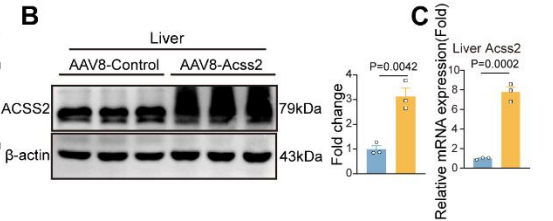
WB and qPCR experiments demonstrate successful Acss2 overexpression
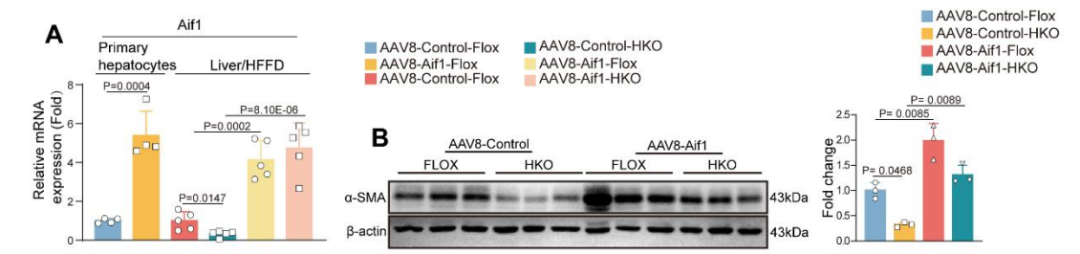
Validation of Aif1 overexpression
Research Background
Inflammation is a key driver of the progression from metabolic dysfunction-associated steatotic liver disease (MASLD) to metabolic dysfunction-associated steatohepatitis (MASH). MASH is highly aggressive and is closely associated with higher liver-related mortality, yet the molecular mechanisms mediating the initiation and persistence of liver inflammation remain unclear. Recently, Hu Wenquan at the Second Affiliated Hospital of Chongqing Medical University and Li Kai at Beijing Tiantan Hospital, jointly with the team of Duan Yajun at the First Affiliated Hospital of University of Science and Technology of China, published the paper ACSS2-KAT5 complex-driven histone crotonylation orchestrates a pro-inflammatory program to promote the transition from MASLD to MASH in Nature Communications (IF 18.1). The study reveals that ACSS2 can act as an epigenetic regulator, independently of the canonical lipogenic pathway, to drive the progression from MASLD to MASH, highlighting ACSS2 as a highly promising therapeutic target for MASH.
Research Results
1. Hepatocyte-specific ACSS2 deficiency alleviates HFFD/MCD/CCl4-induced inflammation and suppresses MASH development
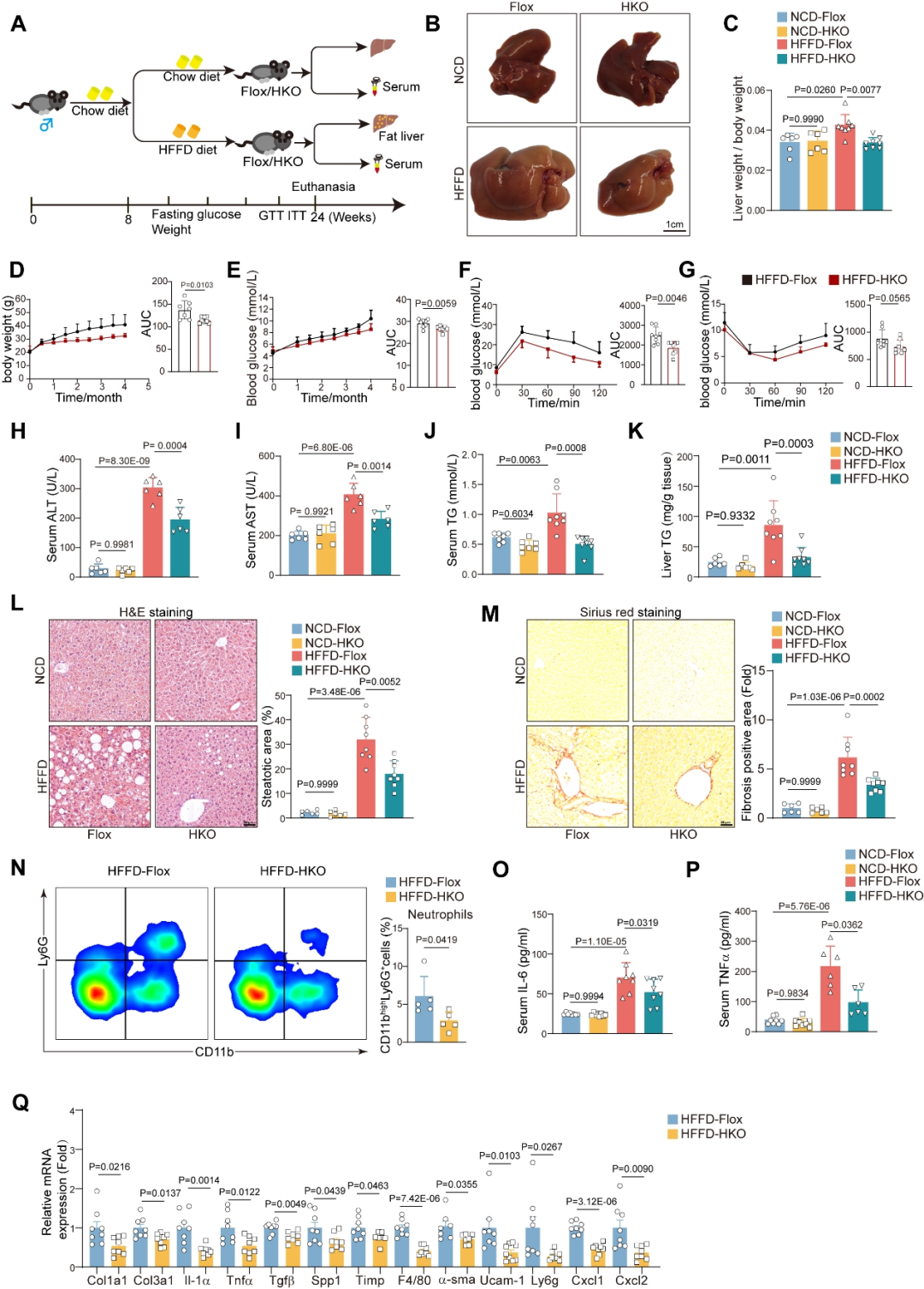
The authors found that ACSS2 expression is upregulated in the livers of humans and mice with MASH, and that ACSS2 levels correlate with key inflammatory chemokines. The authors therefore hypothesized that ACSS2 promotes the progression from MASLD to MASH by driving liver inflammation. To investigate the role of ACSS2 in hepatocytes, the authors generated hepatocyte-specific ACSS2 knockout mice (Acss2-HKO) and found that, compared with controls, HFFD-fed Acss2-HKO mice showed reduced hepatomegaly, a lower liver-to-body weight ratio, improved metabolic profiles, significantly attenuated serum ALT and AST levels and triglyceride accumulation in the liver and serum, alleviated hepatic steatosis and fibrosis, and reduced hepatic inflammatory response, macrophage infiltration and lipid accumulation. The authors used a CCl4-induced liver injury model to further verify the role of ACSS2, finding that hepatocyte-specific knockout of ACSS2 significantly alleviated CCl4-induced inflammatory cell infiltration and liver injury. These results indicate that ACSS2 regulates MASH mainly through inflammatory modulation. Further gain-of-function experiments using AAV8-mediated hepatocyte-specific overexpression of ACSS2 confirmed that ACSS2 overexpression aggravated HFFD-induced MASH progression.
2. ACSS2 promotes hepatocyte senescence by regulating AIF1 expression
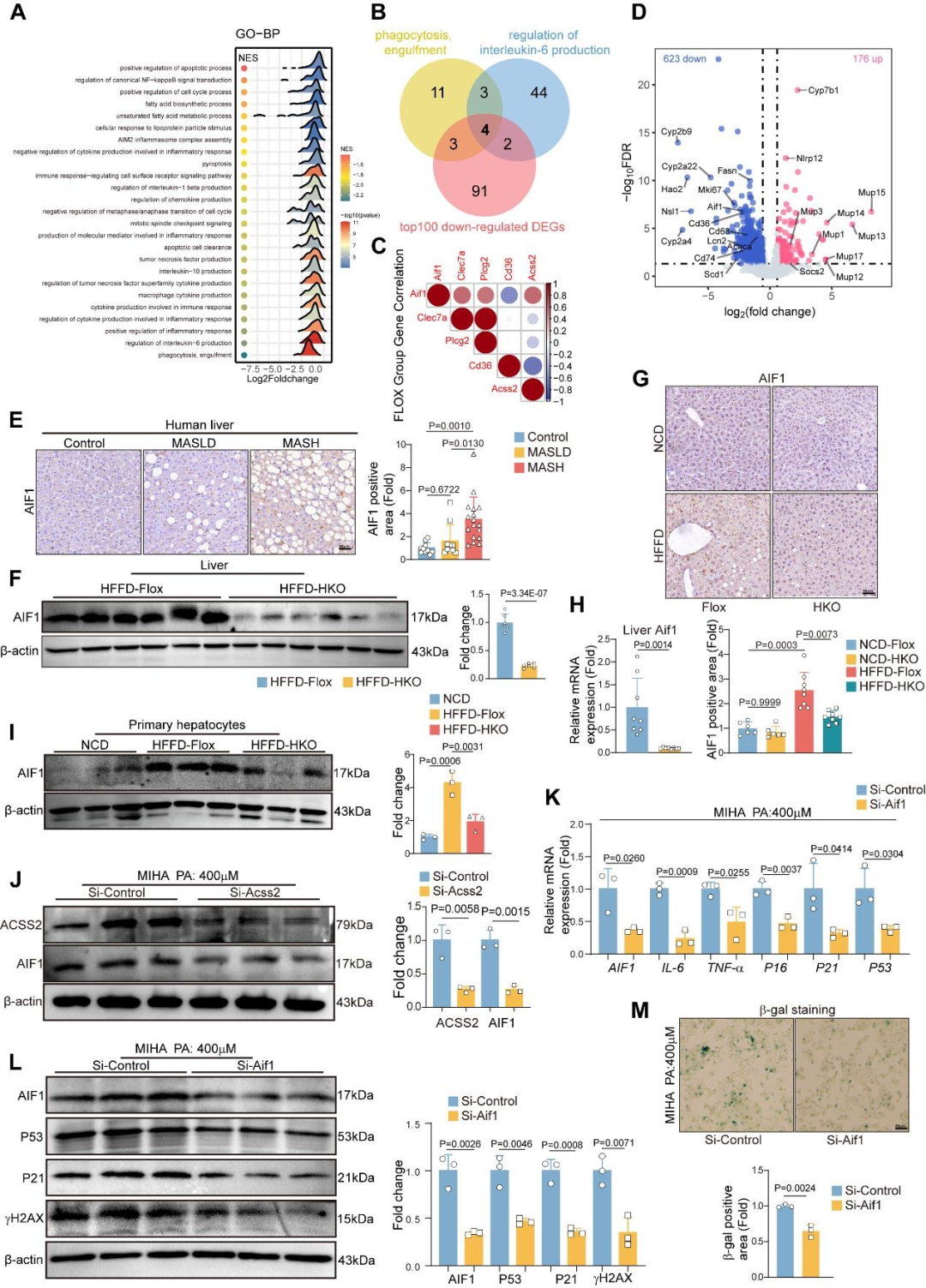
ACSS2 deficiency alleviates MASH by reducing hepatocyte senescence. The authors further explored the potential mechanism by which ACSS2 regulates hepatocyte senescence. Through bioinformatics analysis to identify key mediators, they found that only AIF1 expression was positively correlated with ACSS2 levels. Immunohistochemical staining of human liver tissue sections showed that AIF1 expression was significantly upregulated in MASH patients, consistent with the expression pattern of ACSS2. In vivo studies showed that AIF1 expression was significantly reduced in Acss2-HKO mice. In vitro results showed that in PA-treated MIHA cells and primary hepatocytes, ACSS2 knockdown reduced AIF1 protein levels, whereas ACSS2 overexpression increased AIF1 protein levels. AIF1 knockdown reduced pro-inflammatory cytokine levels and inhibited hepatocyte senescence, while AIF1 overexpression exerted the opposite effects; overexpression of AIF1 in hepatocytes of Acss2-HKO mice reversed the protective effect of ACSS2 deficiency, confirming that AIF1 is a key downstream effector of ACSS2. Mechanistic studies found that ACSS2 forms a complex with KAT5 to upregulate AIF1 transcription through histone crotonylation, thereby inducing liver inflammation and leading to the abnormal accumulation of senescent hepatocytes, which further enhances the production of pro-inflammatory cytokines, triggering a vicious cycle of chronic inflammation that directly promotes the progression from simple steatosis to MASH.
Figure 2 ACSS2 regulates hepatocyte senescence by modulating AIF1 expression
3. Pharmacological inhibition of ACSS2 significantly suppresses HFFD-induced MASH
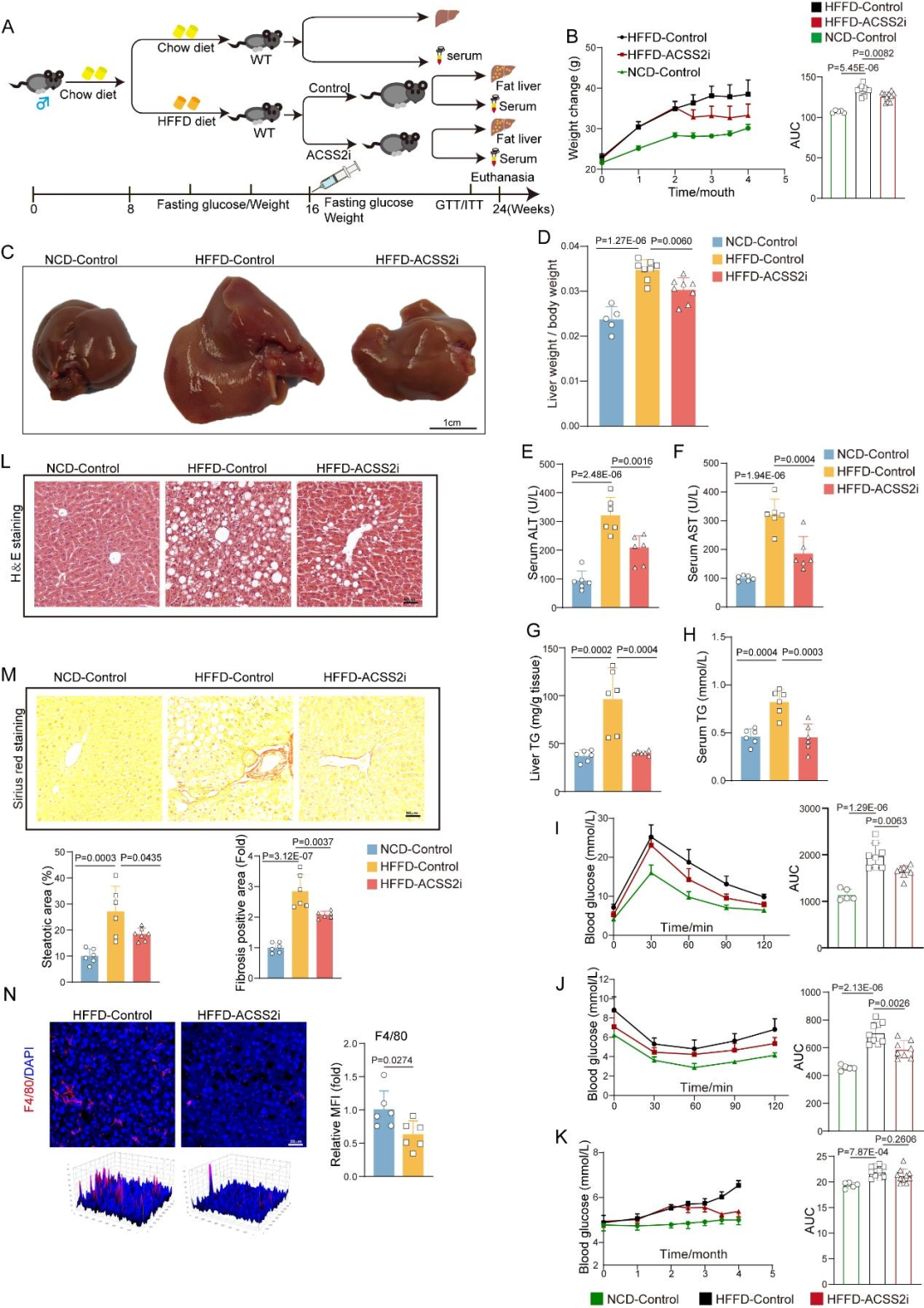
The authors evaluated the therapeutic potential of an ACSS2 inhibitor (ACSS2i) in a MASH model and found that ACSS2i treatment significantly reduced body weight and liver-to-body ratio, lowered serum liver injury markers and triglyceride levels in serum and liver, improved systemic insulin resistance and glucose homeostasis, and alleviated hepatic steatosis, inflammation and fibrosis. This effect was accompanied by inhibition of lipogenesis, reduced lipid droplet accumulation, downregulation of inflammation- and fibrosis-related gene expression, and decreased AIF1 expression, which together acted to alleviate hepatocyte senescence. In summary, this study demonstrates that hepatic ACSS2 deficiency alleviates HFFD-induced metabolic steatohepatitis by downregulating AIF1-mediated hepatocyte senescence.
Figure 3 Pharmacological inhibition of ACSS2 significantly suppresses HFFD-induced MASH
Conclusion
This study reveals that ACSS2 forms a complex with KAT5 to mediate AIF1 transcriptional activation through histone crotonylation, thereby promoting liver inflammation and hepatocyte senescence. It confirms that the ACSS2/KAT5-AIF1 axis acts as a novel regulatory pathway that promotes MASH progression by linking inflammation with hepatocyte senescence, underscoring its potential as a therapeutic target.