Bone Research (IF 14.3) | Dai Jun / Sheng Lei / Wang Jun Team Reveals the Mechanism by Which Extracellular Matrix Stiffness Regulates Nucleus Pulposus Cell Glycolysis
Custom AAV-MRTF-A | Soochow University Dai Jun Team Reveals How Matrix Stiffness Drives Intervertebral Disc Degeneration via MRTF-A Regulation of Nucleus Pulposus Cell Glycolysis (Bone Research, IF 14.3)
Paper title: Matrix stiffness regulates nucleus pulposus cell glycolysis by MRTF-A-dependent mechanotransduction
Journal: Bone Research (IF 14.3)
Collaborating partner: The Second Affiliated Hospital of Soochow University, Prof. Dai Jun and Sheng Lei, together with Prof. Wang Jun, West China School of Stomatology, Sichuan University
· With WZBIO Support - AAV, Adenovirus, Plasmid ·
Gene information
Kidins220: kinase D-interacting substrate of 220 kDa
MRTF-A: myocardin-related transcription factor A
Increased matrix stiffness of nucleus pulposus (NP) tissue is a major feature of intervertebral disc degeneration (IVDD) and affects various functions of nucleus pulposus cells (NPCs). Glycolysis is the main energy source for NPC survival, but the effect of increased extracellular matrix (ECM) stiffness on NPC glycolysis and the underlying mechanism remain unclear. Recently, the team of Dai Jun and Sheng Lei at the Second Affiliated Hospital of Soochow University, together with the team of Wang Jun at West China School of Stomatology, Sichuan University, published the paper Matrix stiffness regulates nucleus pulposus cell glycolysis by MRTF-A-dependent mechanotransduction in Bone Research (IF 14.3), finding that MRTF-A is a key regulator that responds to increased matrix stiffness in IVDD and reduces NPC glycolysis by downregulating Kidins220 and inhibiting AMPK phosphorylation.
Research Results
1. Matrix stiffness activates MRTF-A and promotes NPC degeneration
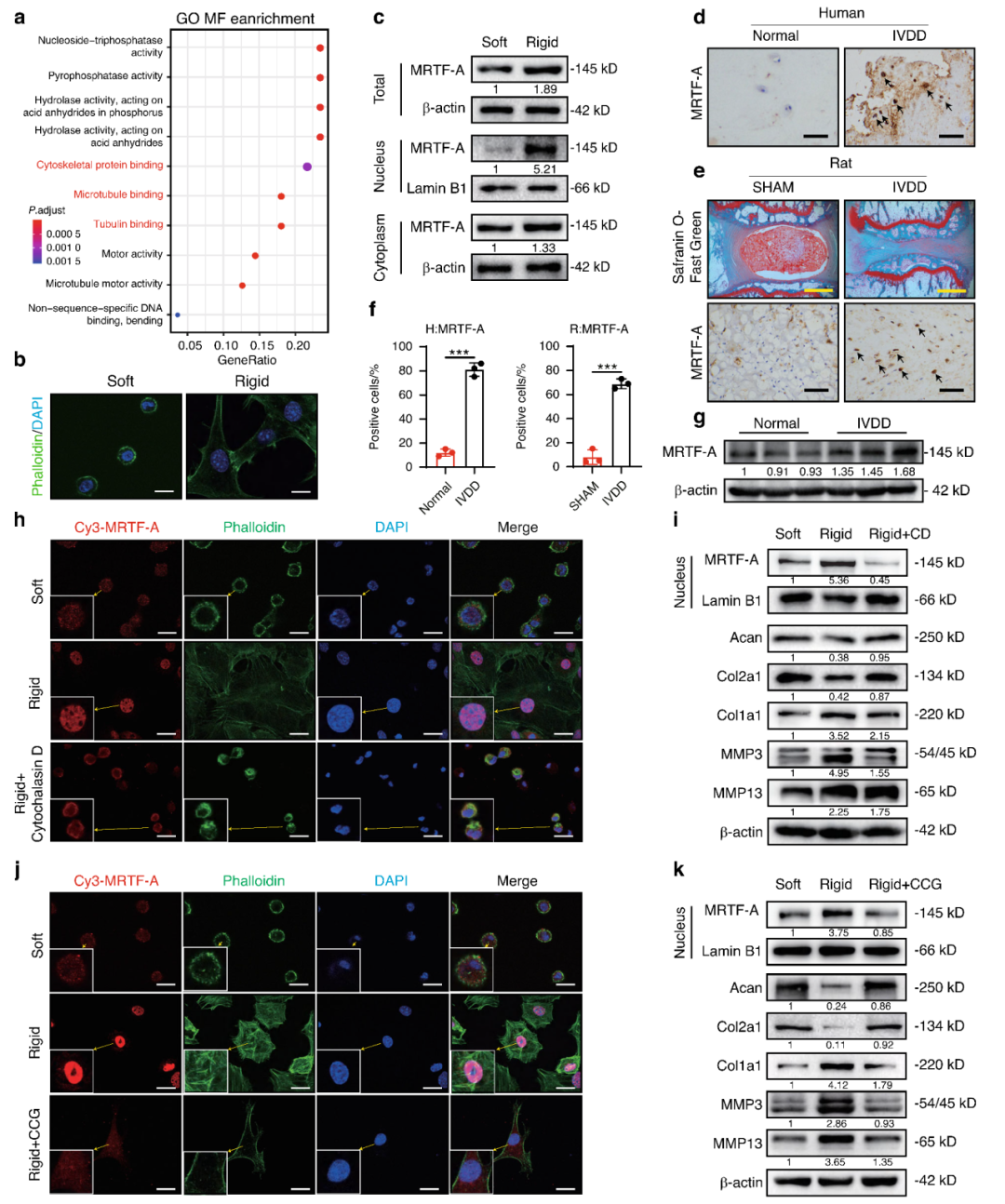
The authors found that matrix stiffness impairs the glycolytic process of NPCs, and investigated the mechanism by RNA sequencing; GO enrichment analysis showed that the rigid substrate altered cytoskeletal protein binding, microtubule binding and tubulin binding. Phalloidin staining showed that the rigid substrate promoted NPC cytoskeletal remodelling. MRTF-A is a major activator responding to cytoskeletal remodelling, increasing and translocating to the nucleus under rigid substrate conditions. MHC staining and western blot analysis showed that MRTF-A was upregulated in NP tissue from patients with IVDD and from rat models. These results suggest that NP tissue degeneration may be closely related to cytoskeletal remodelling and MRTF-A activation. CD treatment effectively inhibited cytoskeletal remodelling and MRTF-A nuclear translocation and partially rescued the rigid matrix-induced degenerative phenotype of NPCs, so the effect of matrix stiffness on NPCs may be mediated by cytoskeletal remodelling-related MRTF-A activation. Using the MRTF-A inhibitor CCG to inhibit MRTF-A translocation to the nucleus, inhibition of MRTF-A was found to partially rescue NPC dysfunction caused by matrix stiffness. These data indicate that MRTF-A is upregulated during IVDD progression, is activated by increased matrix stiffness, and exacerbates NPC metabolic dysfunction. Further study found that MRTF-A reduces glycolysis by inhibiting the AMPK pathway in NPCs.
Figure 1 Matrix stiffness activates MRTF-A and promotes NPC degeneration
2. MRTF-A suppresses AMPK phosphorylation and reduces glycolysis by decreasing Kidins220 expression
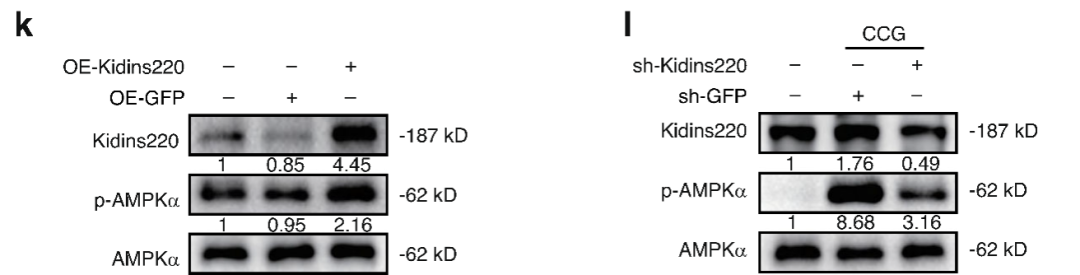
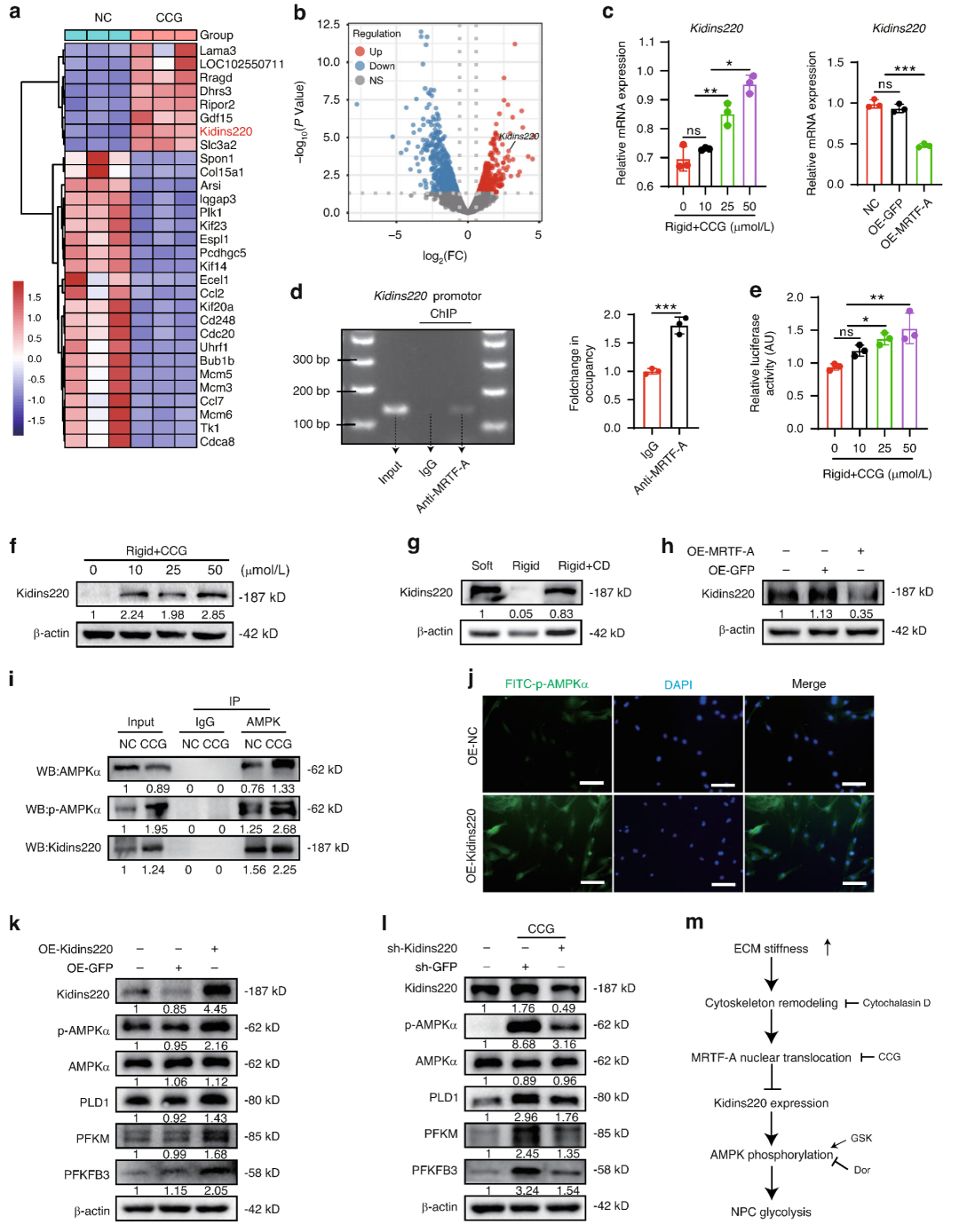
The authors investigated the specific mechanism by which MRTF-A regulates AMPK using RNA sequencing and found that Kidins220 was significantly increased in CCG-treated NPCs. Kidins220 has been shown to be negatively regulated by MRTF-A; ChIP analysis showed that MRTF-A binds the Kidins220 promoter, and luciferase assays showed that CCG treatment directly promotes Kidins220 transcription. In addition, CCG and CD treatment promoted Kidins220 protein levels, whereas MRTF-A overexpression reduced its expression. The authors further investigated the regulatory mechanism between Kidins220 and AMPK; Co-IP showed that Kidins220 interacts with AMPK, and CCG enhanced the interaction between Kidins220 and AMPK. Furthermore, Kidins220 overexpression promoted AMPK phosphorylation and increased the expression of glycolytic enzymes, whereas Kidins220 knockdown partially reduced CCG treatment-induced AMPK phosphorylation and glycolysis. These results indicate that MRTF-A inhibits the expression of Kidins220, thereby suppressing AMPK phosphorylation and the glycolytic process.
Figure 2 MRTF-A suppresses AMPK phosphorylation and reduces glycolysis by decreasing Kidins220 expression
3. MRTF-A overexpression in NP tissue accelerates IVDD progression
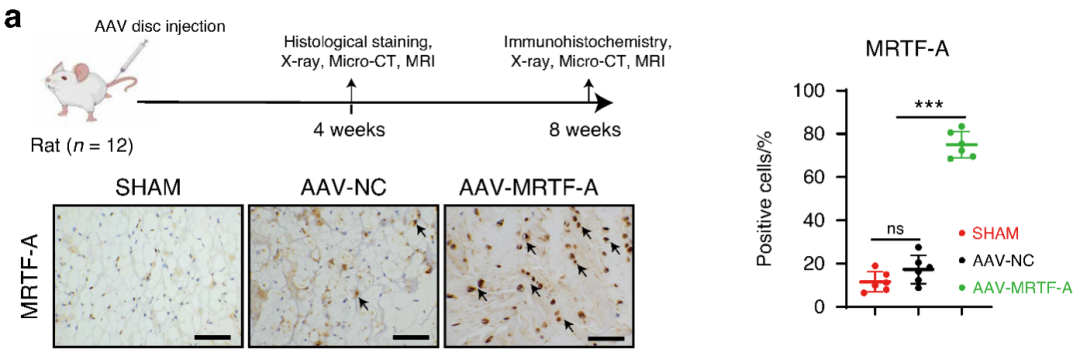
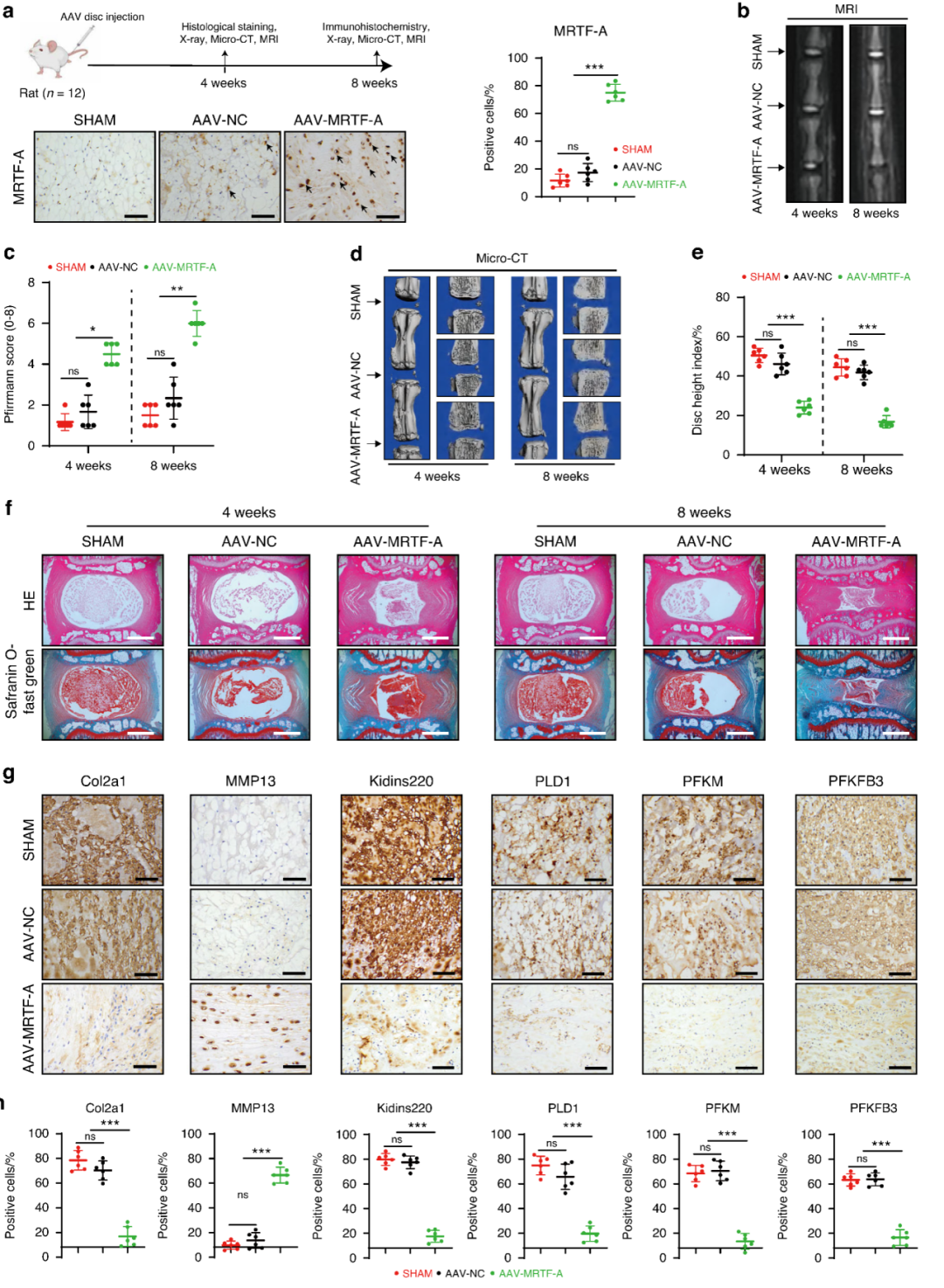
To investigate the role of MRTF-A in IVDD progression, the authors used AAV-MRTF-A to upregulate MRTF-A in NP tissue. MRI analysis showed that, compared with AAV-NC, AAV-MRTF-A treatment led to lower signal intensity and a higher Pfirrmann score. IVD (intervertebral disc) X-ray scanning and micro-CT 3D reconstruction showed that AAV-MRTF-A treatment led to reduced IVD height and increased osteophytes. HE and Safranin O/Fast Green staining showed that MRTF-A expression led to NPC loss, matrix collapse and annulus fibrosus fissures. In addition, AAV-MRTF-A treatment not only increased the expression of MMP13 and decreased the expression of Col2a1 in NP tissue, but also reduced the expression of glycolytic enzymes and Kidins220. Inhibition of MRTF-A partially rescued NPC anabolism and glycolysis and alleviated the progression of IVDD; these results indicate that MRTF-A is involved in the initiation and development of IVDD.
Figure 3 MRTF-A overexpression in NP tissue accelerates IVDD progression
Conclusions
This study reveals the link between matrix stiffness and glycolysis during IVDD and highlights the key role of MRTF-A triggered by abnormal stiffness signalling, which leads to impaired glycolysis by inhibiting Kidins220-AMPK signalling. These findings provide in-depth insight into the underlying mechanism by which the Kidins220-AMPK pathway participates in MRTF-A-activated impaired glycolysis, and indicate that MRTF-A may be an important target for restoring glycolysis and delaying the progression of IVDD mediated by extracellular matrix stiffness.