J ADV RES (IF 17.1): The Jie Zhou, Lu Yu and Heng Ma teams at the Air Force Medical University reveal DACH1 SUMOylation as a new therapeutic target for diabetic cardiomyopathy
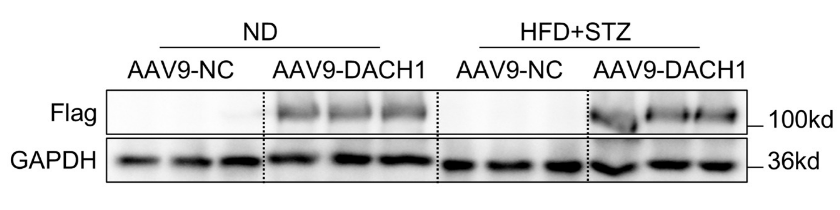
AAV9-cTnT-DACH1 Intramyocardial Injection | DACH1 SUMOylation Suppresses Endoplasmic Reticulum Stress to Alleviate Diabetic Cardiomyopathy: Jie Zhou's team at Xijing Hospital, J Adv Res (IF 17.1)
Paper title: DACH1 SUMOylation protects against diabetic cardiomyopathy by suppressing endoplasmic reticulum stress
Journal: Journal of Advanced Research (IF 17.1)
Collaborating partner: Xijing Hospital, Air Force Medical University — Jie Zhou and Lu Yu; School of Basic Medicine, Air Force Medical University — Heng Ma
Endoplasmic reticulum (ER) stress is a major driver of diabetic cardiomyopathy (DCM), but its upstream regulators remain incompletely defined. The transcription factor DACH1 is genetically associated with the risk of diabetes and cardiovascular disease, yet its role in the diabetic heart is unclear. Recently, the teams of Jie Zhou and Lu Yu at Xijing Hospital, Air Force Medical University, together with Heng Ma's team at the School of Basic Medicine, Air Force Medical University, published a study entitled DACH1 SUMOylation protects against diabetic cardiomyopathy by suppressing endoplasmic reticulum stress in the Journal of Advanced Research (IF 17.1). They found that impaired SUMOylation may contribute to the depletion of DACH1 in the diabetic heart, and that SUMOylation-mediated stabilisation of the DACH1 protein can alleviate diabetic myocardial injury by suppressing ER stress — a potential cardioprotective pathway.
Research Results
1. Cardiac-specific overexpression of DACH1 rescues cardiac dysfunction and attenuates myocardial injury in diabetic mice
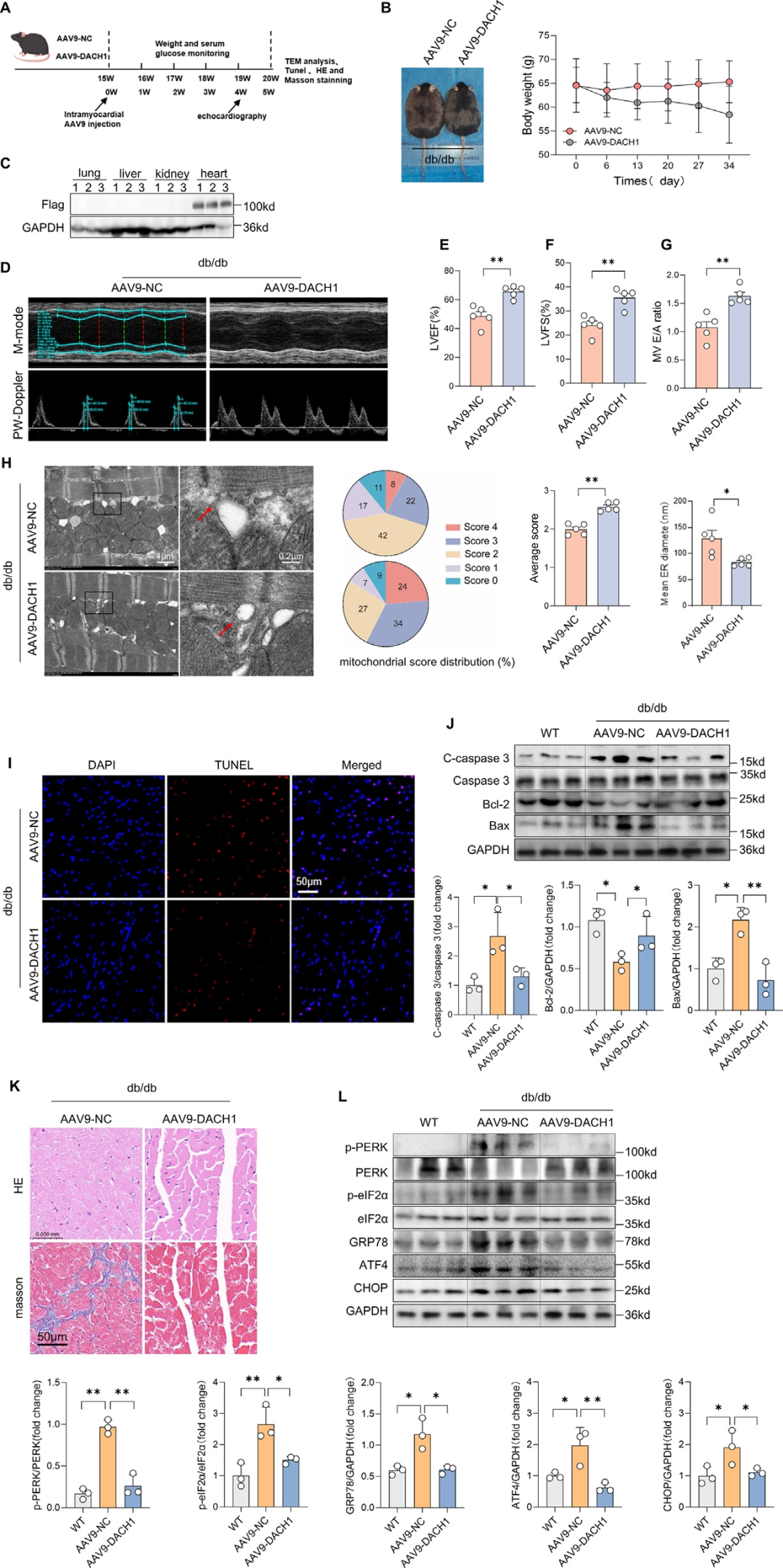
The authors found that diabetic cardiomyopathy is associated with cardiac dysfunction, structural remodelling and cardiomyocyte apoptosis, and transcriptomic analysis identified DACH1 as a candidate regulator with reduced protein expression in DCM. To define the function of DACH1 in DCM, the authors transduced mouse hearts with AAV9-cTnT-DACH1 and found that cardiac-specific DACH1 overexpression significantly improved cardiac function, with both systolic and diastolic function enhanced. The integrity score of cardiac mitochondrial structure improved and the mean diameter of the endoplasmic reticulum decreased, indicating preservation of myocardial ultrastructure. Consistent with the functional and ultrastructural protection, DACH1 overexpression attenuated diabetes-associated cardiomyocyte apoptosis and remodelling: hearts treated with AAV9-DACH1 showed fewer TUNEL-positive cells, improved myocardial architecture and reduced collagen deposition. Mechanistically, DACH1 overexpression attenuated myocardial ER stress signalling by reducing the p-PERK/PERK and p-eIF2α/eIF2α ratios and the expression of GRP78, ATF4 and CHOP. These results indicate that restoration of DACH1 in the heart protects the diabetic heart from functional deterioration, ultrastructural damage, ER stress activation, apoptosis and remodelling.
Figure 1. Cardiac-specific overexpression of DACH1 rescues cardiac dysfunction and attenuates myocardial injury in diabetic mice
2. DACH1 attenuates high-glucose-induced cardiomyocyte apoptosis and endoplasmic reticulum stress
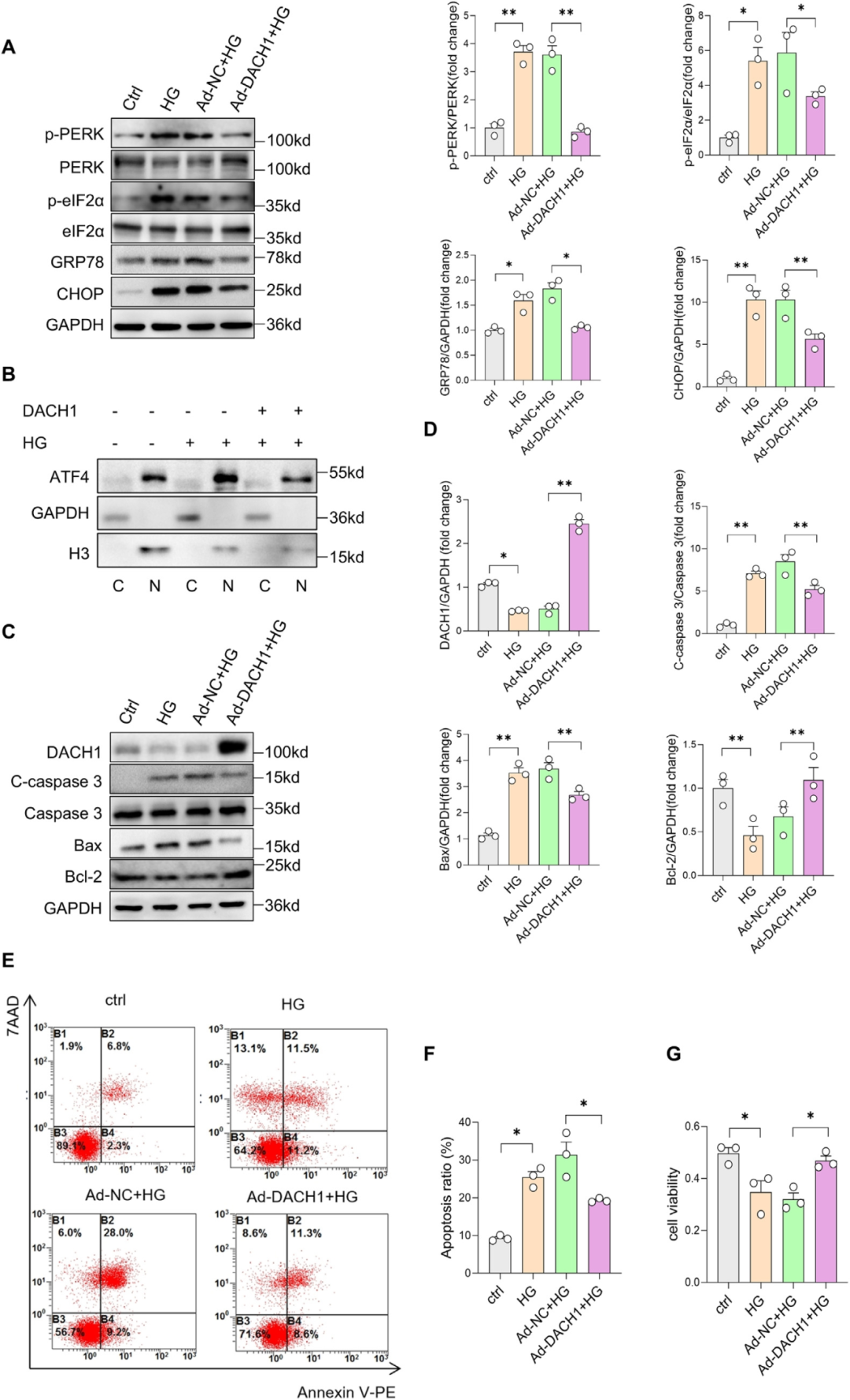
To determine whether DACH1 can directly protect cardiomyocytes under high-glucose stress, the authors exposed neonatal mouse cardiomyocytes (NMCMs) to high glucose (HG) with DACH1 overexpression. HG markedly activated the PERK-mediated ER stress pathway, as shown by increased p-PERK/PERK and p-eIF2α/eIF2α ratios and elevated GRP78 and CHOP expression, and DACH1 overexpression significantly attenuated these HG-induced ER stress-related changes. Nuclear/cytoplasmic fractionation further showed that HG was associated with increased nuclear ATF4 accumulation, whereas DACH1 overexpression reduced this nuclear ATF4 signal under HG conditions. HG exposure decreased DACH1 protein levels and increased apoptosis-related protein changes, both of which were reversed by DACH1 overexpression. Flow cytometry and cell viability assays showed that HG exposure increased the proportion of apoptotic cells and reduced cell viability, while DACH1 overexpression reduced HG-induced apoptosis and partially restored cell viability compared with the Ad-NC control. These data support a protective role for DACH1 in alleviating HG-induced ER stress activation and apoptosis-related cardiomyocyte injury. Mechanistic studies showed that DACH1 is mainly SUMO1-modified at K348, K599 and K631; this modification promotes DACH1 protein stability and nuclear retention, whereas high-glucose stress suppresses DACH1 SUMOylation.
Figure 2. DACH1 attenuates high-glucose-induced ER stress and apoptosis-related injury in cardiomyocytes
3. SUMO1 overexpression protects cardiomyocytes from high-glucose-induced endoplasmic reticulum stress and apoptosis through a partially DACH1-dependent pathway
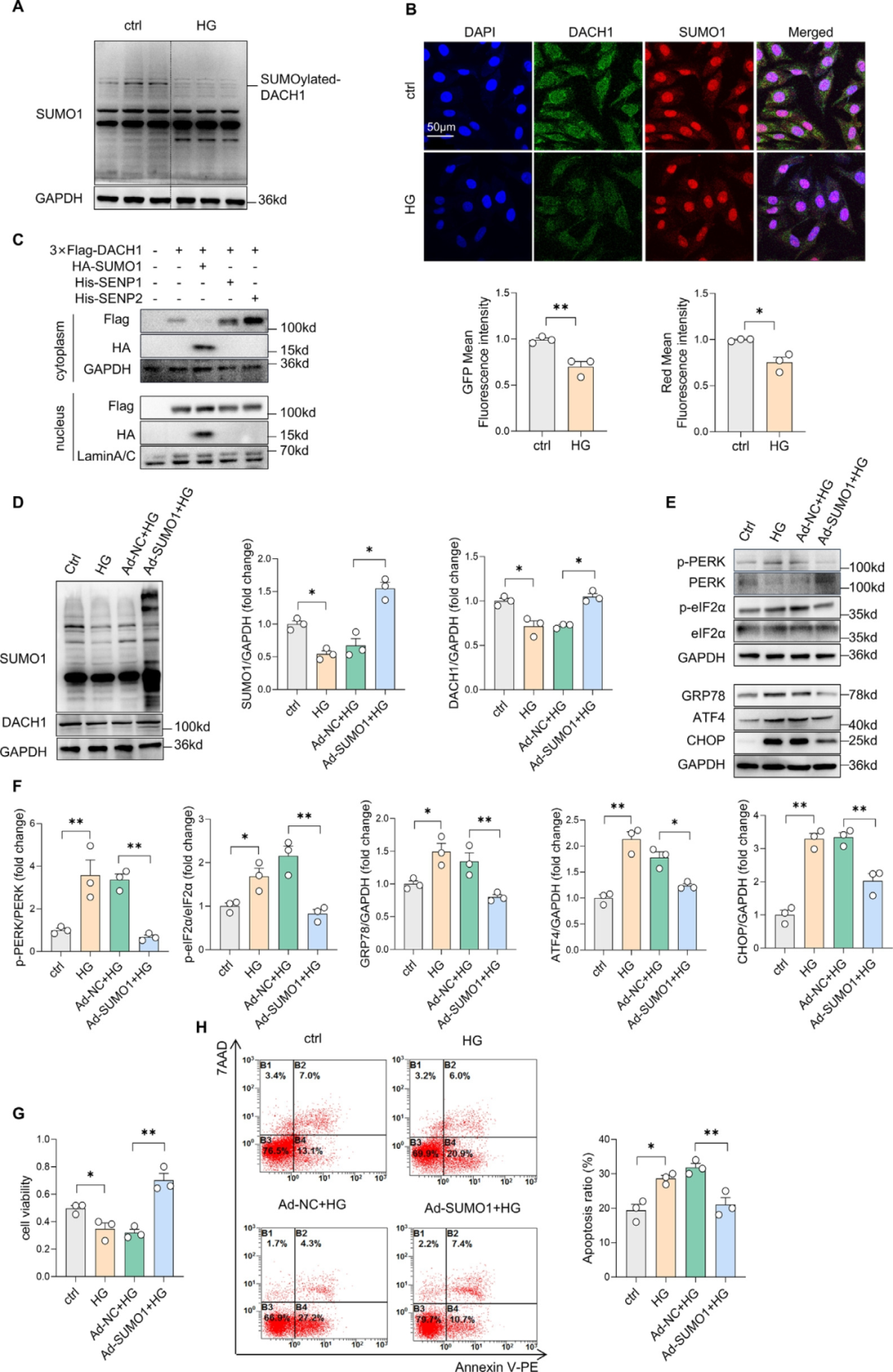
Because DACH1 SUMOylation is reduced under diabetic or hyperglycaemic stress conditions, the authors explored whether enhancing SUMO1 could maintain DACH1 expression levels and protect cardiomyocytes from hyperglycaemia-induced injury. Nuclear and cytoplasmic fractionation showed that SUMO1 overexpression helped maintain DACH1 abundance in the nuclear fraction, consistent with the idea that SUMOylation contributes to DACH1 stability and nuclear retention. Moreover, elevated SUMO1 levels restored DACH1 protein levels under high-glucose conditions. Functional analyses showed that SUMO1 overexpression attenuated HG-induced ER stress activation, improved cell viability under high-glucose conditions and reduced HG-induced apoptosis. SUMO1 overexpression also lowered the levels of cleaved caspase-3 and Bax in HG-treated cells and restored Bcl-2 expression. These results indicate that SUMO1 overexpression increases DACH1 protein abundance and is associated with reduced HG-induced ER stress and apoptosis. DACH1 knockdown significantly blunted the SUMO1-induced recovery of DACH1 protein expression and reversed the inhibitory effect of SUMO1 on ER stress signalling and its anti-apoptotic effect, indicating that DACH1 is an important downstream mediator of the SUMO1-associated protection against HG-induced ER stress and apoptosis.
Figure 3. SUMO1 overexpression partially protects cardiomyocytes from high-glucose-induced ER stress and apoptosis through DACH1
Conclusions
This study shows that DACH1 is downregulated in diabetic cardiomyopathy and that restoring DACH1 expression alleviates ER stress and cardiomyocyte apoptosis. SUMOylation helps maintain DACH1 protein stability under diabetic stress, and targeting DACH1 SUMOylation may be a potential strategy to alleviate diabetic myocardial injury.