NAT CARDIOVASC RES | Jianping Weng and Suowen Xu teams at the University of Science and Technology of China reveal the mechanism by which endothelial IGFBP6 suppresses vascular inflammation and atherosclerosis
AAV and Adenovirus Empower IGFBP6 Research on Suppressing Vascular Inflammation and Atherosclerosis | Jianping Weng and Suowen Xu teams at USTC, Nature Cardiovascular Research (IF 9.4)
Paper title: Endothelial IGFBP6 Suppresses Vascular Inflammation and Atherosclerosis
Journal: Nature Cardiovascular Research (IF 9.4)
Collaborating partner: Division of Life Sciences and Medicine, University of Science and Technology of China — Jianping Weng and Suowen Xu
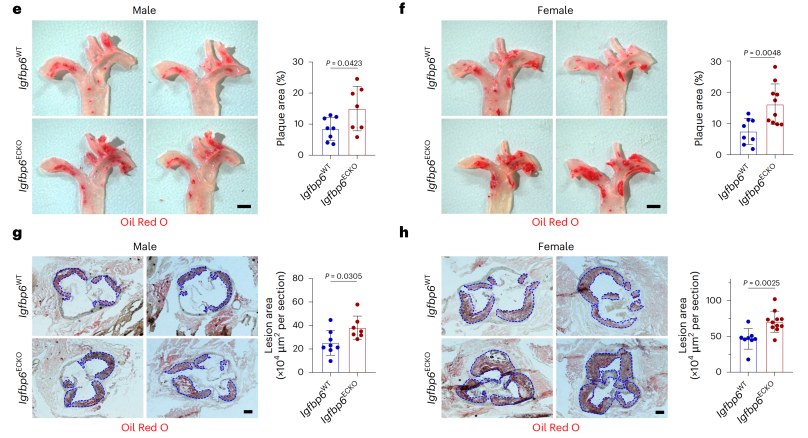
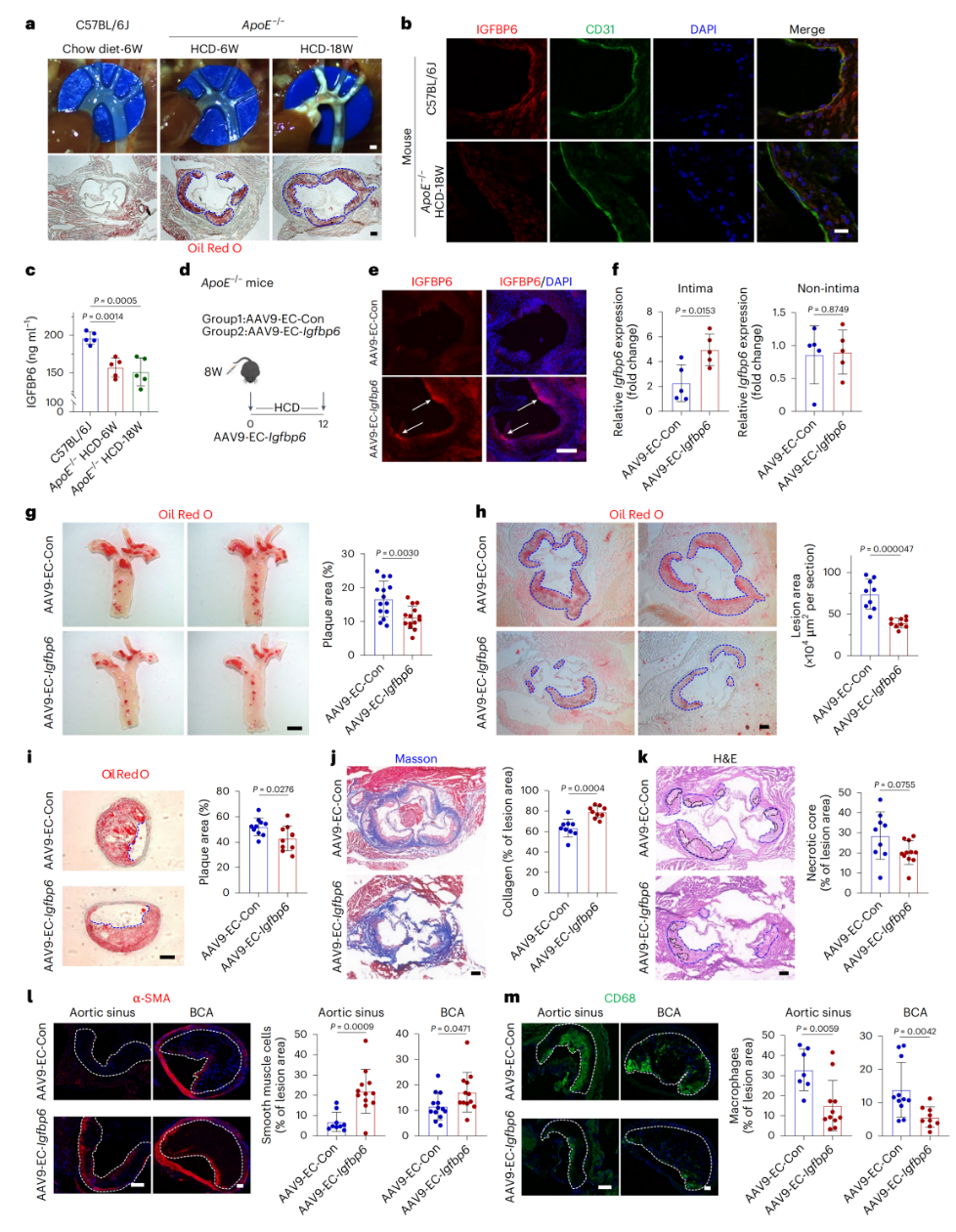
Oil Red O staining showing aortic and aortic root atherosclerotic lesions induced by AAV8-Pcsk9D377Y
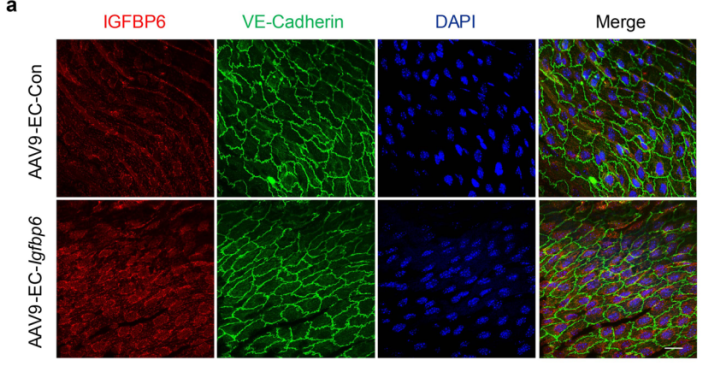
Immunofluorescence showing that AAV9-EC-Igfbp6 successfully mediates Igfbp6 overexpression in the mouse aorta
Research Background
Atherosclerosis is the hallmark pathological feature of coronary artery disease (CAD) and has long been a major cause of death worldwide. In addition to dyslipidaemia, inflammation also contributes to the development of atherosclerosis. However, intrinsic factors that counteract vascular inflammation and atherosclerosis remain underexplored. On 10 January 2025, the teams of Professor Jianping Weng and Professor Suowen Xu at the Division of Life Sciences and Medicine, University of Science and Technology of China, published a research article entitled Endothelial IGFBP6 Suppresses Vascular Inflammation and Atherosclerosis in Nature Cardiovascular Research (IF 9.4). The study demonstrates that IGFBP6 is a negative regulator of endothelial inflammation and leukocyte adhesion, suppresses the development of atherosclerosis, and may serve as a therapeutic target for the prevention of atherosclerotic cardiovascular disease.
Research Results
1. IGFBP6 deficiency increases atherosclerotic plaque formation in mice subjected to PCL surgery
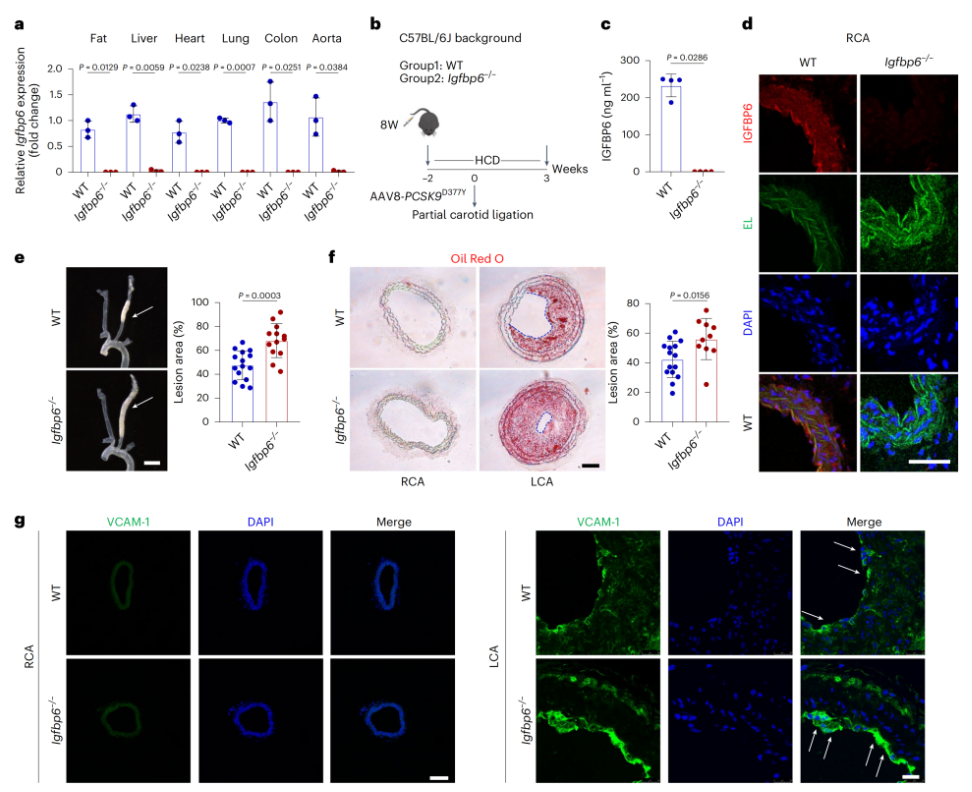
The authors found that IGFBP6 is reduced in human atherosclerotic plaques and is regulated by blood flow, suggesting that IGFBP6, as a flow-responsive gene, may play an important biological role in vascular homeostasis and atheroprotection. To verify whether IGFBP6 suppresses atherosclerosis in vivo, the authors generated Igfbp6-/- knockout mice, injected AAV8-Pcsk9D377Y, fed the mice a high-cholesterol diet (HCD) for 2 weeks, then performed partial carotid ligation (PCL) surgery and continued HCD feeding for 3 weeks. Immunofluorescence staining showed that IGFBP6 was markedly reduced in the RCA of Igfbp6-/- mice. Compared with wild-type mice, Igfbp6-/- mice displayed increased atherosclerotic plaque area in the LCA, increased lipid accumulation in the LCA endothelium and a higher rate of VCAM-1 positivity. These results indicate that Igfbp6 deficiency aggravates disturbed-flow-induced atherosclerotic lesions.
Figure 1. IGFBP6 deficiency increases atherosclerosis formation in mice subjected to PCL surgery
2. Altered IGFBP6 expression affects atherosclerosis progression in mice
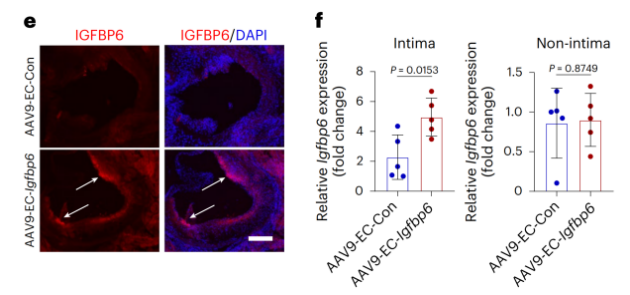
To further explore the role of EC-derived IGFBP6 in atherosclerosis development in hypercholesterolaemic mice, the authors infected Igfbp6ECKO and WT mice with AAV8-Pcsk9D377Y and fed them an HCD to induce atherosclerosis. After 12 weeks, Oil Red O staining of the aorta and aortic sinus showed that atherosclerotic plaque area was significantly increased in Igfbp6ECKO mice compared with controls. In addition, EC-specific Igfbp6 deficiency also increased plaque accumulation in the brachiocephalic artery. Collagen content in plaques was reduced in Igfbp6ECKO mice, and Igfbp6 deficiency enlarged the necrotic core of lesions, indicating that EC-specific knockout of Igfbp6 promotes atherosclerosis and increases features of plaque instability in mice. To link IGFBP6 levels with plaque progression, the authors established a mouse model of progressive atherosclerosis from the early stage (6 weeks of HCD feeding) to the late stage (18 weeks of HCD feeding) and found that IGFBP6 expression declined during atherosclerosis progression. The authors then used AAV9-ICAM2-EC-IGFBP6 to overexpress Igfbp6 specifically in endothelial cells of 8-week-old male ApoE-/- mice fed an HCD for 12 weeks. Elevated IGFBP6 levels were observed in the aortic root and aortic intima of AAV9-ICAM2-EC-IGFBP6 mice compared with control mice. EC-specific overexpression of Igfbp6 reduced atherosclerotic plaque area and necrotic core size, indicating that EC-specific overexpression of Igfbp6 ameliorates atherosclerotic lesions in mice.
Figure 2. Endothelium-specific IGFBP6 overexpression ameliorates atherosclerosis in ApoE-/- mice
3. IGFBP6 interacts with MVP and suppresses endothelial inflammation through MVP-dependent inhibition of p65 and JNK phosphorylation
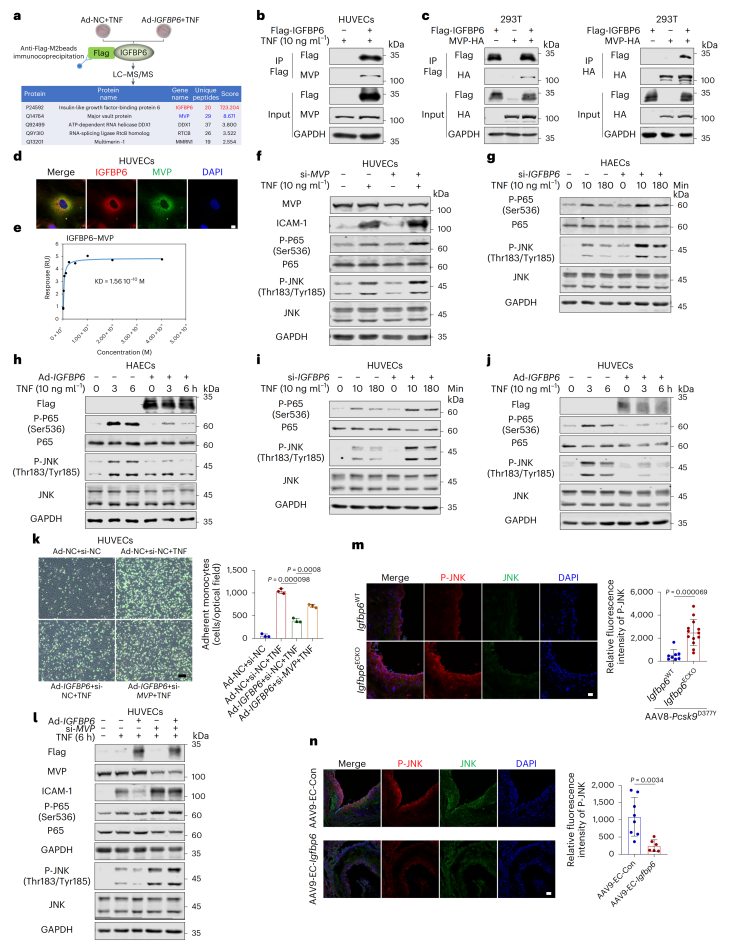
The authors further explored the role of IGFBP6 in endothelial inflammation and found that IGFBP6 alleviates inflammatory-factor-induced endothelial inflammation and prevents leukocyte adhesion to activated endothelium, further consolidating the protective role of IGFBP6 against endothelial dysfunction. Target exploration showed that IGFBP6 is a transcriptional target of KLF2. To uncover the direct mechanism underlying the anti-inflammatory effect of IGFBP6 in ECs, the authors precipitated IGFBP6 from overexpressing ECs and performed mass spectrometry. Based on protein-specific peptides and scores, MVP scored highly. The authors found that IGFBP6 interacts with MVP, and immunofluorescence staining showed that IGFBP6 co-localises with MVP in the cytoplasm of ECs. Further investigation revealed that IGFBP6 inhibits JNK and p65 through its interaction with intracellular MVP, thereby reducing adhesion molecule expression and monocyte adhesion to ECs, ultimately counteracting endothelial inflammation.
Figure 3. IGFBP6 suppresses endothelial inflammation via MVP-dependent inhibition of p65 and JNK phosphorylation
Conclusions
This study demonstrates that IGFBP6 exerts anti-inflammatory and atheroprotective effects, and that IGFBP6 may serve as a therapeutic target for vascular inflammation and atherosclerotic cardiovascular disease.