IF 28.4! Kui Wang, Feng Shen, Hui Dong and colleagues at the Third Affiliated Hospital of Naval Medical University reveal that TREM2+ and TIMD4+ macrophages are key regulators of the immunosuppressive TME in ICC
RNAi AAV8 viral packaging for TREM2 macrophage study | Kui Wang, Feng Shen and Hui Dong teams at the Third Affiliated Hospital of Naval Medical University, Cancer Communications (IF 28.4)
Paper title: Targeting TREM2+ and TIMD4+ Macrophages Reprograms the Tumor Microenvironment and Enhances PD-1 Blockade Efficacy in Intrahepatic Cholangiocarcinoma
Journal: Cancer Communications (IF 28.4)
Collaborating partner: Third Affiliated Hospital of Naval Medical University - Professor Kui Wang, Feng Shen and Hui Dong teams, in collaboration with Nanjing Drum Tower Hospital - Professor Lei Wang's team
· With WZBIO Support - AAV ·
Gene information
Trem2: triggering receptor expressed on myeloid cells 2
Intrahepatic cholangiocarcinoma (ICC) is the second most common primary liver cancer. Macrophages are a key component of the tumour microenvironment (TME), and TREM2+ macrophages have recently been identified as important contributors to tumour progression in multiple cancers. However, the heterogeneity and pro-tumour mechanisms of macrophages in ICC remain to be systematically studied. Recently, the teams of Kui Wang, Feng Shen and Hui Dong at the Third Affiliated Hospital of Naval Medical University, in collaboration with Lei Wang's team at Nanjing Drum Tower Hospital, published in Cancer Communications (IF 28.4) a paper entitled Targeting TREM2+ and TIMD4+ Macrophages Reprograms the Tumor Microenvironment and Enhances PD-1 Blockade Efficacy in Intrahepatic Cholangiocarcinoma. The study found that TREM2+ and TIMD4+ macrophages are key regulators of the immunosuppressive TME in ICC, and that targeting Trem2 and Timd4 enhanced the efficacy of anti-Pd-1 therapy in ICC mouse models.
Research Results
1. TREM2+ macrophages are a contributing factor to poor prognosis in intrahepatic cholangiocarcinoma
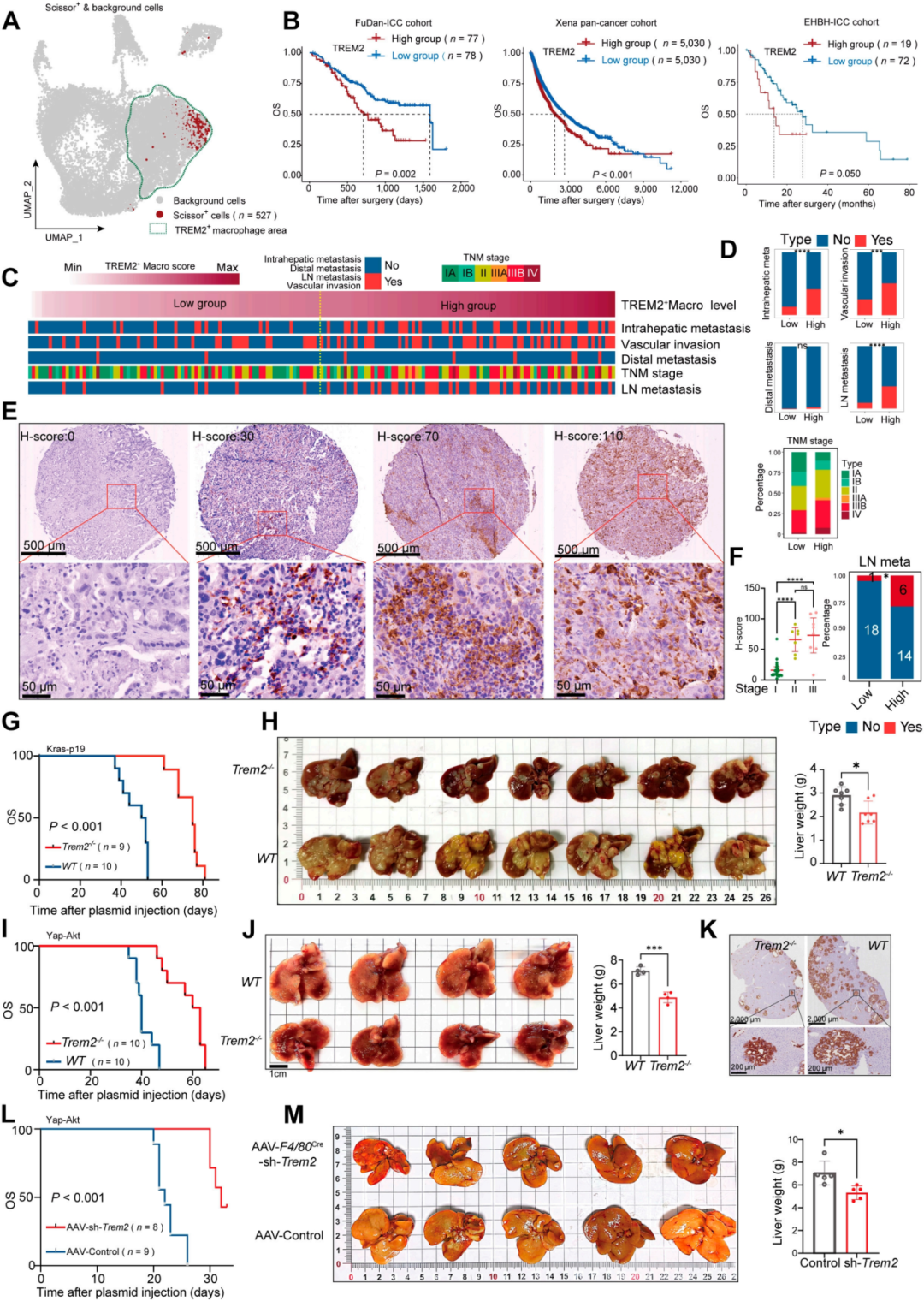
The authors identified cell populations associated with poor prognosis in ICC patients and identified 517 macrophages significantly associated with poor prognosis, which were mainly distributed within the TREM2+ macrophage cluster, suggesting that TREM2+ macrophages may be a key determinant of poor prognosis. In addition, in both human and mouse ICC samples, macrophages preferentially expressed TREM2. These results highlight the therapeutic potential of targeting TREM2+ macrophages. Survival analysis of two independent ICC cohorts found that elevated TREM2 expression levels were significantly associated with shortened overall survival. To investigate the pro-tumour role of TREM2 in ICC, the authors constructed a Trem2 knockout (Trem2-/-) C57BL/6J mouse model. Compared with wild-type (WT) mice, Trem2-/- mice showed significantly slower tumour progression, prolonged survival and reduced tumour burden. To evaluate the specific role of Trem2 in macrophages, the authors used AAV8-F4/80-shTrem2 to specifically silence Trem2 in macrophages and found that Trem2 knockdown significantly delayed tumour progression. Taken together, elevated levels of TREM2+ macrophages are associated with poor prognosis in ICC, and genetic or myeloid-specific inhibition of Trem2 significantly suppresses tumour progression in mouse models, highlighting the potential value of targeting TREM2+ macrophages in ICC treatment.
Figure 1 TREM2+ macrophages correlate with poor clinical prognosis and promote ICC progression
2. TREM2+ macrophages promote the formation of POSTN+ CAFs at the tumour-peritumour interface, thereby limiting CD8+ T cell infiltration
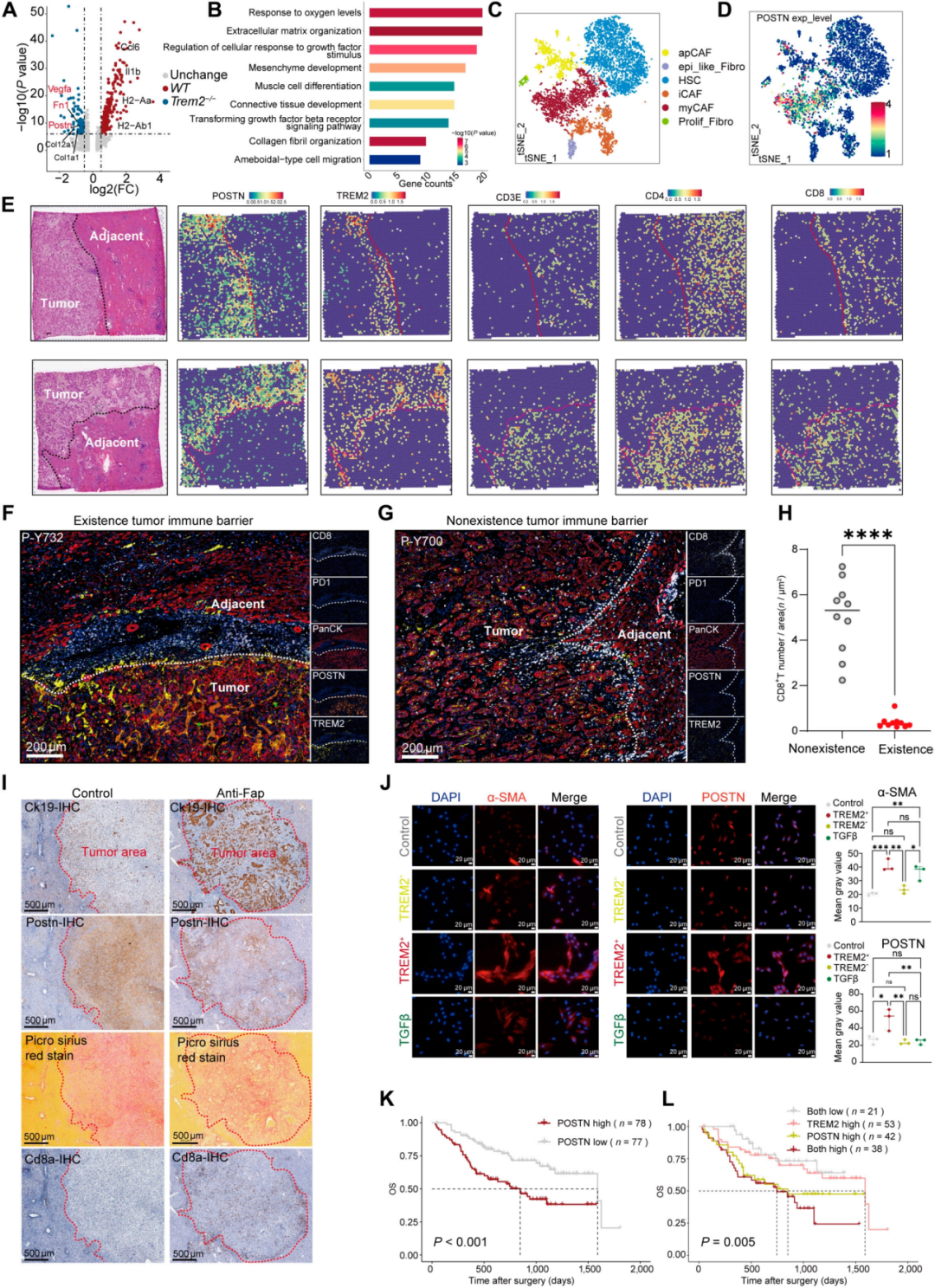
The authors found that Trem2 knockout significantly reduced fibroblasts in ICC mice. The role of cancer-associated fibroblasts (CAFs) in tumours has been well studied, and the authors hypothesised that CAFs may mediate TREM2-driven ICC progression. Spatial transcriptome analysis showed that TREM2+ macrophages and POSTN+ CAFs co-localised in the tumour-peritumour junction region, and this spatial distribution was associated with an immune exclusion barrier formed at the tumour margin. At this barrier, the infiltration of CD8+ T cells into the tumour interior was significantly reduced. In addition, pharmacological induction of myCAF (the POSTN+ CAF subpopulation) into a quiescent state resulted in a significant reduction in liver tumour burden, decreased POSTN expression, reduced collagen deposition in tumour tissue, and increased CD8+ T cell infiltration. Cell co-culture results showed that TREM2+ macrophages could induce LX-2 cells to express α-SMA and undergo morphological changes, while upregulating POSTN protein, indicating that TREM2+ macrophages are a key factor driving myCAF differentiation. Taken together, these results indicate that TREM2+ macrophages at the tumour-peritumour junction promote HSCs to acquire a POSTN+ myCAF-like phenotype, and the spatial association of these cells with reduced intratumoural CD8+ T cell infiltration may act together to form an immunosuppressive microenvironment, thereby promoting ICC progression. Further studies found that TREM2+ macrophages promote CD8+ T cell exhaustion and Treg accumulation, contributing to the formation of an immunosuppressive microenvironment.
Figure 2 TREM2+ macrophages promote POSTN+ CAF formation at the tumour-peritumour junction and limit CD8+ T cell infiltration
3. Blocking TREM2 and TIMD4 to enhance the potential of anti-PD-1 therapy for ICC
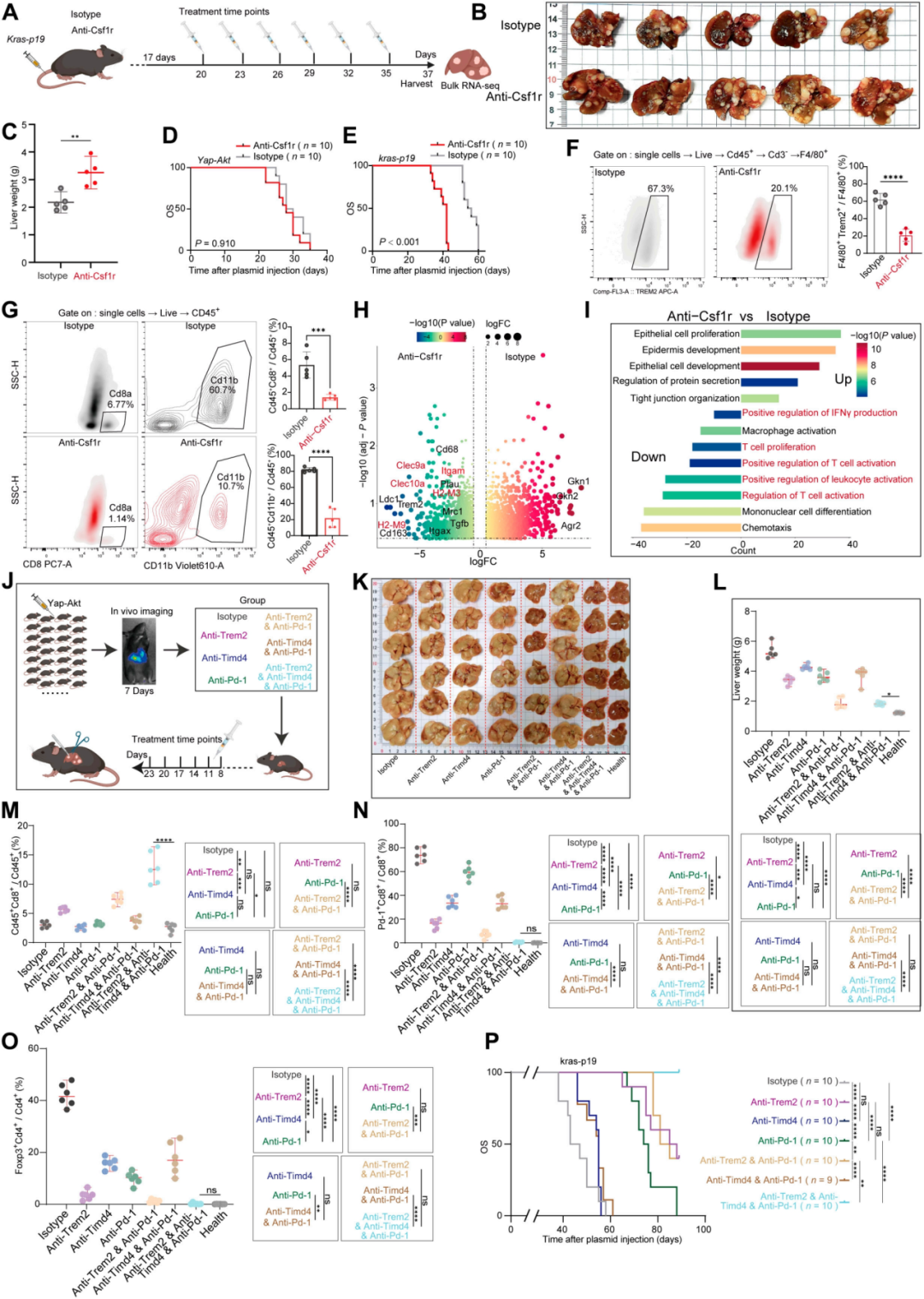
In monotherapy, both anti-Trem2 antibody and anti-Pd-1 antibody significantly reduced tumour burden; anti-Timd4 antibody monotherapy also reduced tumour burden, but the effect was relatively weak. Combined use of anti-Trem2 antibody and anti-Pd-1 antibody further reduced tumour burden compared with monotherapy. In contrast, the combination of anti-Timd4 antibody and anti-Pd-1 antibody produced no significant synergistic effect, and triple therapy did not further reduce tumour burden compared with anti-Trem2 antibody plus anti-Pd-1 antibody. Therefore, under the conditions of this experiment, the main contribution to tumour control appeared to derive from Trem2 blockade plus anti-Pd-1 therapy, while the additional benefit of Timd4 blockade was limited. Flow cytometry analysis showed that anti-Trem2 antibody monotherapy significantly increased the proportion of intratumoural CD8+ T cells, whereas anti-Timd4 antibody monotherapy produced no obvious increase. Anti-Trem2 combined with anti-Pd-1 antibody therapy further increased CD8+ T cell infiltration compared with anti-Pd-1 antibody monotherapy, and the triple therapy regimen achieved the highest proportion of CD8+ T cells among all treatment groups. The authors further evaluated treatment-related survival in ICC mouse models; the triple therapy regimen produced the greatest survival benefit, followed by anti-Trem2 plus anti-Pd-1 antibody therapy and anti-Trem2 monotherapy. Anti-Timd4 monotherapy and anti-Timd4 plus anti-Pd-1 antibody therapy showed limited survival benefit, but transient responses were observed in the early to mid-stage of tumour development. These results indicate that the therapeutic effect of TIMD4 blockade may depend on the tumour model and disease stage rather than having a universal benefit.
Figure 3 Blocking TREM2 and TIMD4 to enhance the potential of anti-PD-1 therapy for ICC
Conclusions
This study mapped the heterogeneity of macrophages within, around and adjacent to ICC tumours. TREM2+ and TIMD4+ macrophages are key contributors to the immunosuppressive microenvironment of ICC, and anti-TREM2 therapy can enhance the efficacy of anti-PD-1 treatment.