ADV SCI (IF 14.1): Xiaoli Tian's Team at Nanchang University Reveals that THSD7A Exacerbates Atherosclerosis via Activation of the αvβ3/CEBPD/IL1A Signaling Axis
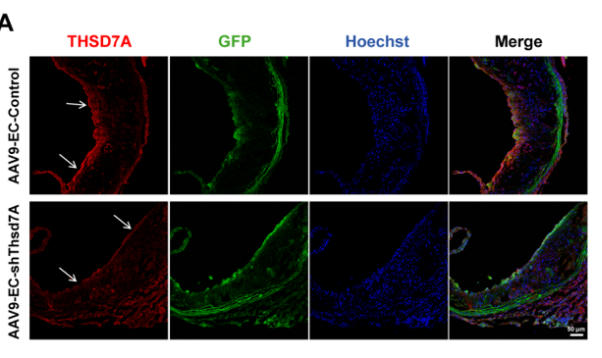
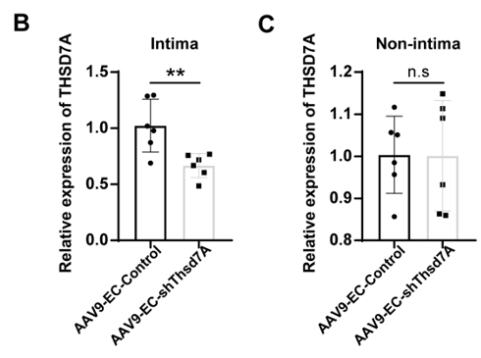
AAV9-ICAM2-shThsd7A successfully knocked down Thsd7A in endothelial cells
Research Background
Coronary artery disease (CAD) has long ranked first among the leading causes of death worldwide, and atherosclerosis is the hallmark pathological feature of CAD. Previous genome-wide screens identified the THSD7A gene as associated with human CAD, but the molecular mechanism by which THSD7A promotes atherosclerosis remained unclear. Recently, Prof. Xiaoli Tian's team at the School of Life Sciences, Nanchang University published in Advanced Science (IF 14.1) an article entitled THSD7A Exacerbates Atherosclerosis via Activation of Signaling Axis αvβ3/CEBPD/IL1A, which established THSD7A as a novel key mediator of the αvβ3/CEBPD/IL1A signaling axis that regulates endothelial inflammation associated with atherosclerosis, and positioned THSD7A as a genetic marker and potential therapeutic target.
Research Findings
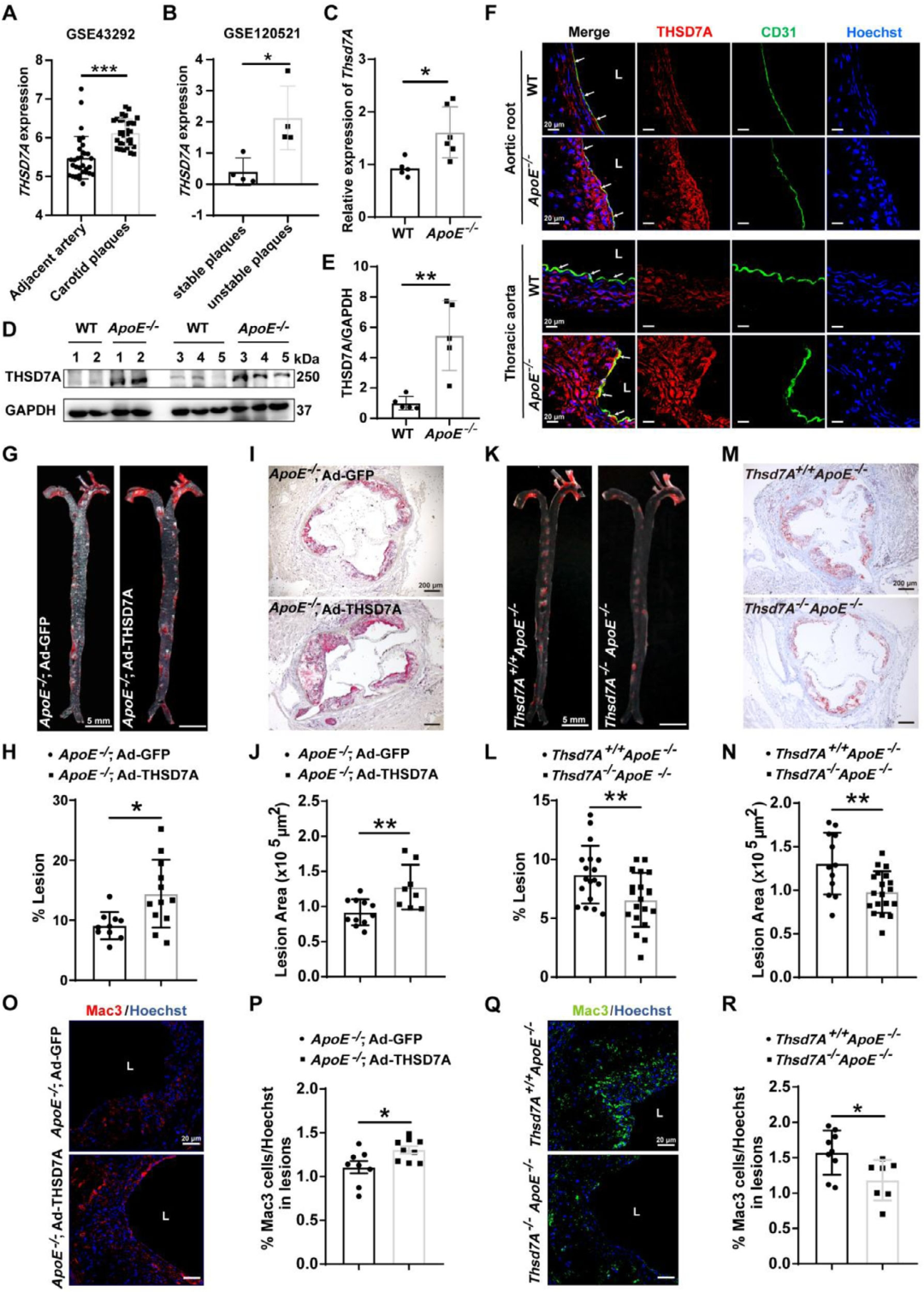
1. THSD7A is upregulated in human carotid plaques and plaques of ApoE-deficient mice, and THSD7A overexpression exacerbates atherosclerotic lesions
To explore the direct role of THSD7A in atherogenesis, the authors overexpressed THSD7A with adenovirus in ApoE−/− mice, and found that the atherosclerotic lesion area of the aorta and the cross-sectional lesion area of the aortic root were increased in ApoE−/−; Ad-THSD7A mice compared with control ApoE−/−; Ad-GFP mice. In addition, the aortic atherosclerotic lesion area was reduced in Thsd7A−/−ApoE−/− mice compared with Thsd7A+/+ApoE−/− mice. Considering that the beneficial effect of global Thsd7A knockout might derive from contributions of other cell types, the authors specifically knocked down Thsd7A in vascular endothelial cells using AAV9-ICAM2-shThsd7A, and the results showed that downregulation of Thsd7A expression in endothelial cells reduced atherosclerotic plaque formation. Further studies showed that macrophage infiltration correspondingly increased or decreased in ApoE−/− mice with THSD7A gain or loss of function. These results indicate that THSD7A overexpression exacerbates atherosclerotic lesions.
Figure 1. THSD7A is upregulated in human carotid plaques and plaques of ApoE-deficient mice, and its overexpression exacerbates atherosclerotic lesions
2. THSD7A activates the downstream IL1A signaling pathway to promote endothelial cell inflammation
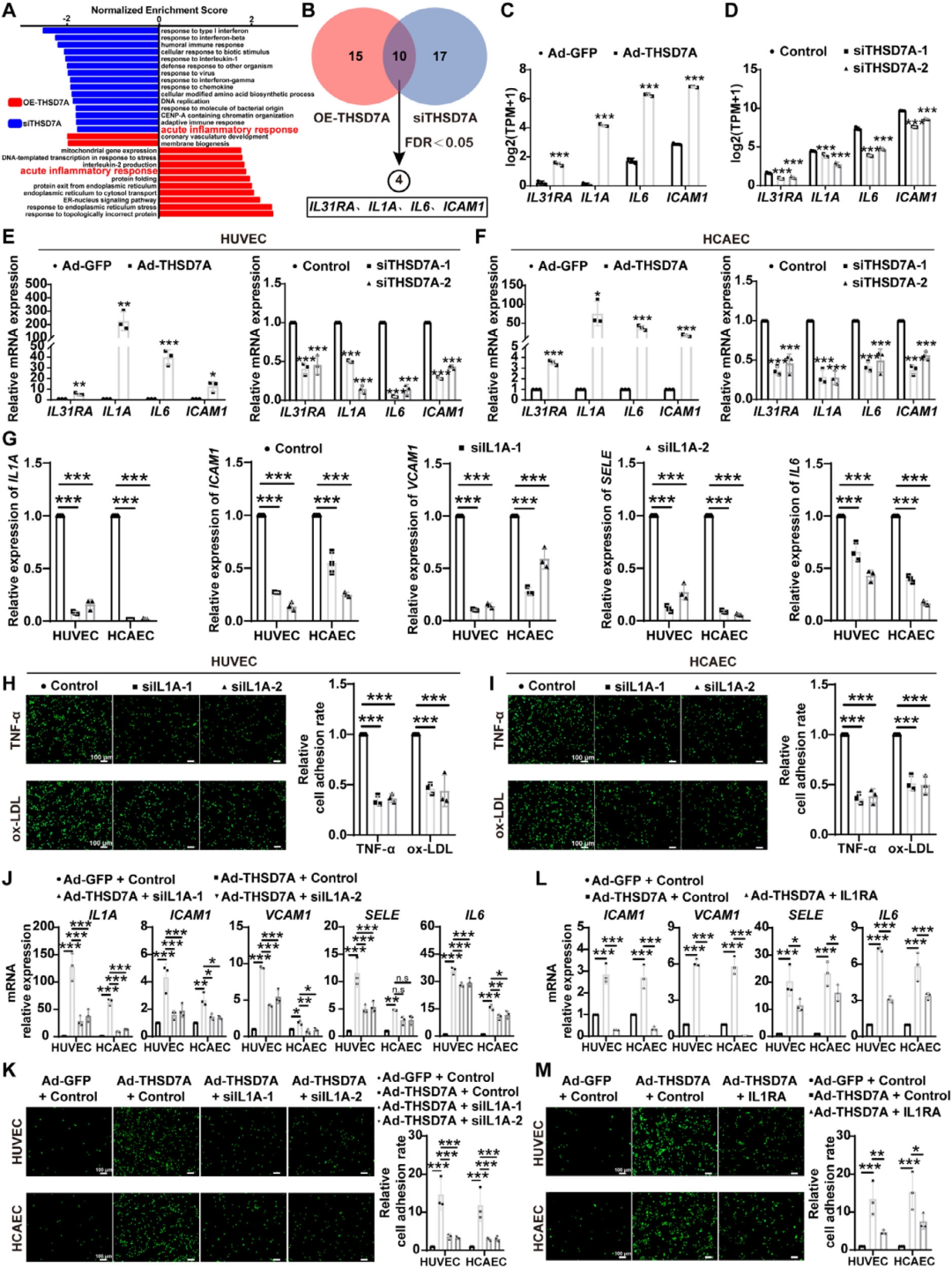
The authors found that THSD7A overexpression promotes endothelial cell inflammation. To explore the mechanism by which THSD7A regulates endothelial inflammation, the authors performed RNA sequencing on HUVECs with THSD7A overexpression or knockdown. Gene set enrichment analysis showed that both THSD7A overexpression and knockdown were involved in the acute inflammatory response. Differential co-expression analysis identified IL31RA, IL1A, IL6, and ICAM1 as differentially co-expressed with THSD7A, among which IL1A showed the most significant differential change. The authors characterized the mechanism of IL1A involvement in the inflammatory response, and found that under TNF-α and ox-LDL stimulation, IL1A knockdown reduced the expression levels of ICAM1, VCAM1, SELE, and IL6 in HUVECs and HCAECs and inhibited monocyte-endothelial cell adhesion, indicating that THSD7A promotes endothelial inflammatory responses by activating the downstream IL1A signaling pathway. The authors then explored whether inhibiting IL1A could alleviate the endothelial inflammation mediated by THSD7A overexpression, and found that THSD7A overexpression significantly increased the expression levels of IL1A, ICAM1, VCAM1, SELE, and IL6 and enhanced cell adhesion. However, siRNA-mediated IL1A knockdown effectively reversed these effects induced by THSD7A overexpression, and these data indicate that inhibiting the IL1A signaling pathway effectively reduces THSD7A-promoted endothelial cell inflammation. Mechanistic studies revealed that THSD7A activates the αvβ3/ERK/CEBPD signaling axis to regulate IL1A transcription and promote endothelial cell inflammation.
Figure 2. THSD7A promotes the inflammatory response of endothelial cells via IL1A signaling
Conclusions
This study demonstrates that THSD7A exerts pro-inflammatory effects and exacerbates atherosclerosis. The αvβ3/CEBPD/IL1A signaling axis activated by THSD7A is a novel and critical pathway regulating endothelial inflammation and atherosclerosis. THSD7A is not only a genetic marker of coronary artery disease but also a potential therapeutic target.