Cell Res (IF 25.9) | Southern Medical University Zhou Weijie team reveals how colorectal cancer
Ad-Cre Custom Adenovirus | Southern Medical University Zhou Weijie Team Reveals APC11 Peptide Targeting PTPN13 Reverses Colorectal Cancer Immune Evasion (Cell Research, IF 25.9)
Paper title: Targeting PTPN13 with 11-amino-acid peptides of C-terminal APC prevents immune evasion of colorectal cancer
Journal: Cell Research (IF 25.9)
Client: Zhou Weijie Team, Southern Medical University
Colorectal cancer (CRC) is the third most common cancer worldwide. Although advances in immunotherapy have revolutionized cancer treatment, their effectiveness in CRC remains limited. Previous studies have shown that APC-driven polyclonality significantly enhances tumorigenic potential, but the role of APC mutations in mediating immune evasion remains poorly understood. Recently, the team of Zhou Weijie at Southern Medical University published the paper Targeting PTPN13 with 11-amino-acid peptides of C-terminal APC prevents immune evasion of colorectal cancer in Cell Research (IF 25.9), revealing a previously unknown APC/PTPN13/STAT1-dependent tumor immunosuppressive mechanism.
Research Results
1. APC deficiency impairs IFNγ-STAT1-IRF1 signaling and suppresses antigen presentation
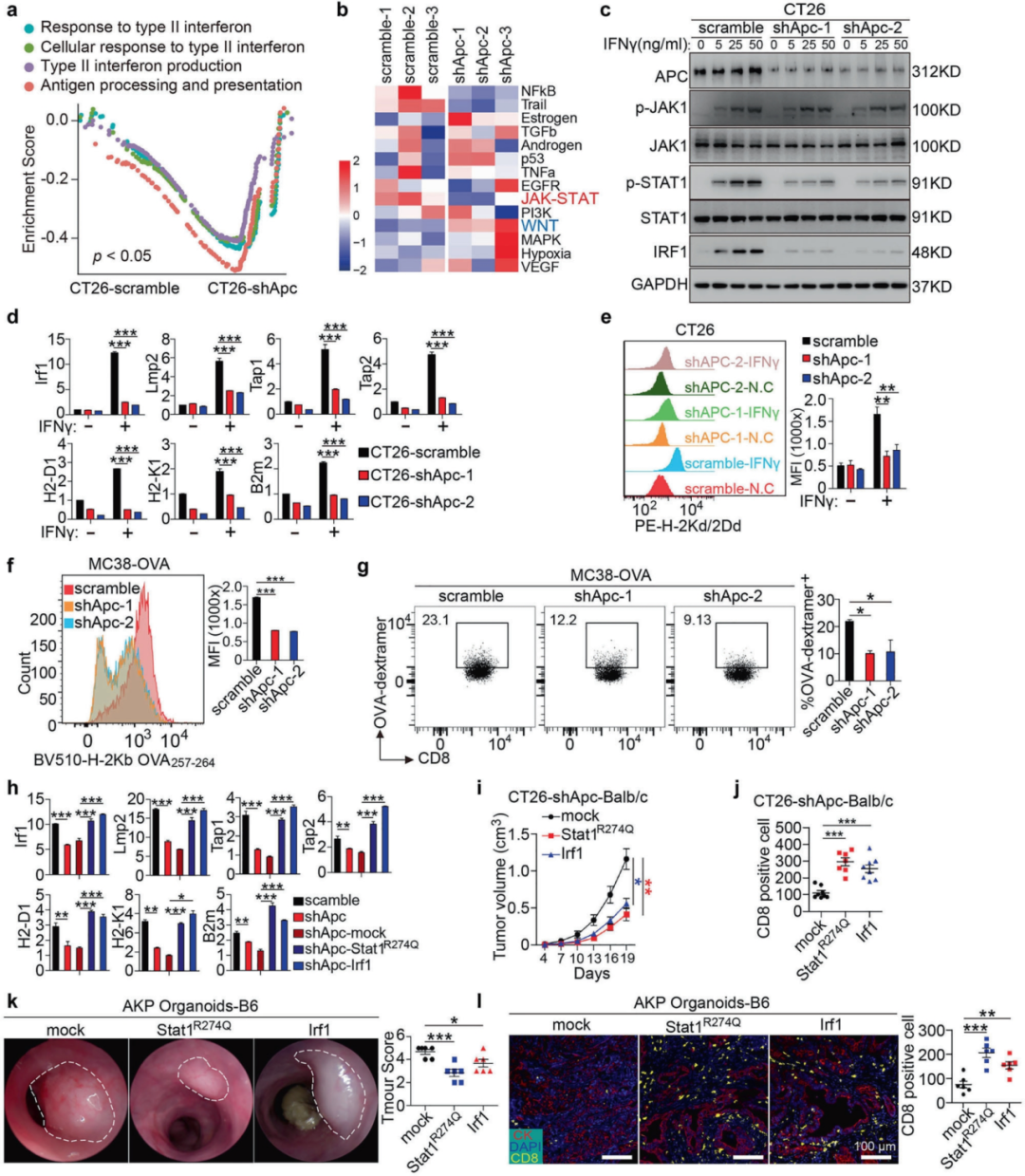
The authors found that APC deficiency impairs CD8+ T cell infiltration-induced immune evasion in CRC, increases the resistance of CRC models to immune checkpoint blockade, and that PTPN13 mediates APC deficiency-driven CRC immune evasion. The authors used RNA-seq to investigate the signaling pathways involved in APC deficiency-induced immune evasion in CRC, and found that APC knockdown was associated with suppression of type II interferon and JAK-STAT signaling pathway responses; Apc knockdown significantly reduced IFNγ-induced STAT1 phosphorylation and IRF1 upregulation, while JAK1 phosphorylation remained unaffected, indicating that APC acts downstream of JAK1 and upstream of STAT1 in this pathway. The authors also explored the effects of APC deficiency on antigen presentation and CD8+ T cell function, and found that antigen presentation was impaired after Apc knockdown, with a significant reduction in antigen-specific CD8+ T cells. Mechanistic studies found that overexpression of Stat1R274Q and Irf1 significantly inhibited the growth of CT26-shApc cells subcutaneously transplanted into WT Balb/c mice and enhanced CD8+ T cell infiltration. These results indicate that APC loss promotes immune evasion by inhibiting STAT1/IRF1 signaling, and that restoring this pathway can effectively counteract tumor immune resistance.
2. Direct interaction and dephosphorylation between PTPN13 and STAT1
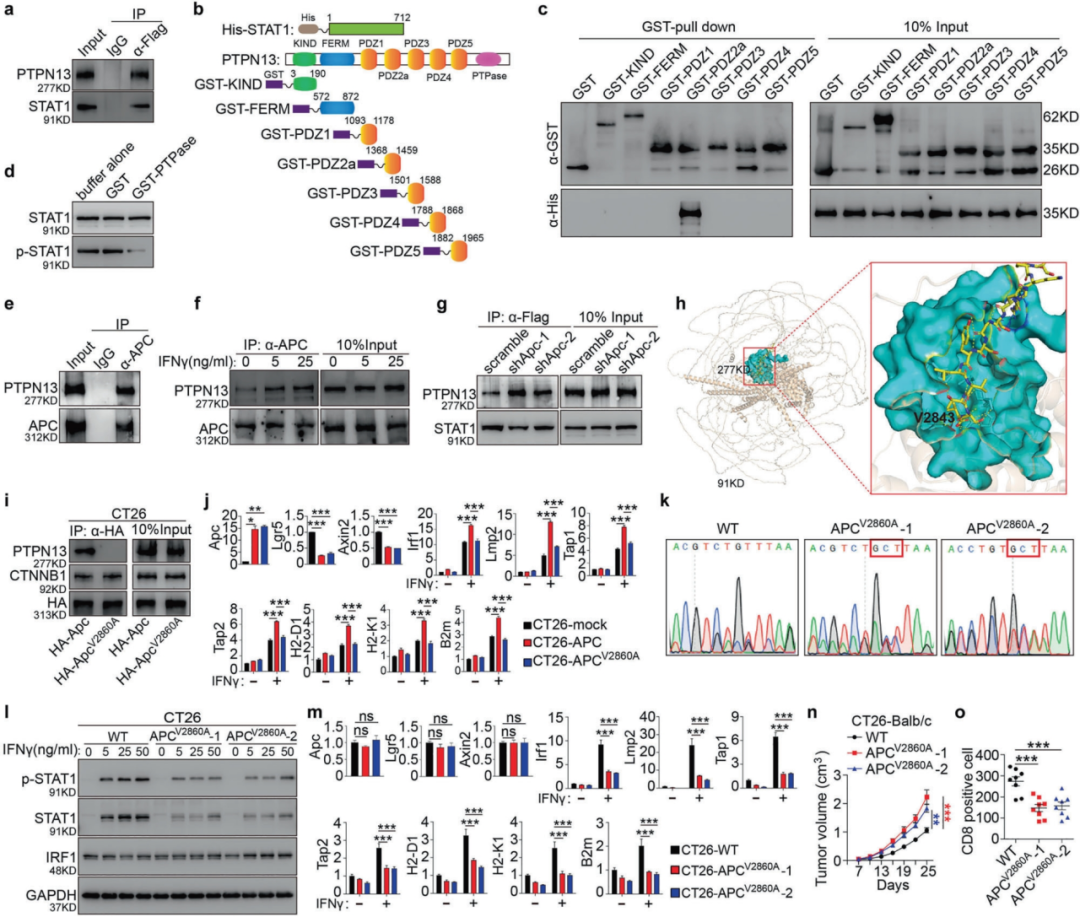
Previous studies have shown that PTPN13 participates in the dephosphorylation of STAT family members. The authors confirmed the STAT1-PTPN13 interaction by co-immunoprecipitation and verified that STAT1 directly binds to the PDZ2a domain of PTPN13. In vitro PTPase assays showed that STAT1 is a direct substrate of PTPN13, with PTPN13 dephosphorylating STAT1. Co-immunoprecipitation also indicated an APC-PTPN13 interaction, and IFNγ stimulation enhanced the formation of this complex. The authors therefore hypothesized that APC blocks the STAT1-PTPN13 interaction, a view corroborated by the enhanced PTPN13-STAT1 interaction in Apc knockout cells. Further investigation revealed that the C-terminal valine of APC is essential for its interaction with PTPN13, and that this interaction is critical for regulating immune evasion in CRC.
Figure 2 The C-terminal valine of APC is essential for PTPN13 binding and immune evasion in CRC
3. APC11 inhibits tumor growth and enhances the response to anti-PD1 therapy
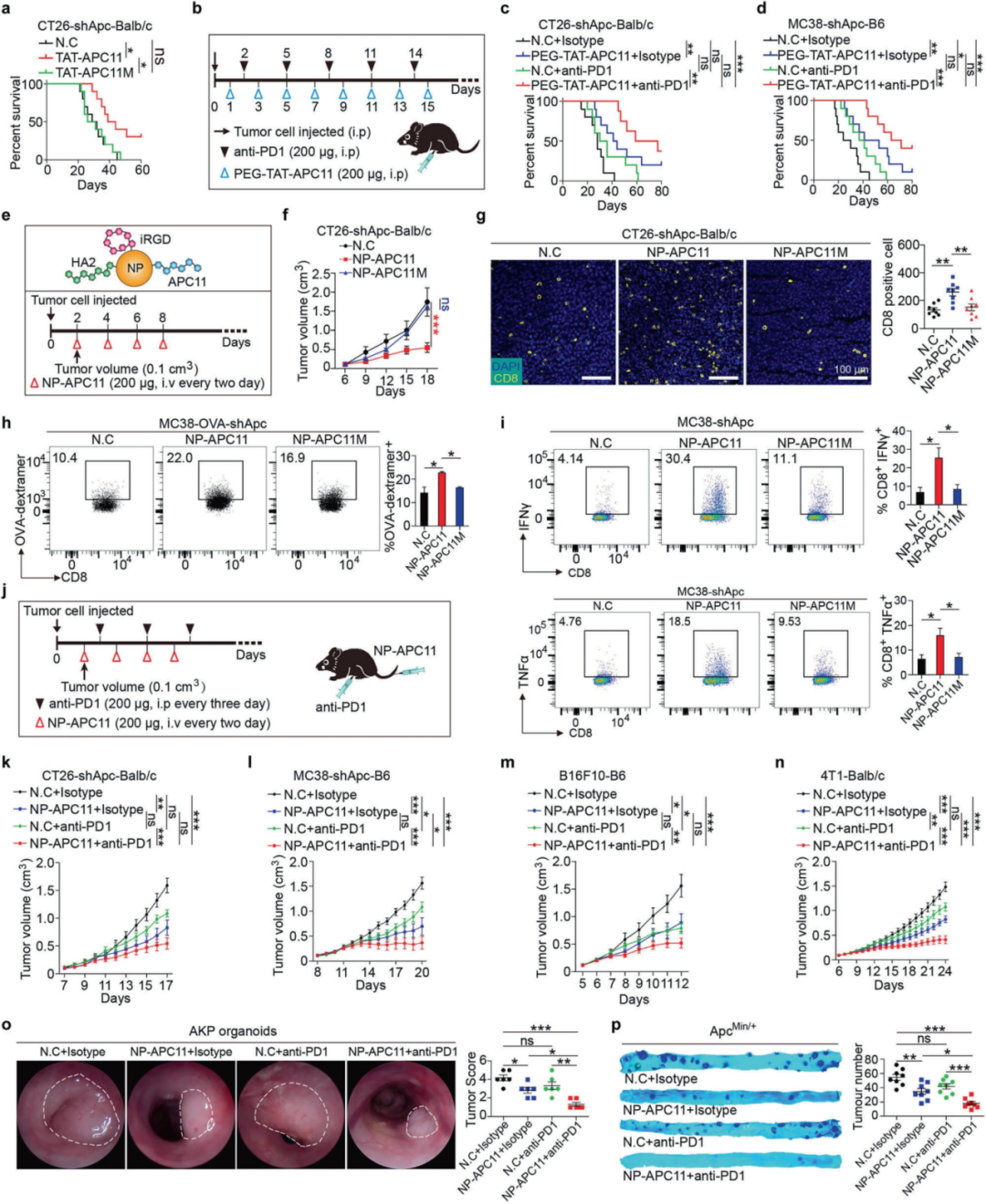
The authors found that APC11 (the last 11 amino acids at the C-terminus of APC) effectively blocks the PTPN13/STAT1 interaction and restores the inactivation of the IFNγ-STAT1-IRF1-MHC-I antigen presentation pathway caused by APC deficiency. Treatment with TAT-conjugated APC11 peptide (TAT-APC11) significantly improved the survival rate of tumor-bearing mice. To improve solubility and stability, the authors conjugated TAT-APC11 with PEG and evaluated the therapeutic potential of PEG-TAT-APC11; they found that in tumor mouse models, anti-PD1 monotherapy did not improve survival, whereas PEG-TAT-APC11 prolonged survival. The combination of PEG-TAT-APC11 and anti-PD1 further improved survival outcomes. To further optimize tumor targeting, the authors developed APC11-based nanoparticles (NP-APC11) and conjugated them with the tumor-penetrating peptide iRGD to improve selectivity, finding that NP-APC11 significantly inhibited tumor growth and increased CD8+ T cell infiltration. The authors also evaluated the efficacy of NP-APC11 combined with anti-PD1 in treating tumors, and found that NP-APC11 significantly inhibited tumor growth, and that NP-APC11 combined with anti-PD1 had a more effective therapeutic effect than anti-PD1 monotherapy. These results demonstrate the potential of APC11 alone or in combination with anti-PD1 as an effective therapeutic strategy for treating APC-deficient CRC.
Figure 3 APC11 inhibits tumor growth and enhances the response to anti-PD1 therapy
Conclusion
This study identifies PTPN13 as a key mediator of APC-driven immune evasion. Mechanistically, APC directly interacts with PTPN13, blocking its interaction with STAT1 and thereby inhibiting tumor progression. APC11 can effectively block the PTPN13-STAT1 interaction, restore STAT1 phosphorylation and reactivate the immune response against tumors; when APC11 is combined with anti-PD1 therapy, better tumor suppression is observed, providing new ideas for developing anti-tumor drugs for CRC patients.