Phytomedicine | Guangdong Provincial Hospital of Chinese Medicine Mo Xiumei team reveals Peitu Qingxin formula restores sphingolipid homeostasis in atopic dermatitis via the miR-30a/GAPR-1 axis
Ad-GAPR-1 Custom Adenovirus | Guangdong Provincial Hospital of Chinese Medicine Mo Xiumei Team Reveals Peitu Qingxin Formula Targets the miR-30a/GAPR-1 Axis to Ameliorate Atopic Dermatitis (Phytomedicine, IF 11.3)
Paper title: Peitu Qingxin formula ameliorates atopic dermatitis by targeting the multi-omics-informed miR-30a/GAPR-1 axis in sphingolipid metabolism
Journal: Phytomedicine (IF 11.3)
Client: Mo Xiumei, Li Hongyi and Yan Fenggen Team, Guangdong Provincial Hospital of Chinese Medicine
· WZBIO Support - Adenovirus ·
Gene information
GAPR-1: Golgi-associated plant pathogenesis-related protein 1
Sphingolipid metabolic dysregulation plays a key role in atopic dermatitis (AD), yet therapeutic options targeting this pathway remain limited. The traditional formula Peitu Qingxin (PTQX) has shown clinical efficacy, but its molecular mechanism has remained largely unclear. Recently, the team of Mo Xiumei, Li Hongyi and Yan Fenggen at Guangdong Provincial Hospital of Chinese Medicine published the paper Peitu Qingxin formula ameliorates atopic dermatitis by targeting the multi-omics-informed miR-30a/GAPR-1 axis in sphingolipid metabolism in Phytomedicine (IF 11.3). The study reveals the molecular mechanism by which PTQX ameliorates AD by targeting the miR-30a/GAPR-1 axis to restore skin sphingolipid homeostasis, providing a new strategy for AD therapy.
Research Results
1. miR-30a overexpression downregulates GAPR-1 and restores barrier integrity in AD-like 3D skin equivalents
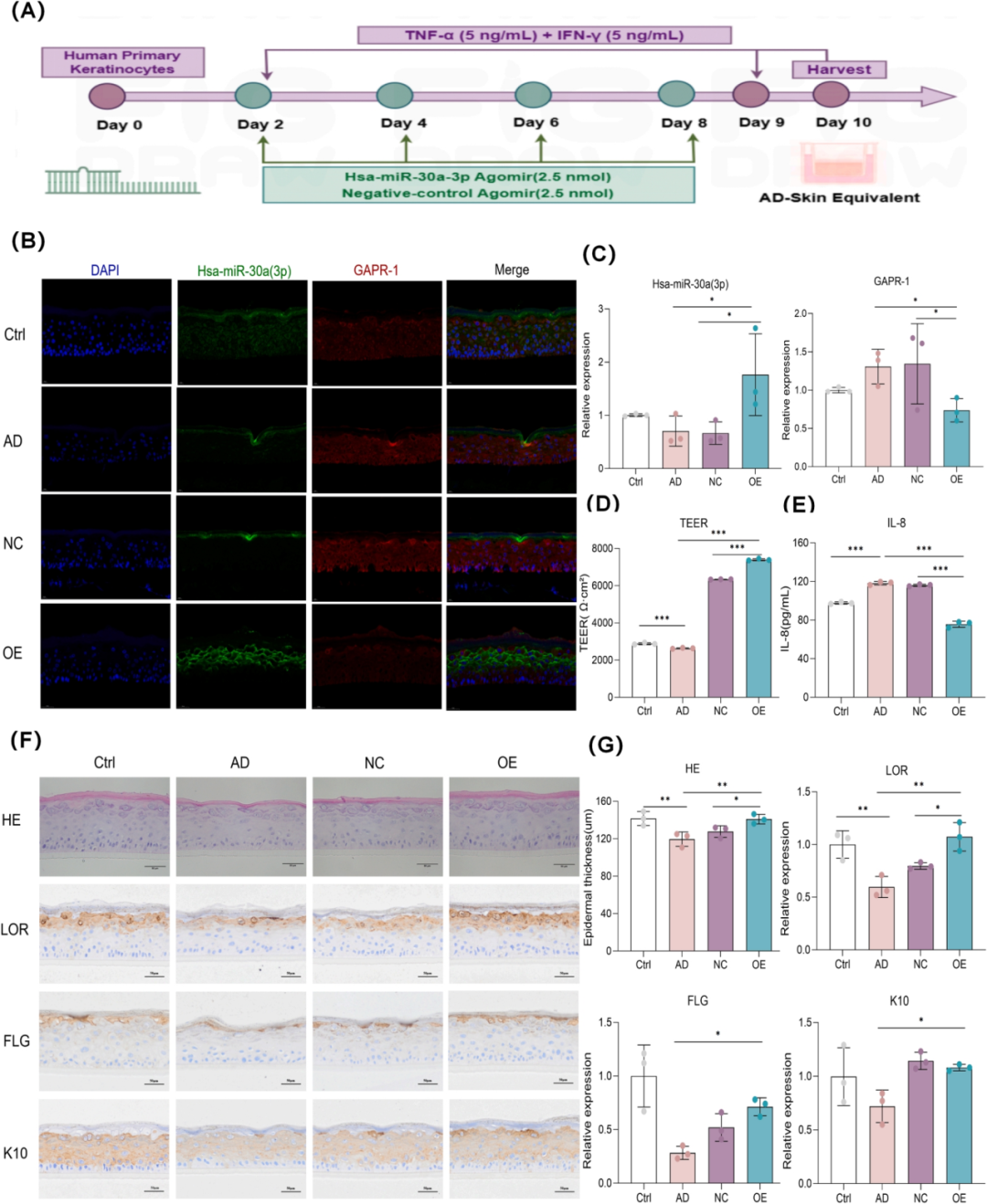
Using Mendelian randomization, clinical proteomics and dual-luciferase reporter assays, the authors identified miR-30a as a direct upstream regulator of GAPR-1, and further evaluated the therapeutic potential of miR-30a in AD; they found that in the miR-30a overexpression (OE) group, GAPR-1 protein expression was significantly reduced, TEER was significantly increased, and IL-8 secretion was significantly decreased. HE staining histological examination showed that in the OE group the epidermal thickness was restored, the layer of viable keratinocytes was increased, and the expression of barrier-related proteins was restored to near-normal levels. Together, these data indicate that overexpression of miR-30a in AD-like 3D skin equivalents effectively downregulates GAPR-1, restoring epidermal barrier integrity through functional, histological and molecular improvements.
Figure 1 miR-30a overexpression downregulates GAPR-1 and restores barrier integrity in AD-like 3D skin equivalents
2. Molecular docking predicts high affinity between PTQX components and GAPR-1, and epidermal GAPR-1 silencing ameliorates AD pathology and restores skin sphingolipid homeostasis
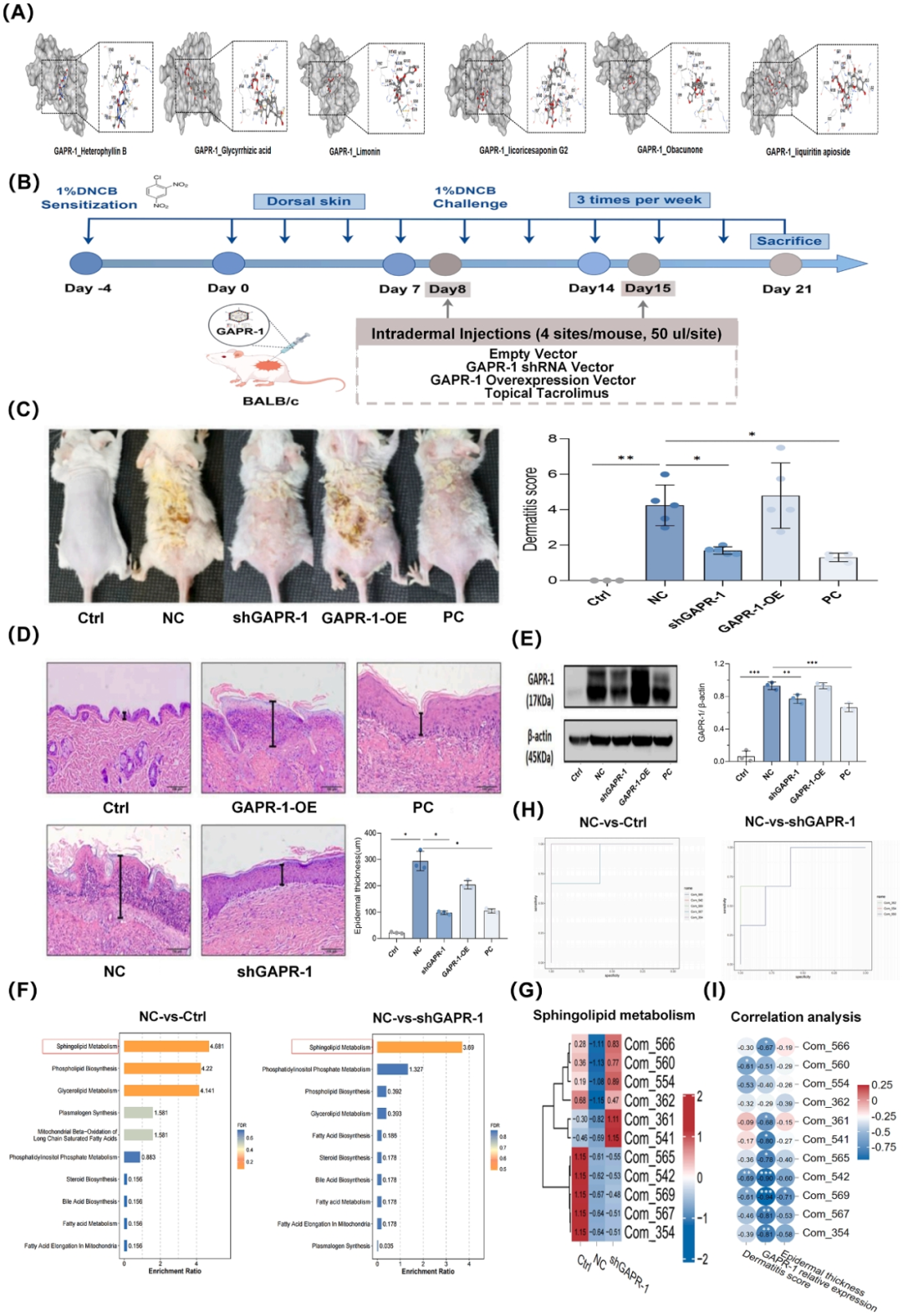
To investigate whether PTQX exerts its anti-AD effects through GAPR-1-mediated sphingolipid metabolism, the authors performed molecular docking analysis to predict potential interactions, and the results suggested that PTQX components can bind GAPR-1. Gene silencing experiments showed that mice in the Ad-shGAPR-1 group had significantly reduced dermatitis scores and decreased epidermal thickness. Bioinformatics analysis of targeted lipidomics showed that when the AD model group (NC) was compared with the normal control group (Ctrl) and the shGAPR-1 group respectively, the sphingolipid metabolism pathway ranked among the top enriched pathways in both comparisons; 11 sphingolipid metabolites were significantly downregulated in the AD model group, whereas after GAPR-1 silencing, most of these metabolites were restored. Pearson correlation analysis showed that 3 metabolites were significantly negatively correlated with dermatitis score, 8 metabolites were significantly negatively correlated with the relative expression level of GAPR-1, and 1 metabolite was significantly negatively correlated with epidermal thickness. In addition, hexosyl-dihydroceramide was significantly negatively correlated with both AD-related phenotypes and GAPR-1 expression levels. These data indicate that GAPR-1 gene silencing ameliorates AD-induced sphingolipid metabolic disorders. The predicted high binding affinity of PTQX components for GAPR-1 suggests that PTQX may alleviate AD pathology and restore sphingolipid homeostasis through GAPR-1. Mechanistic studies found that PTQX ameliorates AD inflammation by targeting the miR-30a-mediated signaling axis.
Figure 2 Molecular docking predicts high-affinity binding of PTQX components to GAPR-1, and epidermal GAPR-1 silencing ameliorates AD pathology and restores skin sphingolipid homeostasis
3. PTQX restores sphingolipid homeostasis in AD by regulating the miR-30a/GAPR-1 axis
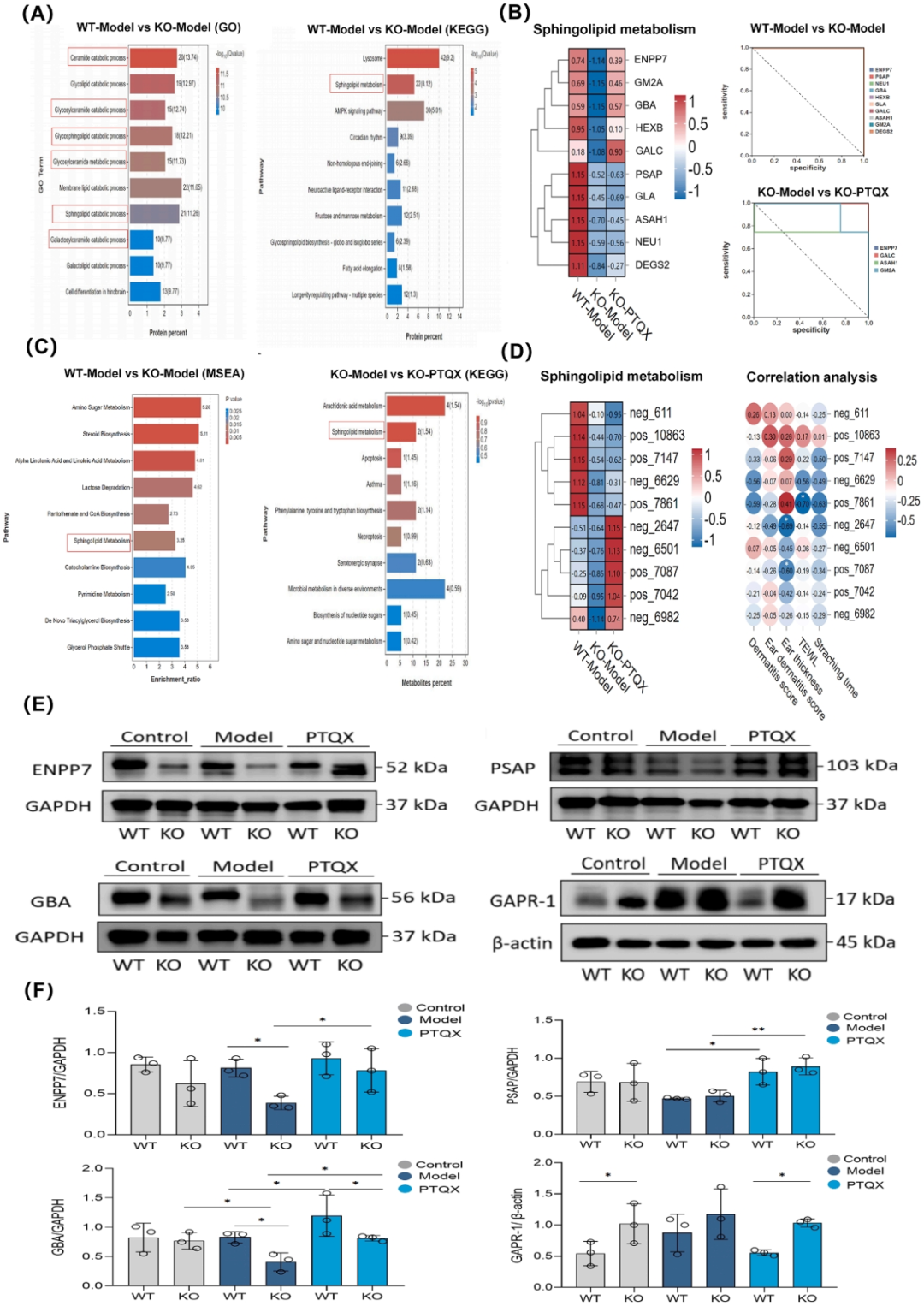
To investigate whether PTQX exerts its therapeutic effects by correcting the metabolic reprogramming caused by miR-30a deficiency, the authors performed proteomic and untargeted metabolomic analyses of skin lesions. They found that miR-30a deficiency (KO group) significantly disturbed lipid metabolism, with 10 proteins related to sphingolipid metabolism significantly downregulated, while PTQX treatment (KO-PTQX group) effectively reversed the suppression of most of these proteins. Gene set enrichment analysis (GSEA) showed that the downregulation of ceramide and sphingolipid metabolism pathways in KO-model mice was significantly blocked and restored by PTQX administration. Consistent with the proteomic data, untargeted metabolomic analysis indicated that sphingolipid metabolism was an important enriched pathway distinguishing KO-model mice from WT-model mice. The authors further examined key enzymes in the sphingolipid metabolic pathway. They found that KO group mice showed decreased expression of the sphingolipid enzymes ENPP7 and GBA and a trend toward increased GAPR-1 expression; the KO-PTQX group reversed these changes, significantly upregulating the expression of PSAP, ENPP7 and GBA. In addition, compared with the WT-PTQX group, the KO-PTQX group showed lower GBA expression but higher GAPR-1 protein expression, indicating that the mode of action of PTQX depends on miR-30a and its target gene GAPR-1. These findings indicate that PTQX ameliorates AD by targeting the miR-30a/GAPR-1 axis, thereby restoring the expression of proteins related to sphingolipid metabolism and normalizing sphingolipid homeostasis.
Figure 3 PTQX restores sphingolipid homeostasis in AD by regulating the miR-30a/GAPR-1 axis
Conclusion
This study establishes that the miR-30a/GAPR-1 axis can restore sphingolipid homeostasis and thereby ameliorate AD pathology. PTQX, as a multi-component herbal formula, can effectively act on this process, offering a promising therapeutic strategy consistent with the holistic principles of traditional medicine. It is expected that PTQX-derived active compounds or miR-30a mimics/GAPR-1 inhibitors could be developed to enhance multi-dimensional barrier repair through oral or transdermal administration.