Ling Zhao/Chengguo Zuo's Research Team at Zhongshan Ophthalmic Center, Sun Yat-sen University Reveals a New Mechanism by which LCN2 Regulates Pathological Angiogenesis in Diabetic Retinopathy
Adenovirus Packaging | Ad Overexpression of LCN2 | New Mechanism of Diabetic Retinopathy - WZBIO
Paper title: Knockdown of lipocalin 2 alleviates ocular angiogenesis in diabetic retinopathy by lowering endothelial cell energy metabolism
Journal: Cell Death Discovery (IF 10.4)
Collaborating partner: Ling Zhao and Chengguo Zuo's team, Zhongshan Ophthalmic Center, Sun Yat-sen University
Human umbilical vein endothelial cells (HUVECs), human retinal microvascular endothelial cells (HRECs)
Research Background
Diabetic retinopathy (DR) is increasingly regarded as a neurovascular degenerative disease characterized by early neuronal dysfunction, chronic metabolic stress, and progressive microvascular abnormalities. Clinical studies have found elevated levels of lipocalin 2 (LCN2) in patients with diabetic retinopathy, but the functional role of LCN2 in diabetic retinal vascular injury remains unclear. Studies have confirmed that LCN2 is a regulator of endothelial cell metabolic capacity in the diabetic retina, suggesting that pathological upregulation of LCN2 causes retinal microvascular dysfunction. Therefore, targeting LCN2-dependent metabolic regulatory pathways holds promise as a potential strategy for treating diabetic retinopathy.
Research Findings
1. LCN2 is upregulated in the retina of the OIR model and exacerbates pathological retinal angiogenesis
The research team found that LCN2 protein was significantly elevated in the retina of oxygen-induced retinopathy (OIR) mice, with markedly enhanced expression in the neovascularized areas. After generating LCN2 transgenic mice (LCN2-TG), the area of pathological neovascularization under the OIR model was significantly increased, while the avascular area showed no difference, indicating that LCN2 promotes pathological angiogenesis.
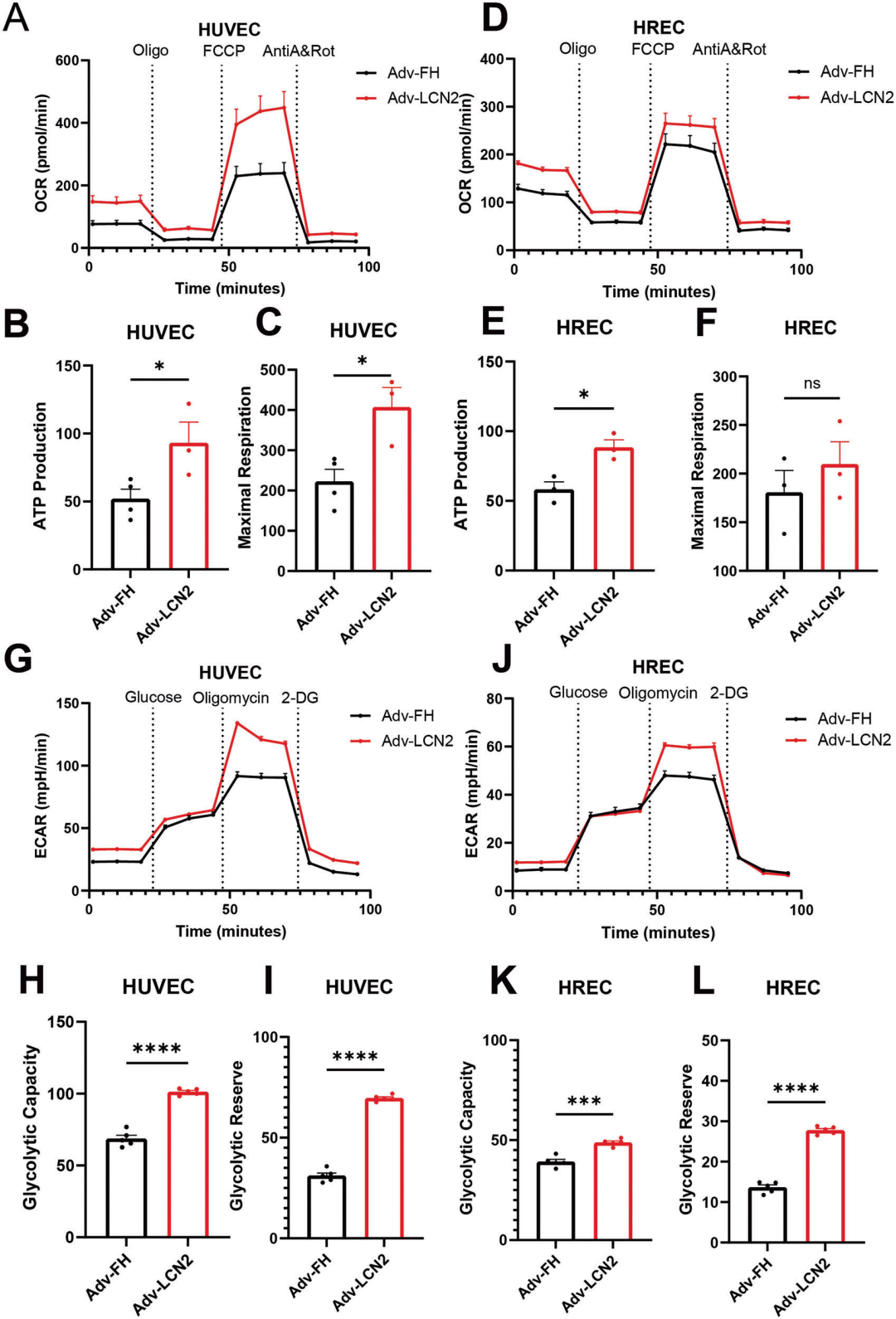
Using adenovirus to achieve LCN2 overexpression in endothelial cells in vitro, transcriptome data showed that adenovirus-mediated LCN2 upregulation significantly activated vascular sprouting pathways, while no significant enrichment was observed in cell division and proliferation-related pathways, suggesting that LCN2-driven angiogenesis is uncoupled from classic proliferative pathways. Seahorse metabolic analysis further confirmed that LCN2 overexpression significantly increased mitochondrial oxygen consumption rate (OCR), ATP production, and maximal respiration, as well as glycolytic capacity and glycolytic reserve (ECAR), in HUVECs and HRECs. These results indicate that LCN2 drives pathological angiogenesis by reshaping endothelial cell metabolic homeostasis. Further studies found that endothelial-specific knockout of Lcn2 inhibits developmental retinal angiogenesis, and this knockout does not affect vascular maturation and stability.
LCN2 upregulation promotes endothelial cell energy metabolism
2. Downregulation of LCN2 inhibits angiogenesis by blocking endothelial cell proliferation and migration
Seahorse metabolic assays showed that after LCN2 knockdown, endothelial cell glycolysis and mitochondrial oxidative phosphorylation decreased synchronously, ATP generation capacity was weakened, and cellular metabolic supply was limited. In in vitro tube formation assays, endothelial tube length and the number of junction points were markedly reduced, and vascular sprouting capacity was impaired; meanwhile, cell proliferation was inhibited while apoptosis showed no obvious change, indicating that LCN2 knockdown exerts anti-angiogenic effects mainly by hindering proliferation and migration.
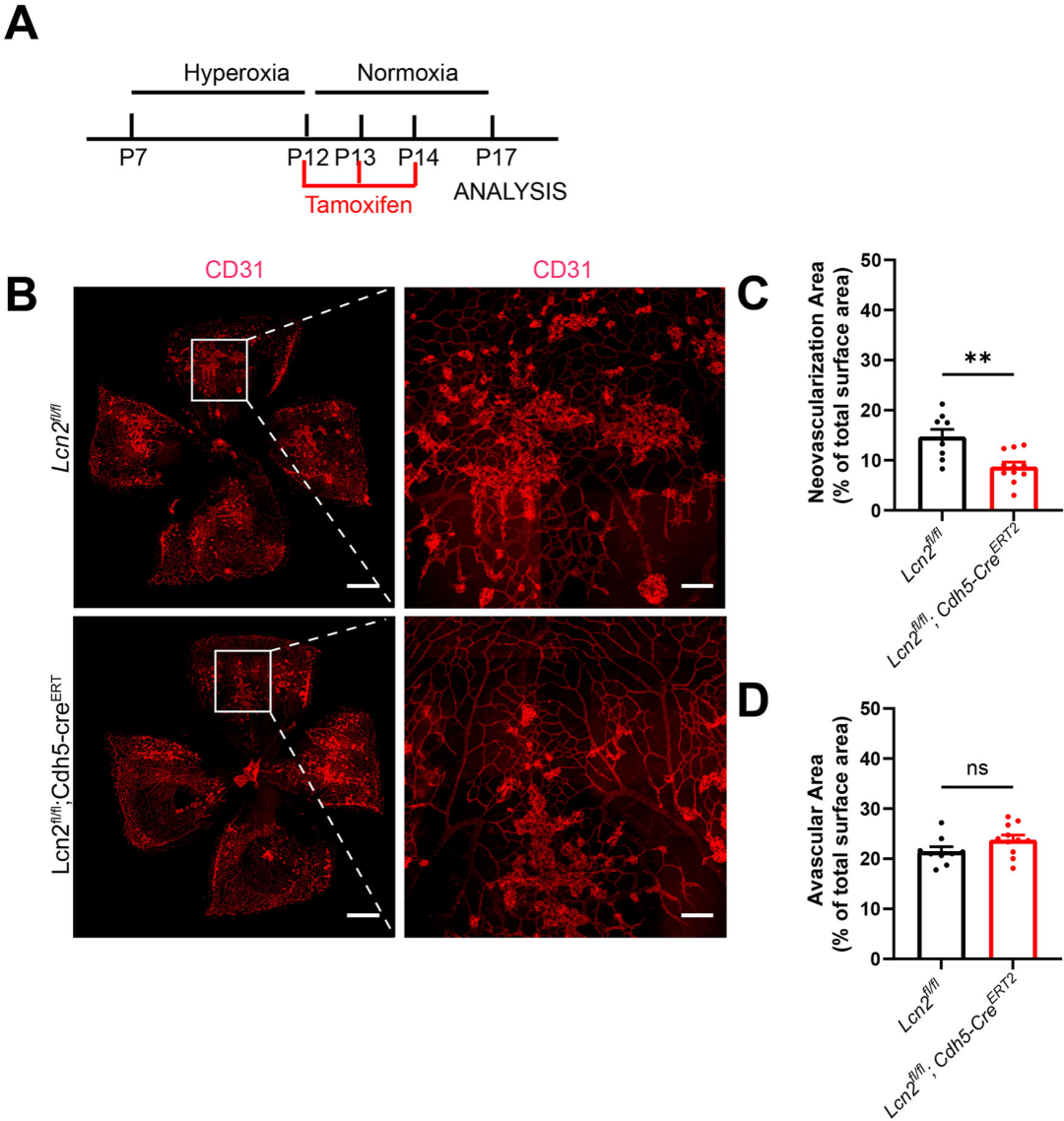
The authors further injected tamoxifen into OIR mice at P12-P14 to induce endothelial-specific knockout of Lcn2, and analysis of retinal flat mounts at P17 revealed that the area of pathological neovascular tufts in Lcn2fl/fl; Cdh5-Cre mice was significantly reduced compared with controls. Combined with the previous finding that vascular structural stability is unaffected during retinal development, this suggests that targeting endothelial LCN2 can alleviate pathological neovascularization without compromising vascular integrity.
Knockout of LCN2 in endothelial cells reduces pathological retinal angiogenesis in the OIR model
Conclusions
In summary, this study confirms that LCN2 is a key molecule regulating endothelial cell metabolic capacity during retinal angiogenesis. Pathological upregulation of LCN2 enhances endothelial cell energy metabolism, thereby promoting vascular sprouting and neovascular growth; reducing LCN2 expression imposes metabolic restriction that suppresses pathological angiogenesis without compromising vascular integrity. Therefore, targeting LCN2-dependent metabolic regulation holds promise as a promising therapeutic strategy for retinal neovascular diseases.