Novel obesity-linked endometrial infertility mechanism: Wei Zhaolian, Zhang Dong & He Ye, Anhui Med Univ, Autophagy (IF18.6)
Lv-SNCA & AAV-STUB1 Custom Lentivirus/AAV | Anhui Medical University Wei Zhaolian Team Reveals Obesity Impairs Endometrial Receptivity via the SNCA-STUB1-TFEB Axis (Autophagy, IF 18.6)
Paper title: SNCA/synuclein alpha impairs endometrial receptivity in obesity by disrupting STUB1-TFEB-mediated autophagy
Journal: Autophagy (IF 18.6)
Client: Wei Zhaolian, Zhang Dong and He Ye Team, The First Affiliated Hospital of Anhui Medical University
Obesity is widely recognized as a key factor driving impaired endometrial receptivity and consequent infertility; however, the molecular mechanisms underlying endometrial dysfunction remain incompletely elucidated. Recently, the team of Wei Zhaolian, Zhang Dong and He Ye at the First Affiliated Hospital of Anhui Medical University published the paper SNCA/synuclein alpha impairs endometrial receptivity in obesity by disrupting STUB1-TFEB-mediated autophagy in Autophagy (IF 18.6). The study reveals for the first time a novel mechanism whereby obesity-driven SNCA overexpression impairs endometrial receptivity by suppressing STUB1-TFEB-mediated autophagy, and positions the SNCA-STUB1-TFEB axis as a potential therapeutic target for obesity-related endometrial infertility.
Research Results
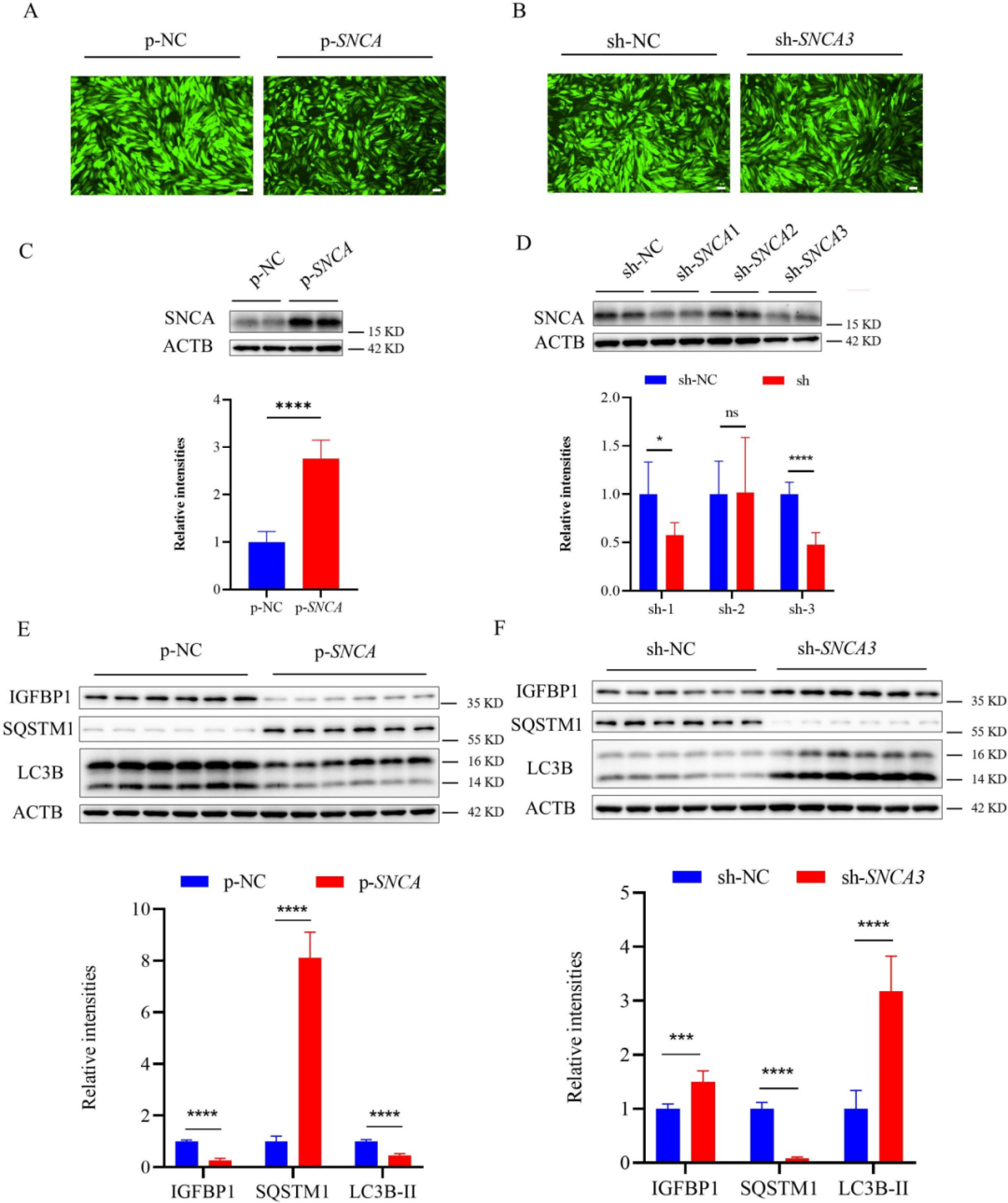
1. SNCA inhibits ESC decidualization by interfering with autophagy
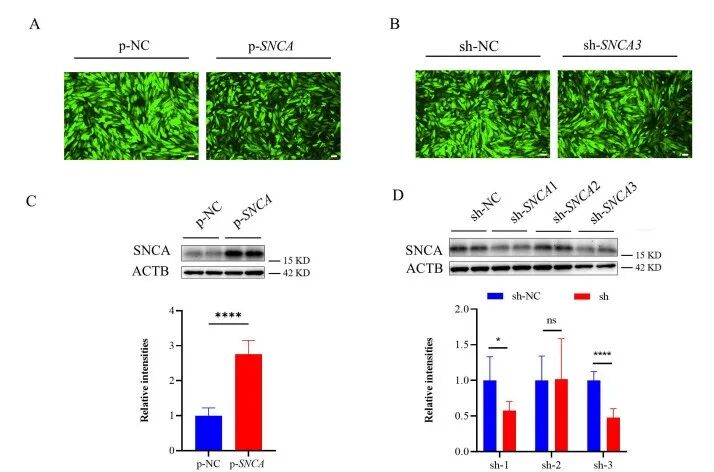
The authors found that obesity-related impairment of endometrial receptivity is associated with SNCA upregulation and autophagic dysfunction, and that impaired autophagy may be a key mechanism of obesity-related decline in endometrial receptivity. To investigate whether SNCA regulates autophagy, the authors established SNCA overexpression and knockdown models in ESCs using lentivirus. Compared with the control group, IGFBP1 and LC3B-II were decreased and SQSTM1 accumulated in ESCs overexpressing SNCA. Conversely, SNCA knockdown enhanced ESC decidualization, increased IGFBP1 and LC3B-II levels, and decreased SQSTM1 levels, indicating enhanced autophagic flux. These results indicate that SNCA overexpression impairs autophagic flux and thereby weakens the decidualization capacity of ESCs, whereas SNCA knockdown enhances autophagic activity and improves the decidualization potential of ESCs. Mechanistically, SNCA directly interacts with the E3 ubiquitin ligase STUB1 in ESCs, competitively disrupting the binding of STUB1 to phosphorylated TFEB (p-TFEB), which leads to attenuated ubiquitination and degradation of p-TFEB, accumulation of p-TFEB, and consequent inhibition of autophagic flux and decidualization.
Figure 1 SNCA impairs ESC decidualization by inhibiting autophagy
2. SNCA promotes obesity-related decline in endometrial receptivity by inhibiting STUB1-TFEB-mediated autophagy
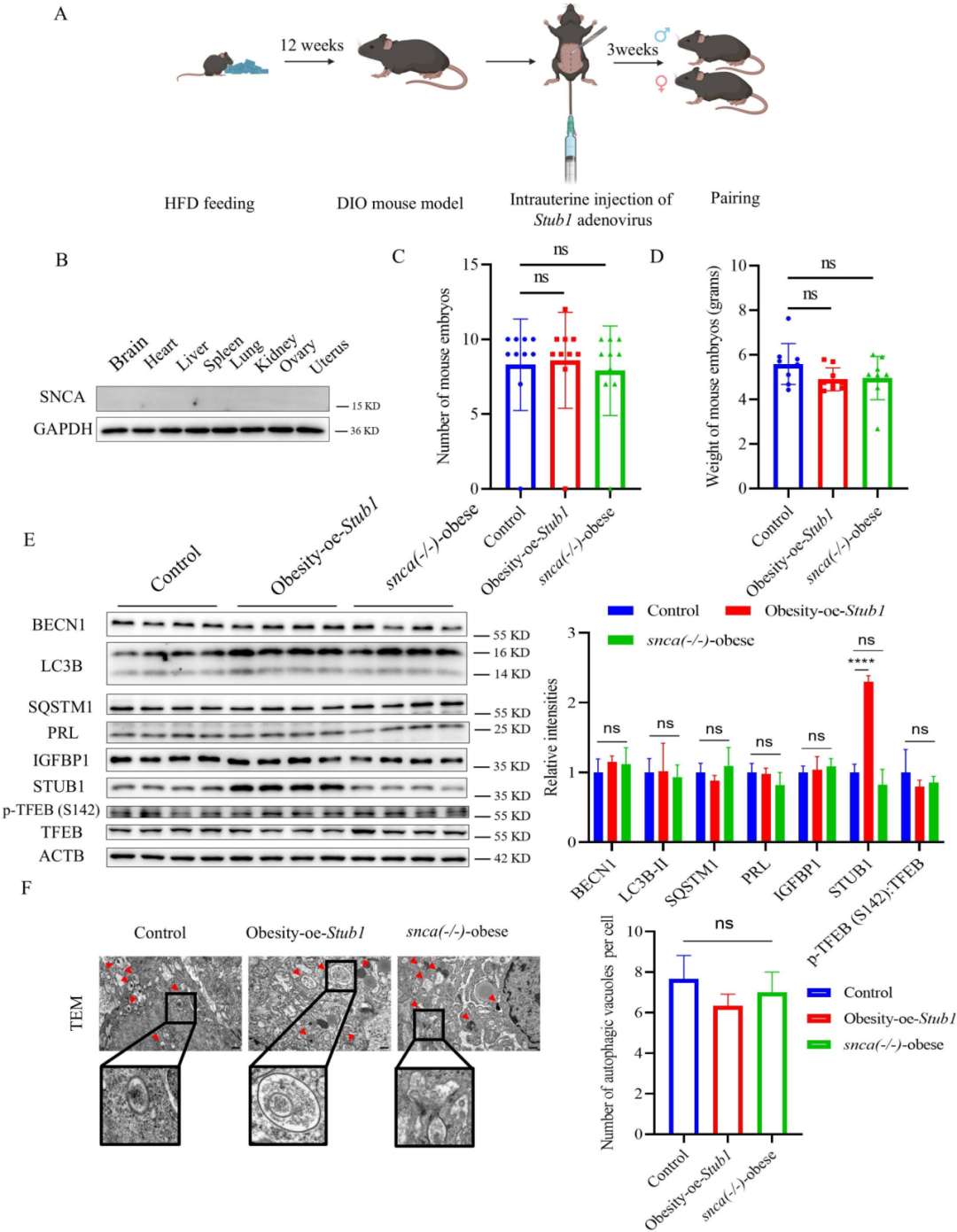
To validate in vivo that SNCA regulates ESC autophagy and decidualization and modulates endometrial receptivity by competing with STUB1 for p-TFEB, the authors established four mouse models: SNCA whole-gene knockout mice, high-fat diet-induced obese (DIO) mice, obese mice with endometrial STUB1 overexpression, and normal-weight mice with endometrial SNCA overexpression. Experiments showed that in mice overexpressing SNCA in the endometrium, both the number and mean weight of decidualization reaction foci were reduced, the number of autophagosomes in decidual tissue was decreased, and PRL, IGFBP1 and autophagy levels were lowered. In contrast, in high-fat diet-fed SNCA knockout mice, none of the above indicators differed significantly from the normal diet group, indicating that SNCA deficiency alleviates obesity-induced autophagic dysfunction and impaired decidualization. The authors further overexpressed STUB1 in the obesity model, and the results showed that the number and weight of decidualization reaction foci returned to normal levels, decidualization markers, autophagy-related proteins and the p-TFEB (S142):TFEB ratio were restored to normal, and the number of autophagosomes was also recovered. These experiments indicate that under obese conditions, SNCA impairs autophagic flux by disrupting the interaction between STUB1 and p-TFEB, thereby affecting decidualization and endometrial receptivity.
Figure 2 SNCA promotes obesity-related decline in endometrial receptivity by inhibiting STUB1-TFEB-mediated autophagy
3. Metformin improves endometrial receptivity and autophagy in obese mice
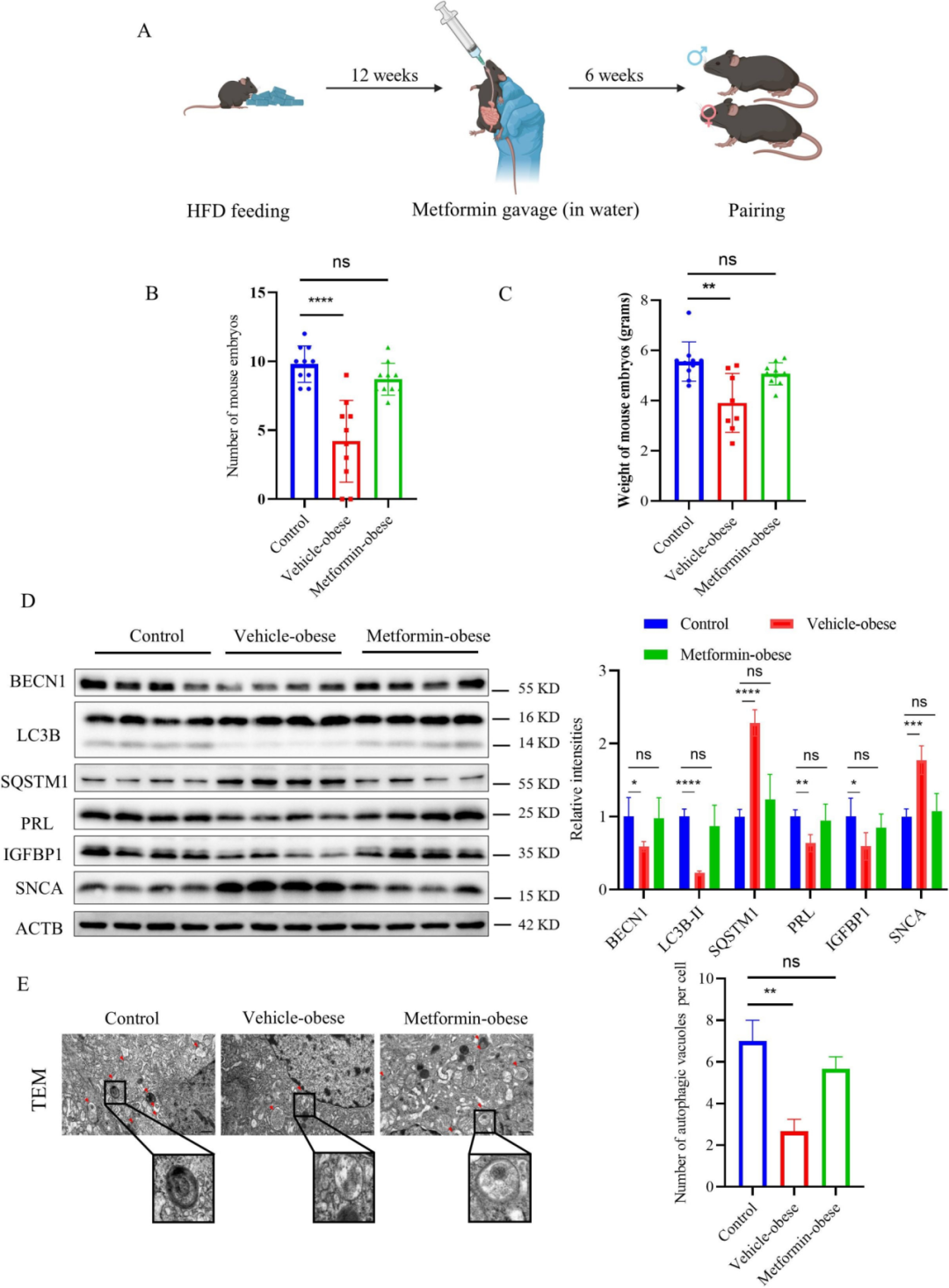
Based on the ability of metformin to reduce SNCA aggregation at neuronal synapses and to regulate autophagy, the authors hypothesized that metformin might restore the decreased endometrial autophagy caused by SNCA overexpression. To test this hypothesis, the authors administered metformin to DIO mice by gavage for 6 consecutive weeks. The results showed that metformin intervention restored the number and weight of decidualization reaction foci in obese mice on pregnancy day 7 to levels comparable to the normal diet control group, reversed the levels of SNCA, IGFBP1 and PRL, and restored the expression of autophagy-related proteins and the number of autophagosomes. Further investigation revealed that metformin lowers intrauterine SNCA levels by improving systemic metabolic status under obese conditions, ultimately enhancing autophagy and improving endometrial receptivity.
Figure 3 Metformin improves endometrial receptivity and autophagy in an obese mouse model
Conclusion
This study reveals a novel pathogenic mechanism: obesity-driven SNCA overexpression impairs endometrial receptivity by suppressing STUB1-TFEB-mediated autophagy, and the SNCA-STUB1-TFEB axis is positioned as a potential therapeutic target for obesity-related endometrial infertility. These insights not only deepen the understanding of the molecular basis of infertility in obese women, but also open new avenues for developing targeted interventions to improve uterine health and pregnancy outcomes.