IF 11.4 | Yi Ding / Yuan Fang / Yizhi Zhan Team at Nanfang Hospital, Southern Medical University Reveals How ATM Regulates Radiosensitivity in Colorectal Cancer
Custom shRNA Lentivirus | Nanfang Hospital, Southern Medical University Yi Ding Team Reveals That Targeting ATM Enhances the Radiation Sensitivity of Colorectal Cancer (Journal of Advanced Research, IF 11.4)
Paper title: Targeting ATM enhances radiation sensitivity of colorectal cancer by potentiating radiation-induced cell death and antitumor immunity
Journal: Journal of Advanced Research (IF 11.4)
Collaborating partner: Nanfang Hospital, Southern Medical University, Yi Ding, Yuan Fang and Yizhi Zhan
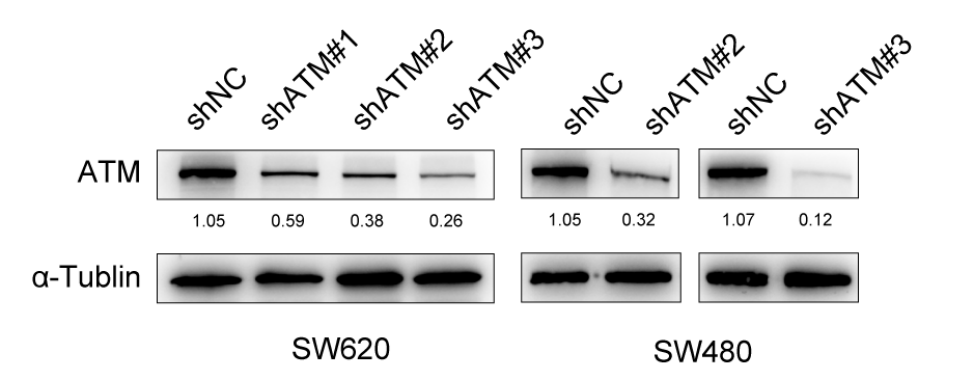
Lv-shATM knocks down ATM expression in SW620 and SW480 cells
Research Background
Colorectal cancer (CRC) is one of the leading causes of cancer-related morbidity and mortality worldwide. Radiotherapy (RT) is a cornerstone in the treatment of locally advanced rectal cancer, but its efficacy in colorectal cancer is often limited by tumour resistance to ionising radiation (IR). The ATM protein repairs double-strand DNA breaks in the DNA damage response pathway, yet whether ATM mediates other mechanisms that contribute to radioresistance remains insufficiently studied. The team of Yi Ding, Yuan Fang and Yizhi Zhan at Nanfang Hospital, Southern Medical University recently published Targeting ATM enhances radiation sensitivity of colorectal cancer by potentiating radiation-induced cell death and antitumor immunity in Journal of Advanced Research (IF 11.4), finding that ATM inhibition significantly enhanced radiation sensitivity both in vitro and in vivo, and that targeting ATM enhanced radiation-induced tumour cell death and antitumour immune responses, offering a promising strategy to overcome radioresistance in colorectal cancer.
Research Results
1. Inhibiting ATM enhances the radiation sensitivity and antitumour immunity of colorectal cancer
The authors found that ionising radiation significantly activated ATM in CRC cells, indicating that ATM is a promising target for improving the efficacy of radiotherapy in colorectal cancer. They then used Lv-shATM and Lv-shNC to generate ATM-knockdown stable cell lines in SW620 and SW480 cells, and found that ATM downregulation significantly enhanced the radiation sensitivity of CRC cells. AZD0156 is an ATM inhibitor; compared with the control group, AZD0156 treatment resulted in lower SF2, D0 and Dq values in the cells, indicating increased radiation sensitivity. In vivo experiments showed that AZD0156 treatment had little effect on the growth of SW480 and SW620 tumours, that radiotherapy significantly slowed tumour growth, and that the combined treatment further enhanced this effect. IHC staining showed that AZD0156 alone had no effect on CD8+ T cell infiltration, that radiotherapy increased it, and that the combined treatment further enhanced CD8+ T cell infiltration. These results indicate that targeting ATM increases the radiosensitivity of colorectal cancer cells both in vitro and in vivo, and that the ATM inhibitor AZD0156 may enhance antitumour immune responses and improve tumour radiosensitivity by increasing CD8+ T cell infiltration.
Figure 1. Inhibiting ATM enhances the radiation sensitivity and antitumour immunity of colorectal cancer
2. Targeting ATM activates the STING pathway by increasing cytoplasmic DNA levels after radiation
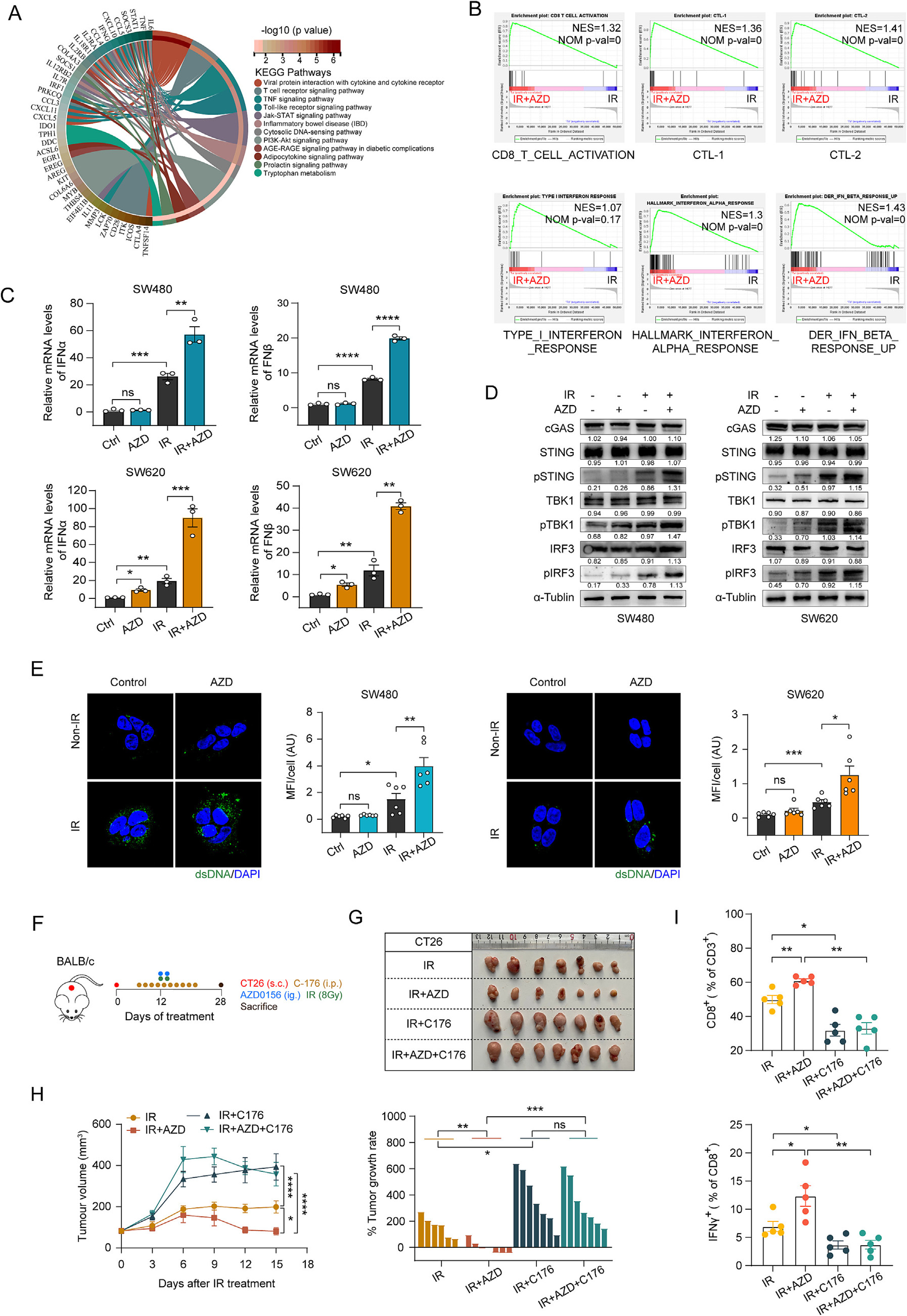
To investigate how ATM inhibition enhances antitumour immunity after radiation, the authors performed transcriptome sequencing, and gene set enrichment analysis revealed that the cGAS-STING signalling pathway plays an important role in mediating the radiation-induced antitumour effect. The gene set enrichment analysis results also revealed enrichment of CD8 T cell activation-related pathways, the CTL-1 and CTL-2 pathways and multiple interferon-related pathways in the combination treatment group, indicating activation of immune-related pathways and enhancement of the type I interferon response. qRT-PCR validation in vitro and in vivo confirmed that the combination treatment increased the expression of interferon genes. Western blot analysis showed that IR activated the STING pathway and that the combination treatment further enhanced this activation. The authors also assessed cytoplasmic dsDNA levels after radiation and ATM inhibition, and found that radiation increased cytoplasmic dsDNA and that this effect was further enhanced by the combination treatment. Flow cytometry analysis showed that after STING inhibition CD8+ T cells were reduced and CD8+ T cell activation was decreased, indicating suppressed antitumour immunity. These results suggest that inhibiting ATM may enhance activation of STING signalling by increasing cytoplasmic DNA, thereby promoting the expression of the downstream chemokines CXCL10/CXCL11 and thus increasing the infiltration of CD8+ T cells into the tumour microenvironment.
Figure 2. Targeting ATM activates the STING pathway by increasing cytoplasmic DNA levels after radiation
3. Triple therapy combining radiotherapy with AZD0156 and anti-PD-L1 blockade significantly enhances antitumour activity
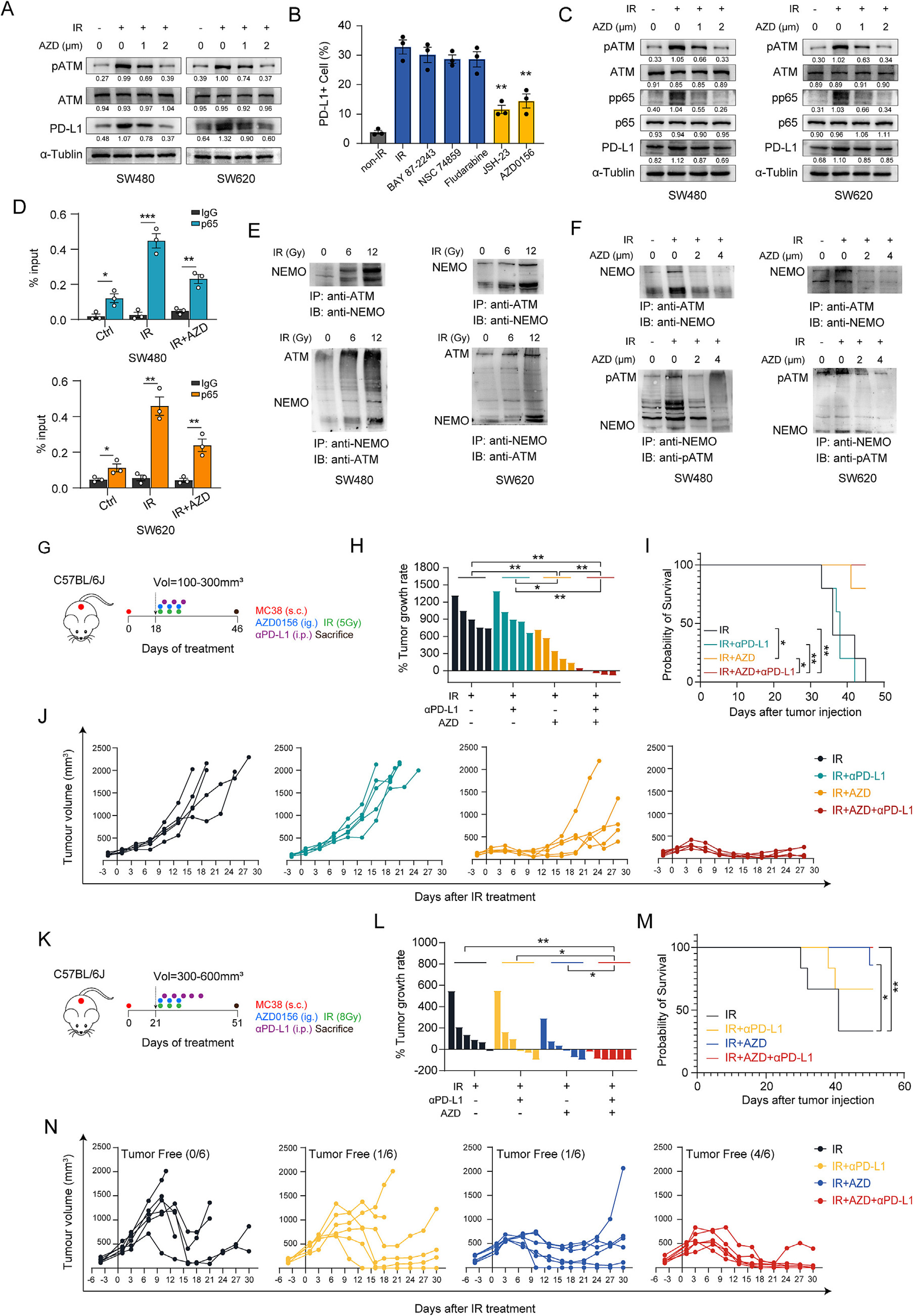
The authors used tumour-bearing mice to evaluate the efficacy of the combination treatment. Mice implanted with CT26 cells were divided into four treatment regimens: radiotherapy alone; radiotherapy plus anti-PD-L1 treatment; AZD0156 plus radiotherapy; and AZD0156 plus radiotherapy plus anti-PD-L1 treatment. The results showed that the combination of anti-PD-L1 treatment, radiotherapy and AZD0156 significantly inhibited tumour growth without causing additional liver or cardiac toxicity in the mice. The authors also used MC38 cells in a subcutaneous tumour model in C57 mice to verify the efficacy of the triple therapy; radiotherapy combined with AZD0156 had a limited effect on tumour control, but the addition of αPD-L1 significantly improved the outcome. Large tumours respond poorly to treatment, so the authors used a subcutaneous MC38 tumour model and treated the mice when tumour volume reached 300-600 mm3 to study the efficacy of the combination treatment on large tumours, finding that combining an ATM inhibitor with radiotherapy and ICI effectively controlled the growth of large, treatment-resistant tumours and significantly improved the response rate and survival of mice with a high tumour burden.
Figure 3. Triple therapy combining radiotherapy with AZD0156 and anti-PD-L1 blockade significantly enhances antitumour activity
Conclusions
This study highlights the importance of targeting radiation-induced ATM activation for enhancing the radiosensitivity of colorectal cancer. AZD0156 inhibits ATM, increases the radiosensitivity of cells, reduces tumour growth and enhances antitumour immunity. Combining radiotherapy with an ATM inhibitor and immune checkpoint blockade achieved effective tumour control in mouse models and may be an effective strategy for improving the outcomes of colorectal cancer, offering a promising approach to overcoming resistance to radiotherapy in colorectal cancer and improving clinical results.