A new therapeutic target for triple-negative breast cancer: the teams of Zhanhai Su, Shanshan Qin and Jianing Wang reveal the key mechanism by which EMP1 regulates the TNBC tumour microenvironment
4-in-1 shRNA Lentivirus Packaging Case | Zhanhai Su, Shanshan Qin and Jianing Wang teams reveal that EMP1 mediates TNBC-CAF crosstalk to promote tumour progression (Cell Death & Disease, IF 8.1)
Paper title: Tumor cell-derived EMP1 is essential for cancer-associated fibroblast infiltration in tumor microenvironment of triple-negative breast cancer
Journal: Cell Death & Disease (IF 8.1)
Collaborating partner: Qinghai University (Zhanhai Su), Hubei University of Medicine (Shanshan Qin) and Shiyan People's Hospital (Jianing Wang)
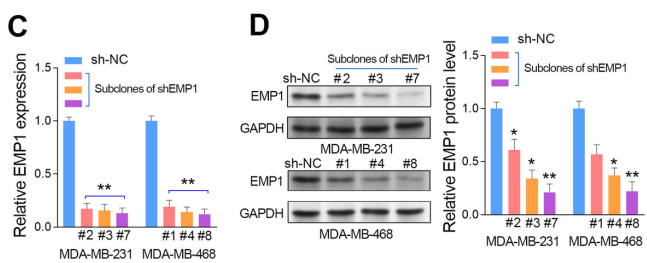
Knockdown efficiency of Lv-4 in 1-shEMP1 in MDA-MB-231 and MDA-MB-468 cells
Research Background
Breast cancer (BC) is one of the most common malignant tumours in women, and triple-negative breast cancer (TNBC) is an aggressive, highly metastatic subtype that lacks effective therapeutic targets. Targeting cancer-associated fibroblasts (CAFs) in the tumour microenvironment (TME) is regarded as an effective strategy for patients with TNBC. Aberrant expression of epithelial membrane protein 1 (EMP1) plays a crucial role in tumour progression and metastasis; however, the biological role and molecular mechanism of EMP1 in TNBC remain unclear. On 27 February 2025, the teams of Professor Zhanhai Su (Qinghai University), Associate Professor Shanshan Qin (Hubei University of Medicine) and Professor Jianing Wang (Shiyan People's Hospital) published an article entitled "Tumor cell-derived EMP1 is essential for cancer-associated fibroblast infiltration in tumor microenvironment of triple-negative breast cancer" in Cell Death & Disease (IF 8.1), showing that EMP1 acts as an oncogene in TNBC by mediating crosstalk between TNBC cells and CAFs, and that targeting EMP1 to inhibit CAF infiltration may be a promising strategy for the treatment of TNBC.
Research Results
1. EMP1 is highly expressed in TNBC patients and positively correlates with CAF infiltration
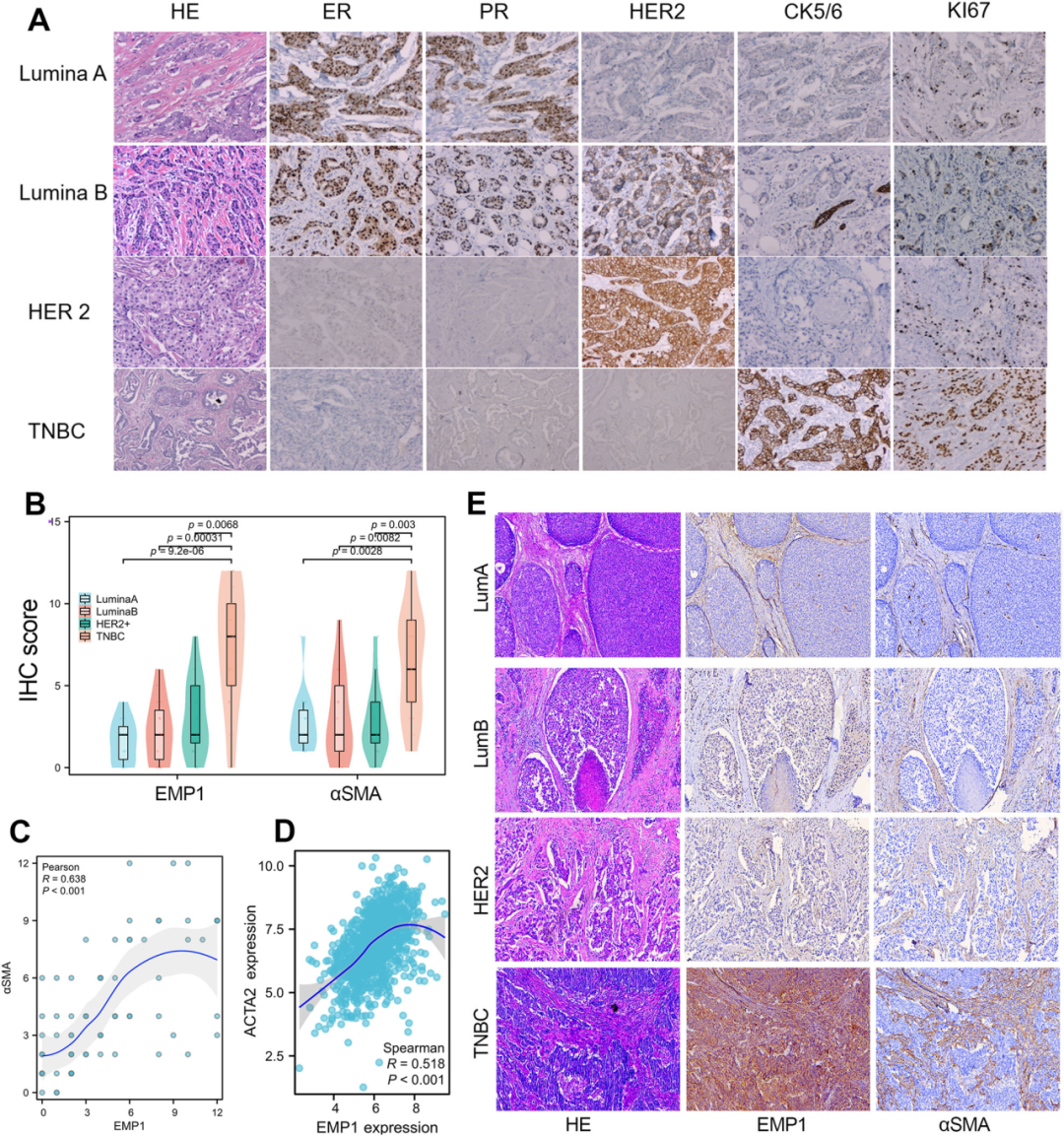
By analysing the clinical information of BC patients in the TCGA cohort, the researchers found that EMP1 correlated with CAF infiltration and predicted poor BC prognosis, suggesting that EMP1 may act in the tumour microenvironment of BRCA. To further verify the expression pattern of EMP1 in BC, the researchers performed immunohistochemical (IHC) staining with an EMP1 antibody and found that EMP1 and αSMA protein levels in TNBC patients were higher than those in patients with the other three BC subtypes. In addition, EMP1 protein levels were highly positively correlated with αSMA protein levels. Consistently, expression analysis based on bulk RNA-seq data also revealed a significant positive correlation between EMP1 mRNA levels and ACTA2 (αSMA) expression. These results indicate that EMP1 expression is positively correlated with CAF infiltration in BC. Furthermore, consecutive sections of BC tissues of different subtypes were stained by IHC with anti-EMP1 and anti-αSMA antibodies. The results showed strong co-expression and co-localisation of EMP1 and SMA proteins in BC, especially in TNBC tissues.
Figure 1. EMP1 is highly expressed in TNBC and correlates with CAF infiltration
2. EMP1 positively regulates the proliferation, migration and invasion of TNBC cells
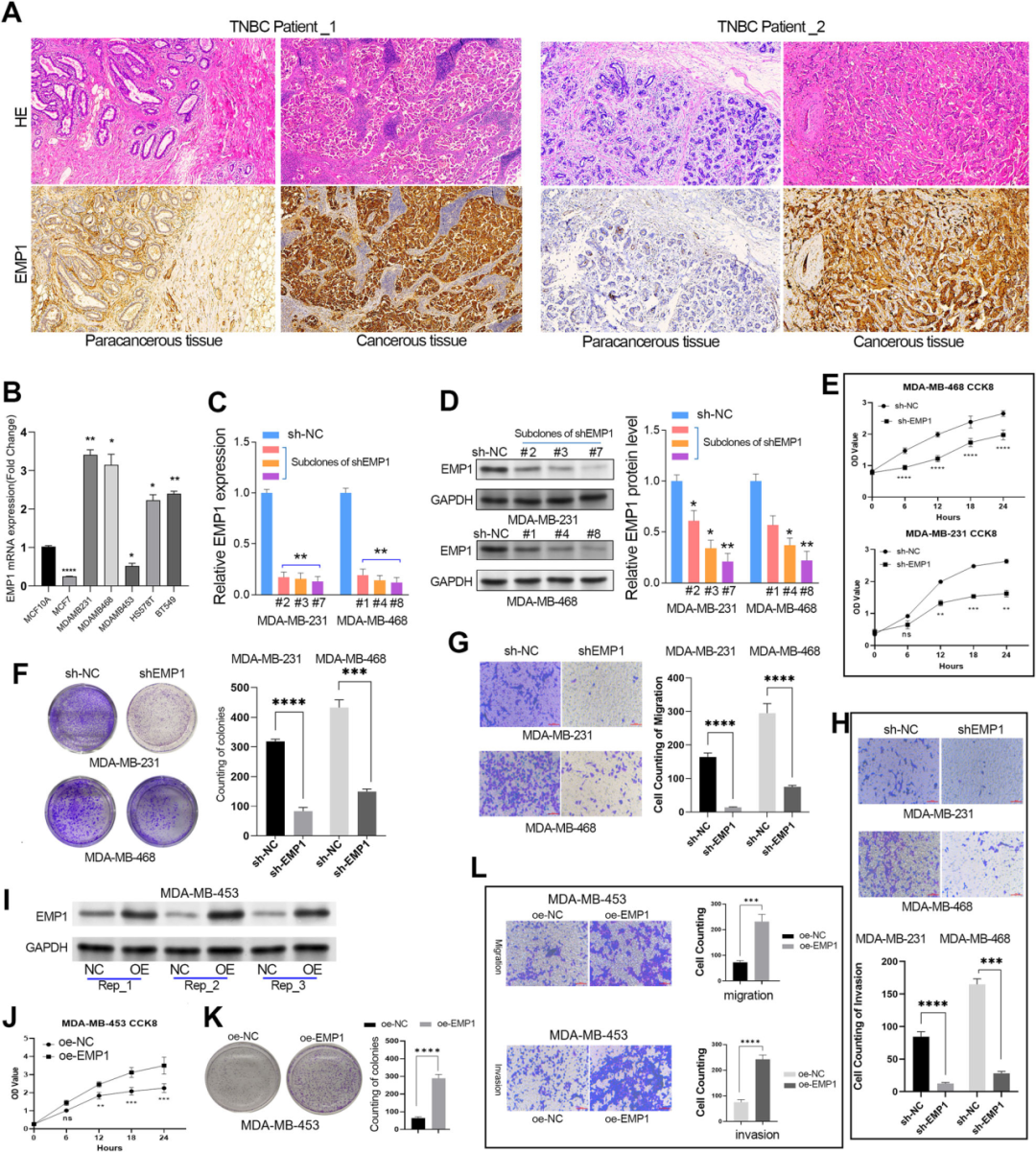
The researchers found that EMP1 was overexpressed in TNBC tissues, indicating that EMP1 may be a pro-tumour factor in TNBC. To test this hypothesis, gain- and loss-of-function studies were carried out in TNBC cell lines. MDA-MB-453 cells, which express relatively low levels of EMP1, were used to establish EMP1-overexpressing cell lines, whereas EMP1-knockdown cell lines were established in MDA-MB-231 and MDA-MB-468 cells, which express relatively high levels of EMP1. To achieve efficient and specific knockdown of EMP1, the researchers constructed a 4-in-1 shRNA lentivirus targeting EMP1 and confirmed its knockdown efficiency by qRT-PCR and western blot. Knockdown of EMP1 markedly inhibited the growth rate, proliferation, migration and invasion of TNBC cell lines. Conversely, overexpression of EMP1 markedly promoted the proliferation, migration and invasion of MDA-MB-453 cells. Together, these data indicate that EMP1 acts as an oncogene in TNBC cells. The biological role of EMP1 knockdown in vivo was investigated using a xenograft mouse model, and EMP1 knockdown significantly inhibited the in vivo proliferation and metastatic capacity of TNBC cells.
Figure 2. EMP1 exerts oncogenic properties in TNBC cell lines
3. EMP1 knockdown in TNBC cells impedes CAF infiltration in xenografts
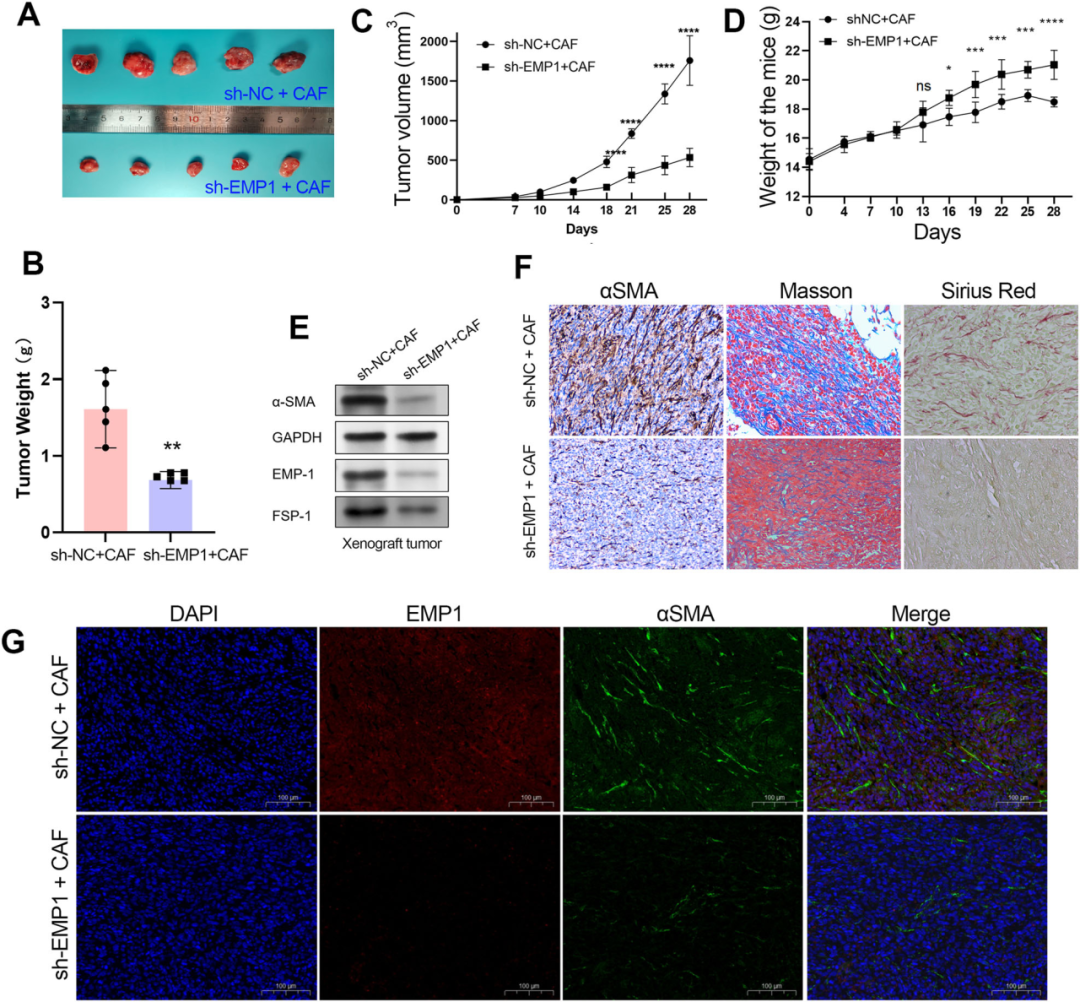
The researchers explored the role of EMP1 in CAF infiltration in TNBC and found that EMP1 is required for CAF proliferation in TNBC. To further evaluate the in vivo biological effect of EMP1 on CAF infiltration, TNBC cells and CAFs were resuspended at a 5:1 ratio and injected into nude mouse xenograft tumour models. Xenograft tumours in the EMP1-knockdown group were smaller and lighter than those in the control group. Compared with the control group, the level of CAF infiltration in xenograft tumours of the EMP1-knockdown group was markedly reduced. These findings indicate that EMP1 plays a crucial role in regulating crosstalk between TNBC cells and CAFs. Mechanistic studies showed that EMP1 is highly expressed in TNBC cells and enhances IL6 secretion through the NF-κB signalling pathway; meanwhile, TNBC cell-derived IL6 promotes CAF proliferation by increasing the level of activated AKT, thereby driving TNBC progression and metastasis.
Figure 3. EMP1 is required for CAF infiltration in xenografts
Conclusions
This study demonstrates that EMP1 knockdown suppresses the NF-κB signalling pathway in TNBC cells, and rescue experiments confirmed that EMP1 mediates the interaction between TNBC cells and CAFs by regulating IL6 secretion from TNBC cells, thereby promoting CAF proliferation and infiltration and, in turn, driving the progression and metastasis of TNBC.