Adv Sci | Zeyu Huang and Weihua Guo jointly reveal the mechanism by which DPP4 accelerates osteoarthritis progression in an enzyme-independent manner
AAV2-Dpp4 Custom | Zeyu Huang's joint team at West China Hospital, Sichuan University, reveals how DPP4 accelerates osteoarthritis progression in an enzyme-independent manner (Advanced Science, IF 14.3)
Paper title: Dipeptidyl Peptidase 4 (DPP4) Exacerbates Osteoarthritis Progression in an Enzyme-Independent Manner
Journal: Advanced Science (IF 14.3)
Collaborating partner: West China Hospital, Sichuan University (Zeyu Huang), in collaboration with City of Hope National Medical Center, USA (Weihua Guo team)
· With WZBIO Support - AAV & LV ·
In vivo
Gene information
DPP4: dipeptidyl peptidase 4
Animal model
10-week-old C57BL/6 mice (AAV injected two weeks after DMM surgery)
18-month-old C57BL/6 mice
Chondrocyte senescence is a key driver of osteoarthritis (OA), and mitochondrial dysfunction and oxidative stress can induce chondrocyte senescence. However, the specific mechanisms by which senescence drives OA progression are not fully understood. Recently, the teams of Zeyu Huang of West China Hospital, Sichuan University, and Weihua Guo of City of Hope National Medical Center, USA, jointly published, in Advanced Science (IF 14.3), the paper entitled Dipeptidyl Peptidase 4 (DPP4) Exacerbates Osteoarthritis Progression in an Enzyme-Independent Manner, which reveals the mechanism by which DPP4 aggravates osteoarthritis progression through an enzyme-independent pathway, indicating that the non-enzymatic activity of DPP4 is a promising target for OA therapy.
Research Results
1. DPP4 overexpression activates oxidative stress and senescence pathways
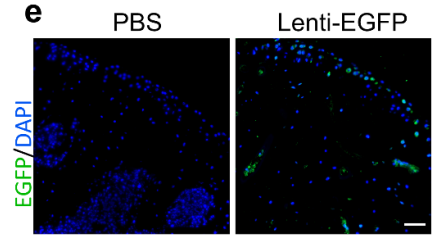
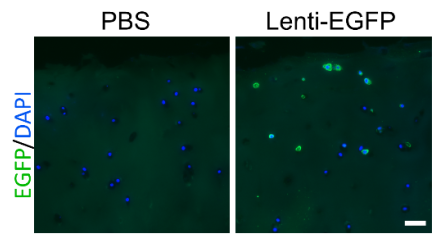
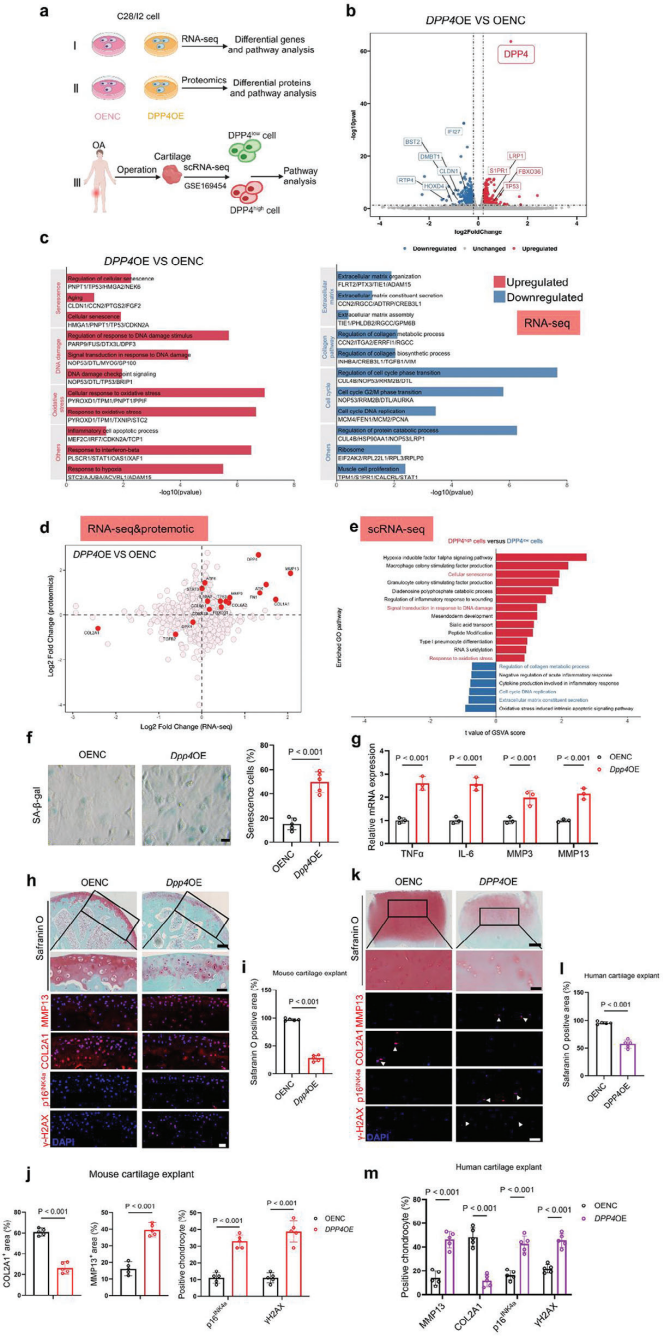
By analysing RNA-seq data from cartilage samples of patients with OA and of OA-induced rats and mice, the authors found elevated DPP4 expression in OA-associated chondrocytes. To investigate the effect of DPP4 upregulation on chondrocyte transcription and protein expression, the authors overexpressed DPP4 in C28/I2 chondrocytes and performed RNA-seq and 4D FastDIA quantitative proteomic analysis. RNA-seq analysis showed that DPP4 upregulation increased the expression of genes related to oxidative stress and cellular senescence, while decreasing the expression of genes related to ECM maintenance, collagen synthesis and cell cycle transition. When DPP4 was overexpressed in primary mouse chondrocytes, senescence was aggravated in DPP4-overexpressing cells compared with the control group. The authors then used lentivirus to overexpress DPP4 in human and mouse cartilage explants, and compared with the control group, DPP4 overexpression led to a reduction in cartilage matrix. In addition, IF experiments showed that DPP4 overexpression upregulated MMP13, P16INK4A and γH2AX (a DNA damage marker) and downregulated COL2A1. These results suggest that DPP4 overexpression may disrupt the balance between anabolism and catabolism by participating in oxidative stress-related and senescence-related pathways. Further study found that DPP4 disrupts mitochondrial dynamics in chondrocytes in an enzyme-independent manner, thereby inducing oxidative stress and cellular senescence.
Figure 1. DPP4 promotes oxidative stress and senescence in chondrocytes
2. Overexpression of DPP4 in chondrocytes exacerbates DMM- and senescence-induced OA progression
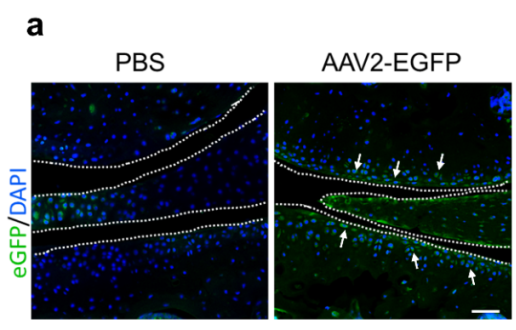
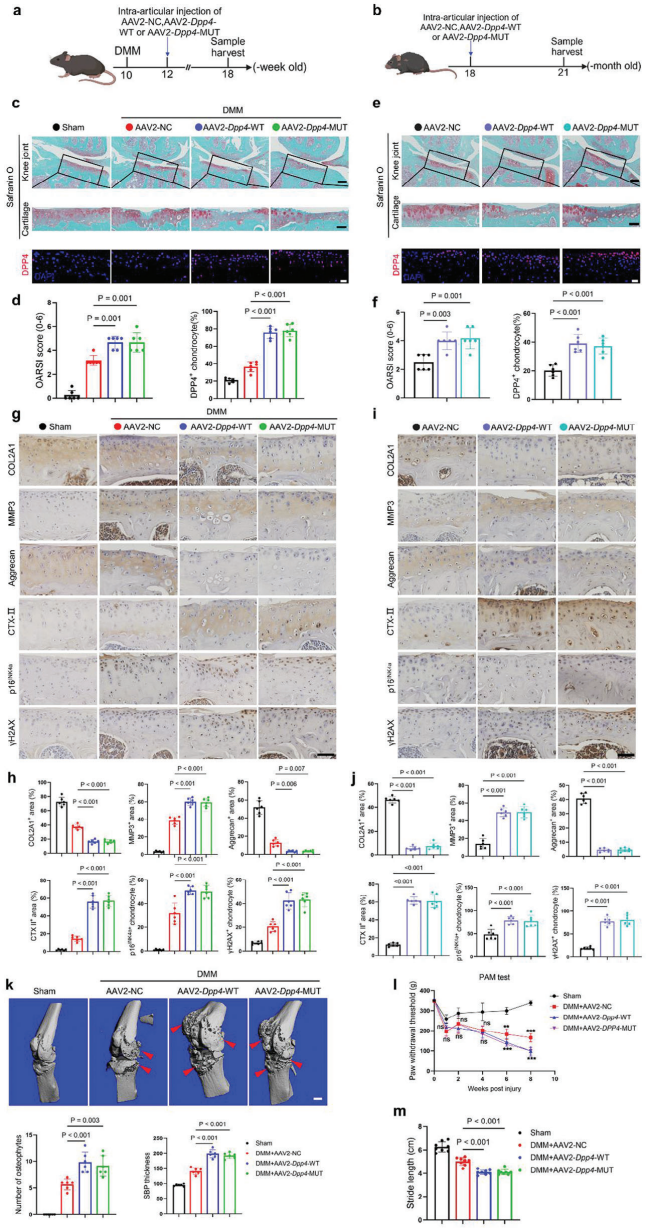
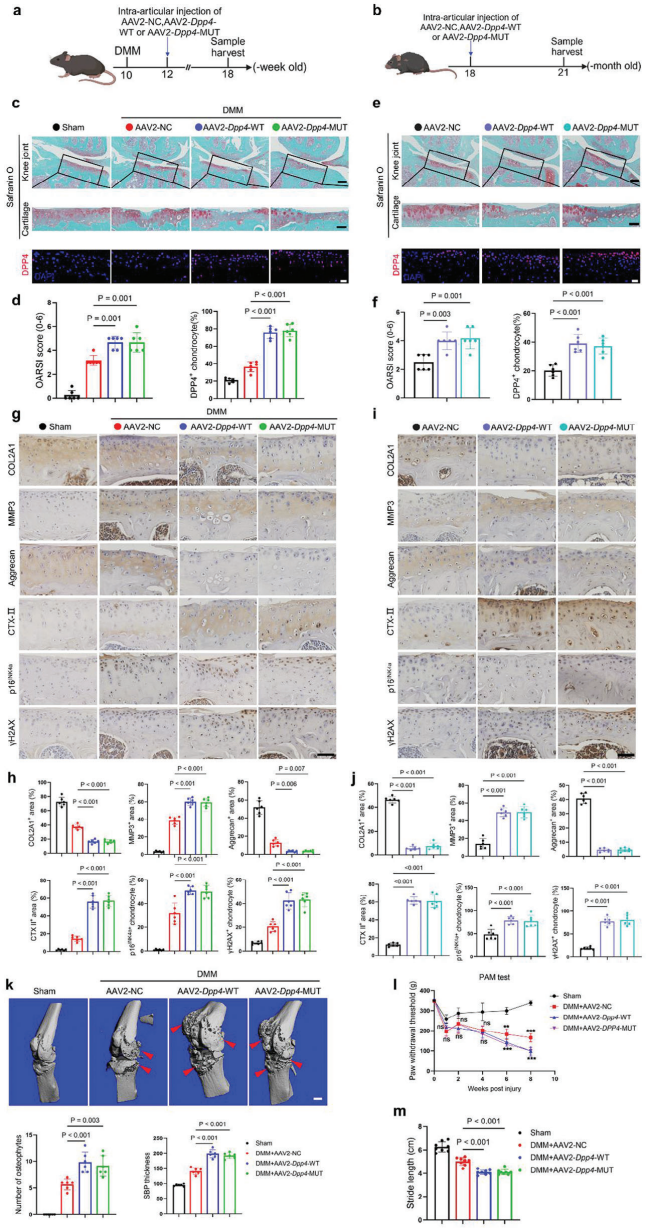
To study the role of DPP4 in mouse OA models, the authors injected adeno-associated virus containing AAV2-NC, AAV2-Dpp4-WT or AAV2-Dpp4-MUT into the knee joint cavity of mice. Infection by AAV2 in chondrocytes was confirmed by detecting GFP expression using IF analysis. In DMM- and senescence-induced OA mice, mice in the AAV2-Dpp4-WT and AAV2-Dpp4-MUT groups had higher OARSI scores and increased Dpp4 expression compared with the AAV2-NC group. In addition, DPP4 upregulation led to more severe synovitis in DMM- and senescence-induced mice. IHC results showed that mice in the AAV2-Dpp4-WT and AAV2-Dpp4-MUT groups had lower levels of cartilage matrix components, elevated levels of MMP3, CTX-II and senescence-related molecules, and exhibited more osteophyte formation and subchondral bone sclerosis. The PAM test found that mice in the Dpp4 overexpression groups had poorer pain tolerance; gait analysis showed that Dpp4 upregulation led to motor dysfunction in mice. These results indicate that DPP4 upregulation aggravates DMM- and senescence-induced OA in mice through an enzyme-independent mechanism.
Figure 2. DPP4 promotes DMM- and senescence-induced OA progression in mice
3. 4,5-Dicaffeoylquinic acid alleviates DMM- and senescence-induced OA in mice
The authors found that DPP4 binds MYH9 in an enzyme-independent manner and impedes the degradation of MYH9 protein through the ubiquitin-proteasome pathway, thereby upregulating MYH9 protein expression and leading to mitochondrial dysfunction and cellular senescence. Screening revealed that 4,5-dicaffeoylquinic acid can disrupt the interaction between DPP4 and MYH9, thereby promoting the ubiquitination and degradation of MYH9. The authors next explored whether 4,5-dicaffeoylquinic acid can alleviate OA in mice in vivo. AAV2-NC, AAV2-Dpp4-WT or AAV2-Dpp4-MUT was administered into the knee joints of senescence-induced OA mice, and mice treated with 4,5-dicaffeoylquinic acid had lower OARSI scores than the PBS group. IF detection showed that, although 4,5-dicaffeoylquinic acid could not change the upregulation of DPP4 in chondrocytes after DMM surgery, it significantly reduced MYH9 expression compared with the PBS group. IF analysis showed that, compared with AAV2-NC, AAV2-Dpp4-WT and AAV2-Dpp4-MUT still upregulated Dpp4 expression in chondrocytes, but 4,5-dicaffeoylquinic acid treatment resulted in no upregulation of MYH9 in the chondrocytes of these two groups. In addition, 4,5-dicaffeoylquinic acid effectively improved pain tolerance and motor function in OA mice. These results support that 4,5-diCQA effectively alleviates the progression of DMM- and senescence-induced OA in mice.
Figure 3. 4,5-Dicaffeoylquinic acid alleviates DMM- and senescence-induced OA in mice
Conclusions
This study found that overexpression of DPP4 in chondrocytes aggravates DMM- and senescence-induced OA in mice, and that DPP4 inhibits the ubiquitination and degradation of MYH9 independently of its enzymatic activity, leading to mitochondrial dysfunction and cellular senescence. In addition, reducing MYH9 levels with 4,5-dicaffeoylquinic acid alleviates DMM- and senescence-induced OA symptoms in mice, indicating that the non-enzymatic activity of DPP4 is a promising target for OA therapy.