Cre/LoxP recombination system
一.Principle of Cre/LoxP Recombination System
1. Cre recombinase and LoxP site
Cre Recombination Enzyme is encoded by the Cre gene of Escherichia coli bacteriophage P1 and is a 38kD protein composed of 343 amino acids. It not only has catalytic activity, but also, similar to restriction enzymes, can specifically recognize loxP sites.
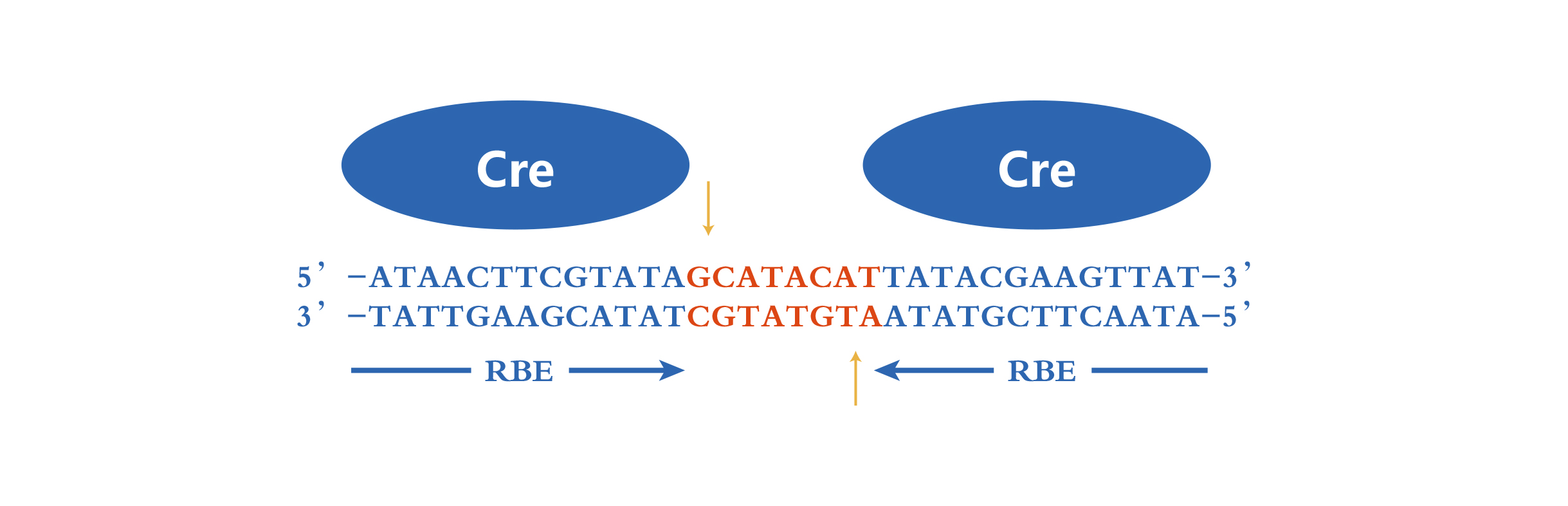
The LoxP (locus of X-overP1) site is 34bp long, consisting of two 13bp inverted repeat sequences and an 8bp spacer region. Among them, the reverse repeat sequence is the specific recognition site of Cre recombinase, while the spacer region determines the direction of the loxP site.
Figure 1. Cre recombinase and loxP site
2. The Cre/LoxP recombination system induces gene recombination
There are several ways to induce recombination in the Cre/LoxP system, which are based on the interaction between Cre recombinase and loxP site.
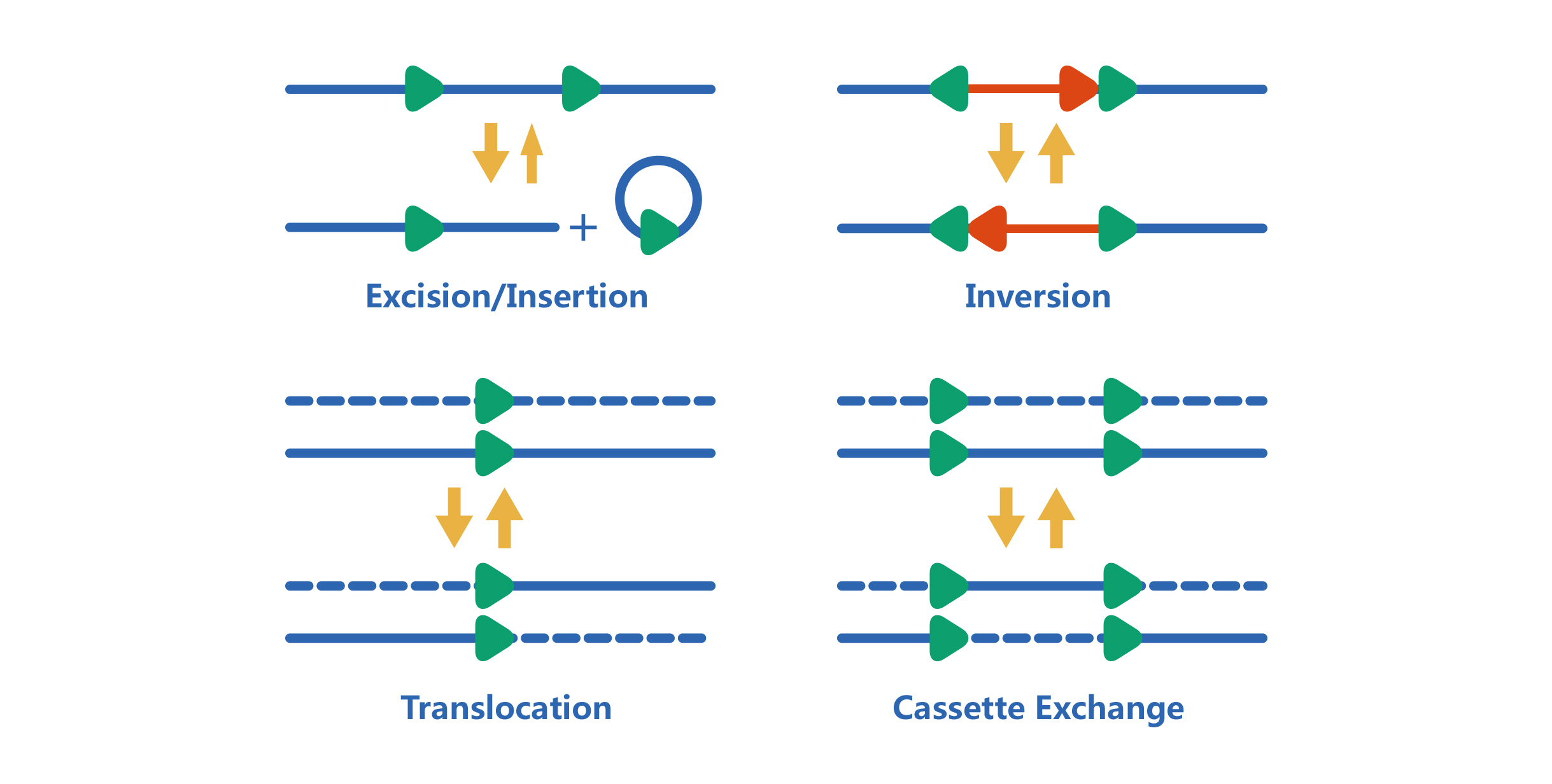
When there is a loxP site in the genome, once Cre recombinase is present, it will bind to the reverse repeat sequence regions at both ends of the loxP site to form a dimer. This dimer combines with dimers at other loxP sites to form a tetramer. Subsequently, the DNA between loxP sites was cleaved by Cre recombinase, and the cut was reconnected under the action of DNA ligase. The result of recombination depends on the position and direction of the loxP site. There are several main ways of restructuring:
(1) Two loxP sites are located on the same DNA strand and in the same direction, and Cre recombinase knocks out the sequence between loxPs;
(2) Two loxP sites are located on the same DNA strand and in opposite directions, and Cre recombinase induces sequence flipping between loxPs;
(3) Two loxP sites are located on different DNA strands or chromosomes, and Cre recombinase induces exchange or chromosomal translocation between the two DNA strands;
(4) Four loxP sites are located on two DNA strands or chromosomes, and Cre recombinase induces sequence exchange between loxPs.
|
|
Figure 2. The way Cre/LoxP induces gene recombination
二.Advantages of Cre/LoxP Recombination System
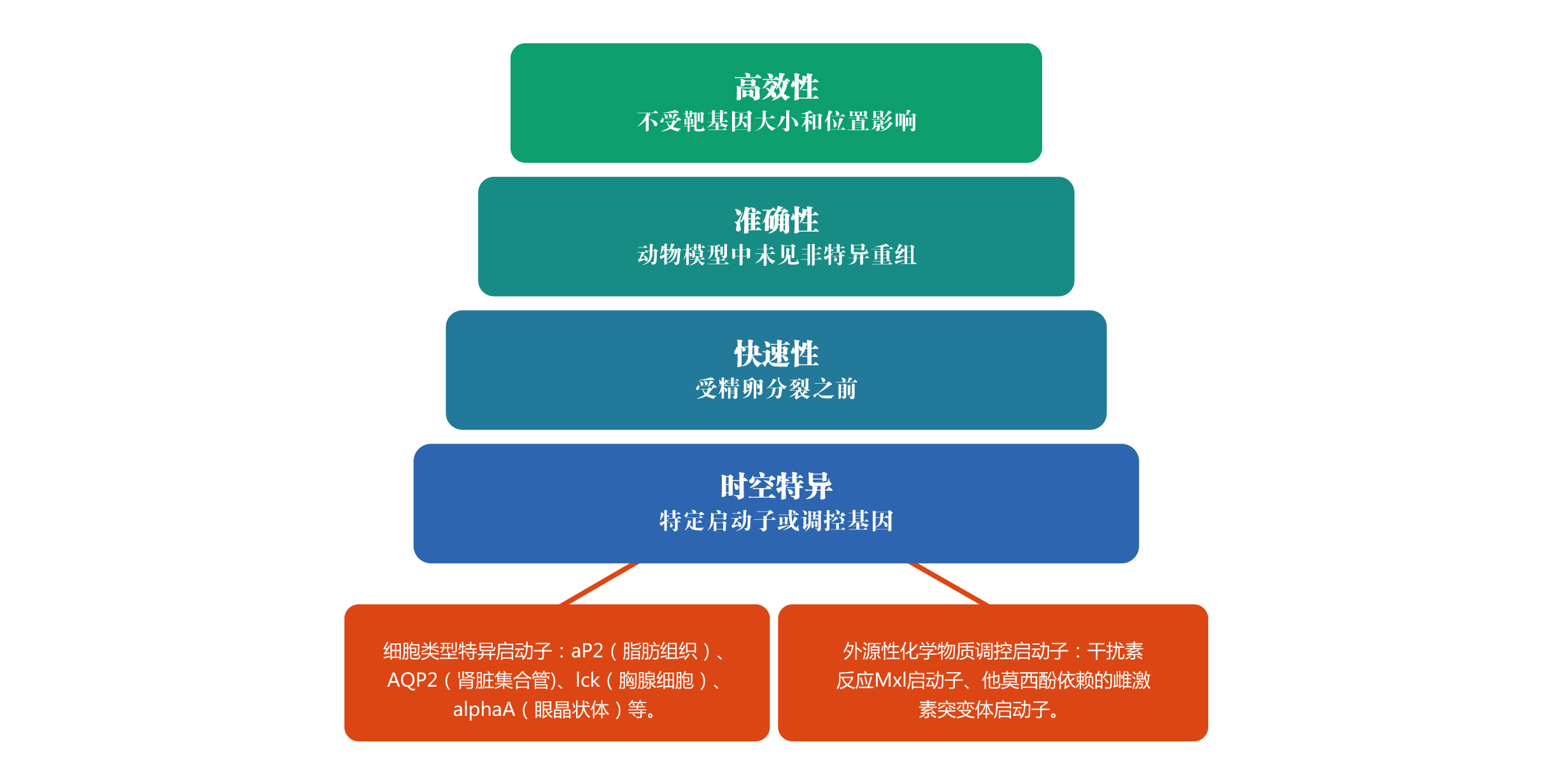
The reason why the Cre/LoxP recombinant system has been widely used in transgenic animals is because it has very obvious advantages. Mainly reflected in: spatiotemporal specificity, efficiency, accuracy, and speed.
Figure 3. Advantages of Cre/LoxP Recombination System
三.Application of Cre/LoxP Recombination System in Transgenic Engineering
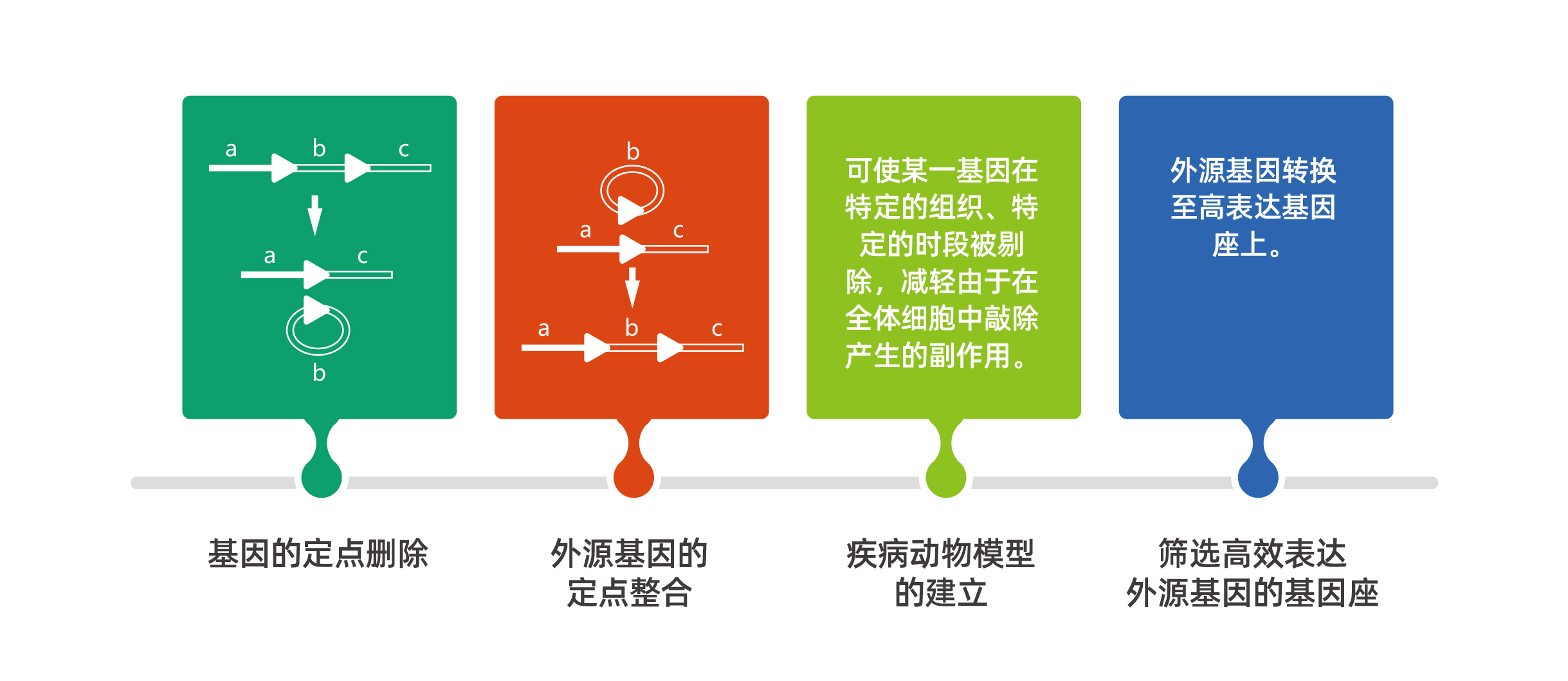
Due to its efficient and simple mode of action, the Cre/LoxP recombination system has been effectively utilized in gene site deletion, exogenous gene site integration, disease animal model establishment, and screening of highly expressed gene loci, becoming a powerful tool for DNA recombination in vitro and in vivo.
Figure 4. Application of Cre/LoxP Recombination System in Transgenic Engineering
四.The advantages of virus dependent gene recombination
The most common form of applying the Cre/LoxP recombination system is the hybridization of two genetically modified animals. The general strategy is:
(1) Obtaining transgenic "Cre mice" through prokaryotic injection. Generally, specific promoters are used to control the expression of Cre recombinase in this mouse;
(2) By homologous recombination of displacement vectors, a selection marker gene is introduced into the target site in embryonic stem cells, and two loxP sites are introduced on both sides. It is required that both homologous chromosomes carry loxP sites and cannot interfere with the transcription of the target gene. Inject these embryonic stem cells into pseudo pregnant female mice to develop into 'floxed mice';
(3) When "Cre mice" mate with "floxed mice", the offspring produce Cre recombinase that interacts with loxP sites, leading to gene recombination.
Although this method has the high efficiency and specificity of Cre/LoxP recombination system, there are many shortcomings:
|
● High cost
● Long time consumption
● Low regional or organizational specificity
|
At present, whether virus dependent genetic recombination can overcome the many shortcomings of genetically modified animals has become a new choice for more and more researchers. The strategy for the Cre/LoxP recombination system dependent on viruses is:
(1) Obtaining a "Cre mouse" or "floxed mouse" through genetically modified animal methods;
(2) Virus injection into these "Cre mice" or "floxed mice" introduces loxP or Cre recombinase elements.
This method has obvious advantages:
|
● Less expenses
● Shorter experimental period
● Stronger regional specificity
|
五.维真为您提供Cre/LoxP重组系统的AAV载体构建和病毒包装服务
1. FLEX-ON system dependent on Cre recombinase induced expression
By combining tissue-specific promoters and different AAV serotypes, the FLEX-ON system provided by Weizhen can help you achieve more precise tissue-specific and time control.
In the FLEX-ON system, the target gene is located in the opposite direction below the promoter, with two "head to head" loxPs connected on either side. When Cre recombinase is absent, the target gene cannot be expressed; When Cre recombinase is present, it can induce a "flip" of the target gene, leading to its expression.
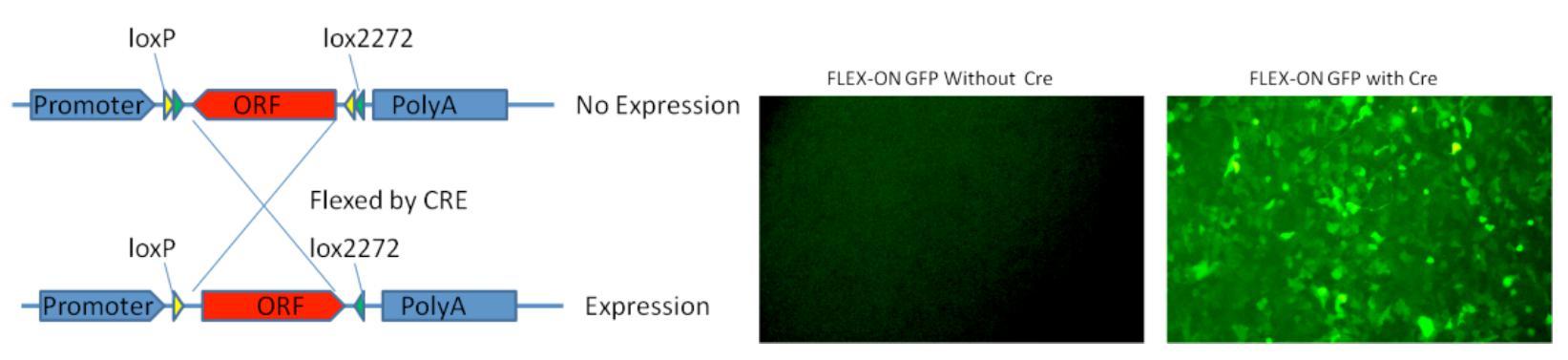
Figure 5. Schematic diagram of the FLEX-ON system dependent on Cre provided by weizhen (left) Experimental diagram of weizhen's FLEX-ON (right)
2. Relying on Cre recombinase trans splicing system - easily possessing "AAV expressing large genes"
The smaller packaging capacity (less than 5kb) limits the application of AAV. Weizhen provides you with a Cre dependent trans splicing system, making it easy for you to have AAV expressing large genes.
The co transfection efficiency of multiple recombinant AAVs is as high as 90%, and Weizhen divides larger genes into two parts and constructs them on two AAV vectors. By recombining ITR, mRNA splicing, and Cre/LoxP, the inhibitory effect of ITR on transcription is eliminated to achieve the expression of the target protein. Compared to the Cre dependent trans splicing system provided by a single vector, the expression efficiency is about 20%.

Figure 6. Schematic diagram of weizhen's Cre dependent trans splicing system (left) Experimental diagram of weizhen's Cre dependent trans splicing system (right)