环状RNA(CircRNA)
|
|
Circular RNA (circRNA) is a special type of non coding RNA molecule that differs from traditional linear RNA in that it is a closed RNA molecule formed through reverse splicing. CircRNAs do not have a 5 '- terminal cap and a 3' - terminal poly (A) tail. Instead, they are connected by exon or intron cyclization to form a complete circular structure, avoiding degradation by nucleases. Therefore, they are more stable and conserved than linear RNAs. Circular RNA plays a crucial role in diseases, especially in cancer, and has unique advantages in disease diagnosis and treatment strategy development.
|
|
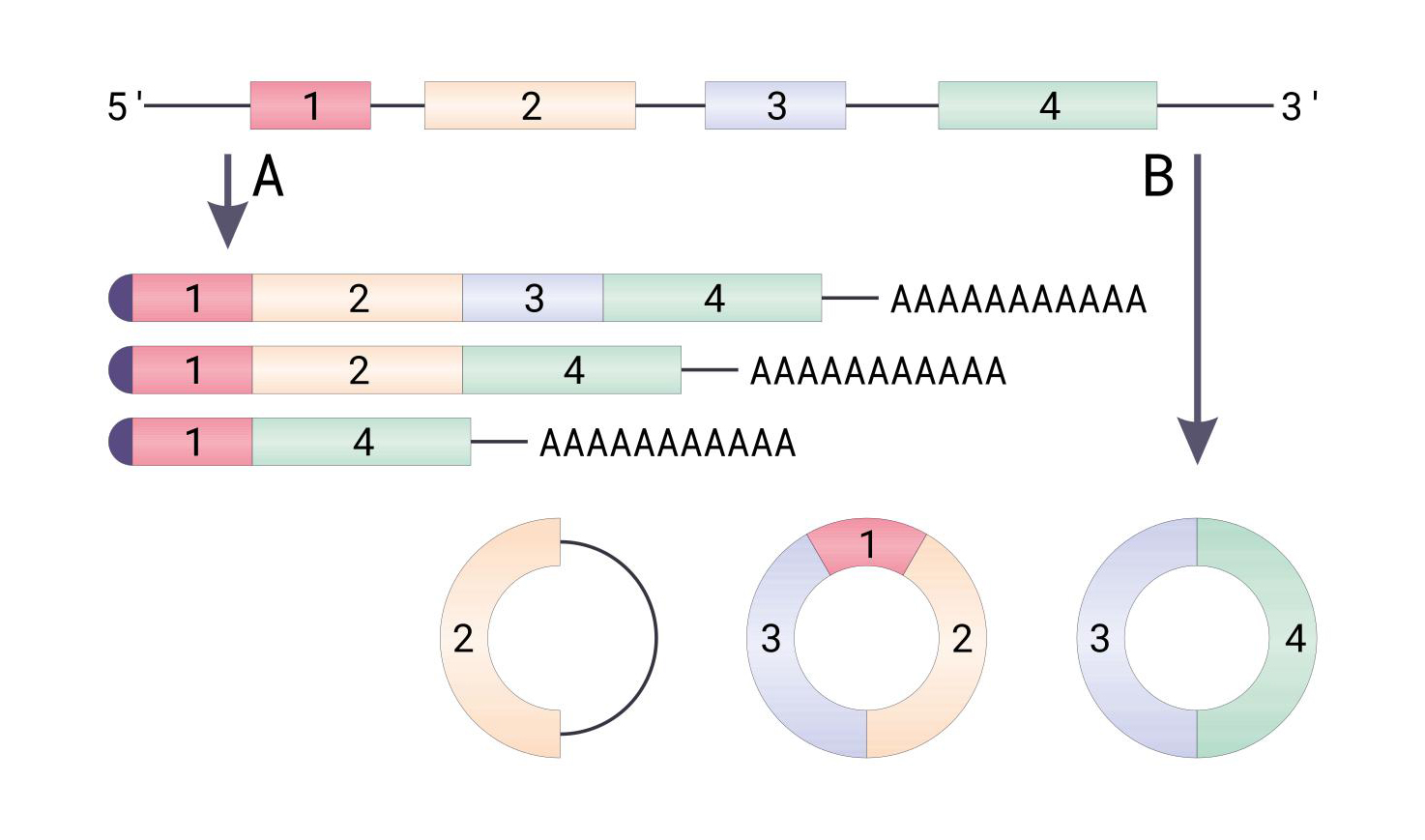
CircRNA generation:
A. The classic linear RNA splicing method involves connecting the front and back exons end-to-end through GU/AG sequences in introns. Mature RNA has a 5 'short cap structure and a 3' PolyA tail;
B. The splicing method of circular RNA: Through specific reverse splicing, the tail end of the posterior exon is connected to the front end of the anterior exon, without a 5 'short cap structure and a 3' PolyA tail. It is composed of one or more exons, and some circular RNAs also contain introns.
Characteristics of circuRNA:
1. It has a closed circular structure and a longer half-life than linear RNA;
2. It has specific reverse splicing sites;
3. Has tissue expression specificity, disease specificity, etc;
4. Mostly present in the cytoplasm (CiRNA, EIciRNA), with a small portion present in the nucleus;
5. Most of them are non coding RNAs, and their sequences are highly conserved;
6. The overall expression abundance is lower than mRNA;
Classification of circRNAs:
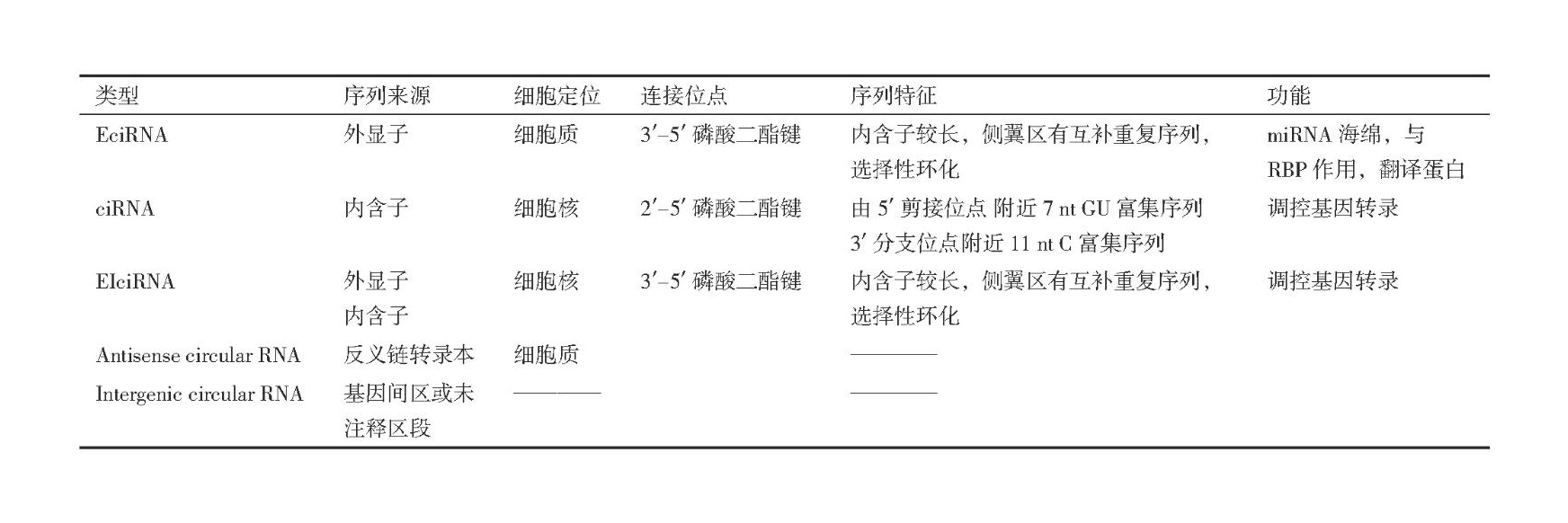
According to the source of circRNA sequences, circRNAs can be classified into four categories:
The first type is circRNA (EciRNA) derived entirely from the maternal gene exon;
The second type is a lasso type circRNA (ciRNA) that is entirely derived from introns;
The third type is circRNA derived from exons and introns (Exon intron circRNA, EIciRNA);
The fourth type includes antisense circular RNA derived from antisense transcripts, and transgenic circular RNA derived from intergenic sequences or other unannotated genome sequences.
The vast majority of circRNAs belong to exon type circRNAs, which have higher conservation than other types of circRNAs.
|
|
|
CircRNA发现历程表
|
The main biological functions of circular RNA :
1. miRNA sponge function
According to the complementary pairing rule of bases, miRNA inhibits or promotes mRNA translation by binding to non translated regions in target genes. RNA can competitively bind to common miRNAs to affect their inhibitory effects on target genes. This type of RNA is called competitive endogenous RNA (ceRNA). Research has shown that circRNA has a stable structure and contains a large number of miRNA response elements, making it an efficient ceRNA that can bind to miRNA, exert miRNA sponge function, adsorb miRNA, effectively inhibit miRNA binding to non translated regions of target genes, and thus achieve regulatory effects on target genes. In addition, some circRNAs can also bind to multiple miRNAs, affecting the regulation of multiple genes.
2. As a translation template
CircRNA lacks essential elements for cap dependent translation, such as the 5 'cap and polyA tail, and is therefore generally considered to lack translation function. However, in recent years, with further research on circRNAs, it has been found that a small number of circRNAs contain internal ribosome entry site sequences (IRES) that endow them with translation ability, such as circ-ZNF609, circMb1, circFBXW7, circPINTexonn2, and circ-SHPRH, which have been confirmed to serve as protein templates.
3. Regulating gene expression
Some CircRNAs can bind to transcription factors to regulate gene transcription. EciRNA can specifically bind to certain protein molecules within cells, serving as a scaffold to bind to RNA or DNA, providing a platform for interactions between RNA binding proteins (RBPs), RNA, and DNA.
CircRNA数据库:
① circBase(http://www.circbase.org/)
CircBase has collected tens of thousands of circular RNAs discovered in recent years and is a database constructed by collecting and integrating published circRNA data. At present, the database collects circRNA information for the following seven species: human (hg19), mouse (mm9), Caenorhabditis elegans (ce6), Drosophila melanogaster (dm3), lanternfish (latCha1), coelacanth (latCha1), and ciliate (S.mediterranea). By submitting the circRNA ID number or genome region location information supported by circBase through list search in the search interface, relevant circRNA information can be quickly queried; Researchers can also set conditions through the table browser to screen the circRNA data they need.
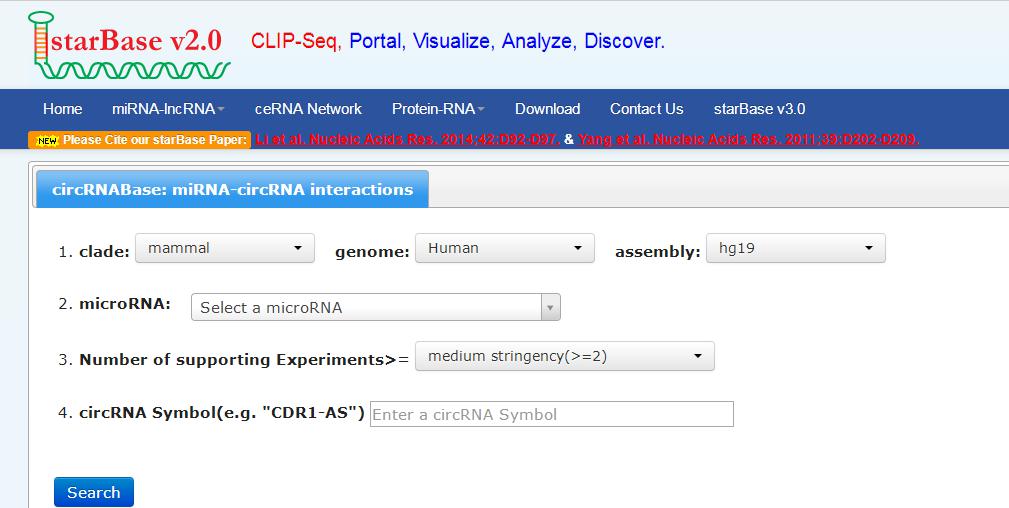
② circRNABase数据库
(http://starbase.sysu.edu.cn/starbase2/mirCircRNA.php)
(http://starbase.sysu.edu.cn/starbase2/mirCircRNA.php)
This database integrates published circRNA data to construct interaction networks between miRNA and circRNA, as well as between circRNA and RNA binding protein (RBP).
Weizhen CircRNA Service Project:
①Construction of CircRNA Vector and Virus Packaging
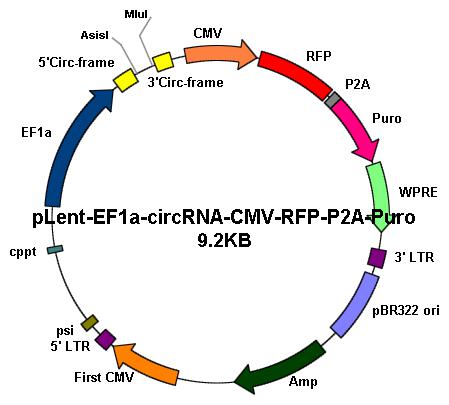
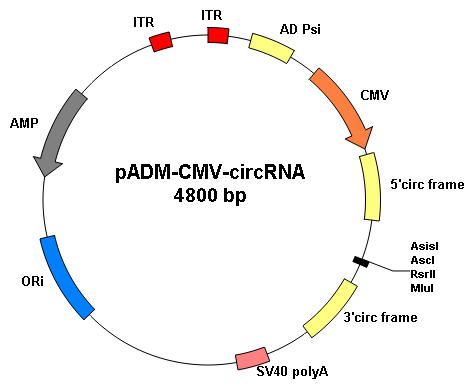
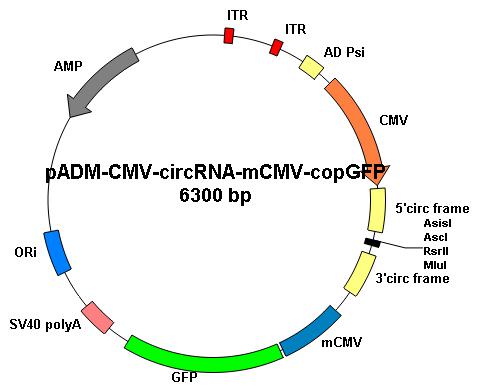
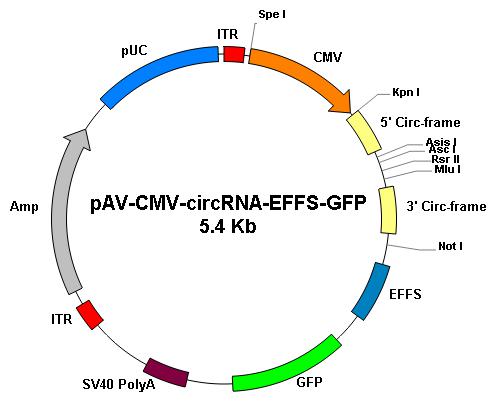
Weizhen Biotechnology has successfully constructed a large number of circRNA expression vectors by incorporating the cyclization framework into the vector, and established a complete system of circRNA overexpression and interference vectors for adenovirus, lentivirus, and AAV.
|
Partial carrier list:
|
|
|
|
|
|
For more inquiries about environmental carriers, please call 400-077-2566 or your local sales manager.
|
②CircRNA expression level and circularity detection
Weizhen Biotechnology can provide professional services for detecting circRNA expression levels and circularity. We can design specific RT-PCR validation primers for different regions on CircRNA to detect the expression level of circRNA and accurately calculate the efficiency of circRNA formation.