Optogenetics, also known as optical stimulation plus genetic engineering, is a technology that precisely controls cell behavior in the brains of living animals through optical and genetic techniques. Due to its high spatiotemporal specificity, optogenetic technology is widely used in the field of neuroscience research.
In 2010, optogenetics technology was awarded the Nature Methods Life Science Technology of the Year. In 2010, it was considered one of the breakthroughs in the past decade by Science. Optogenetics technology has once again been named one of the eight noteworthy technologies in 2016 by Nature Methods. In the future, optogenetic technology will contribute more to the treatment of neurological and psychiatric disorders, as well as research on tissue functions beyond neuroscience.
一、Before optogenetics
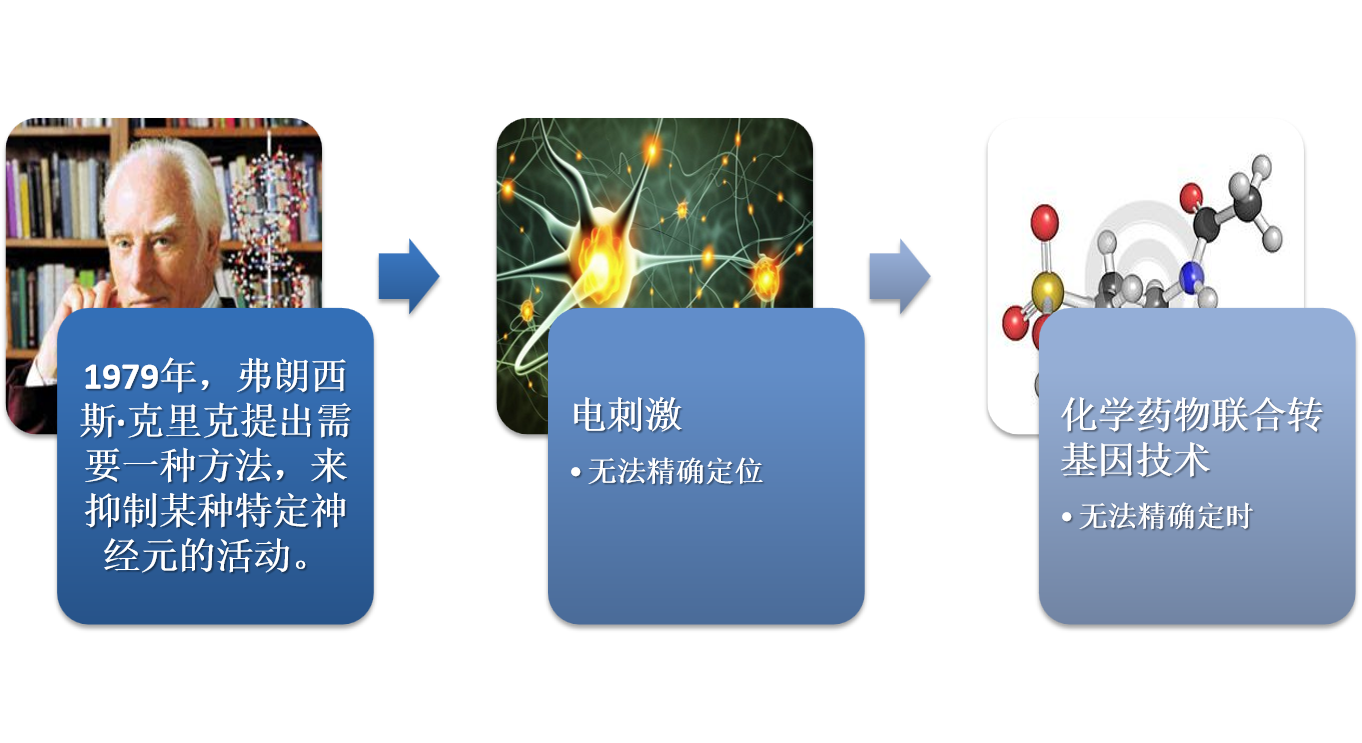
In 1979, Francis Crick proposed that the field of neuroscience urgently needed to develop a control technology that could manipulate certain cells in the brain without changing other conditions. Due to the inability of electrical stimulation signals to accurately locate and stimulate cells, and the slow onset of chemical drugs, which cannot be precisely timed and controlled, Crick considered whether light control technology could be used. Although microbiologists had already discovered some proteins that could express visible light-sensitive proteins, no one had yet linked them together at that time.
二、Optogenetics
1.The development process of optogenetics
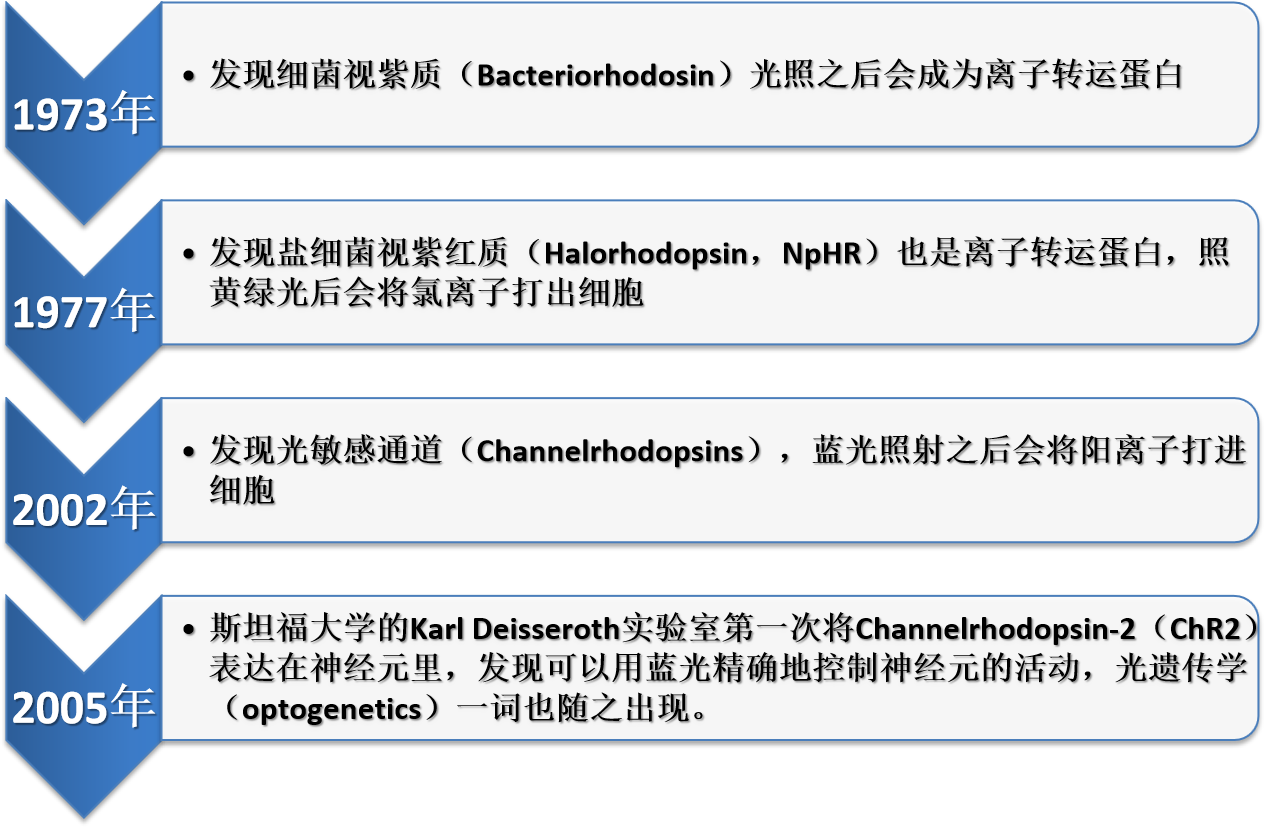
In August 2005, an article published in Karl Deisseroth's laboratory brought a long-awaited new technology to scientists in the field of neuroscience - optogenetics. The implementation of this technology is based on the discovery of a single component control tool - photosensitive protein.
2.Principles of Optogenetics
In August 2005, an article published in Karl Deisseroth's laboratory brought a long-awaited new technology to scientists in the field of neuroscience - optogenetics. The implementation of this technology is based on the discovery of a single component control tool - photosensitive protein.
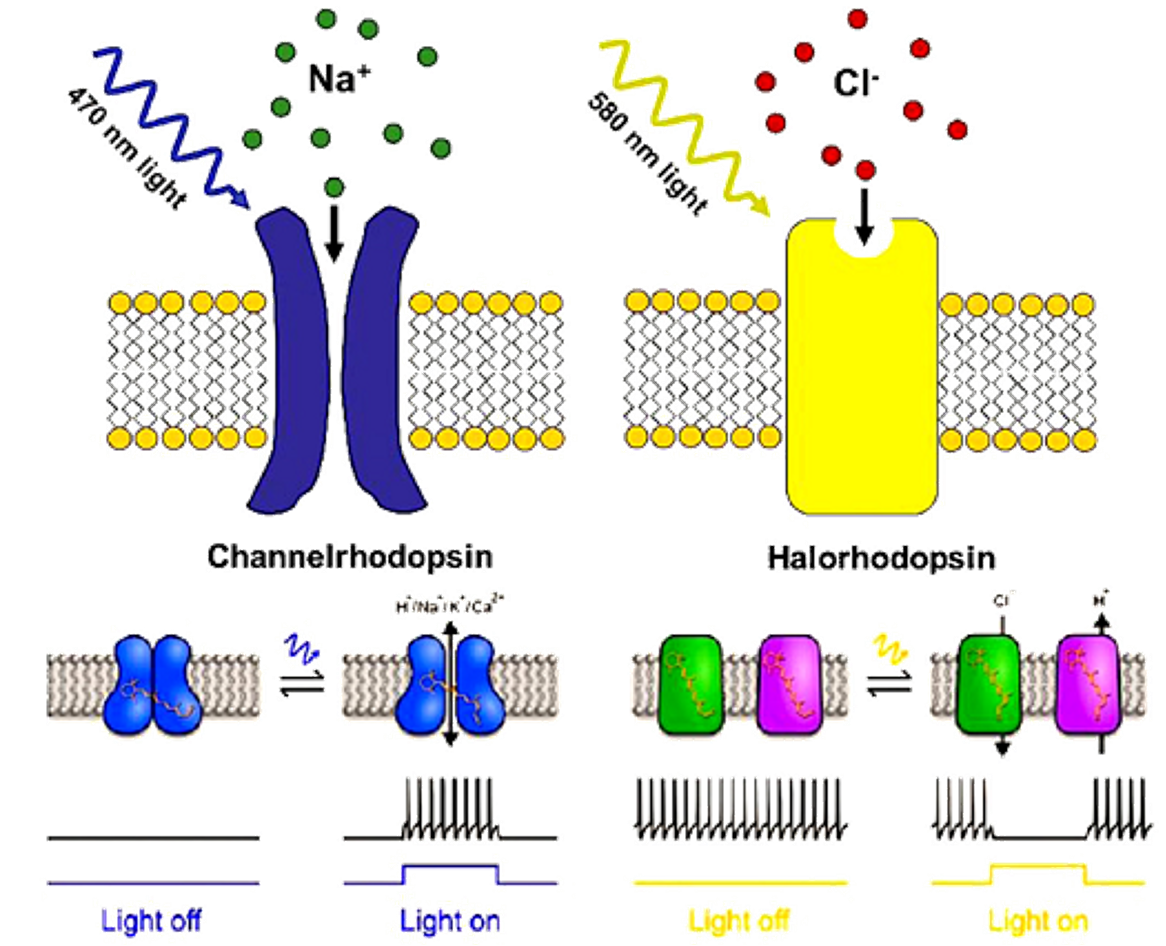
Using photosensitive channel proteins to control a specific type of neuron through light at the microsecond level. When neurons are irradiated with light of a specific wavelength, the light sensitive ion channels on the cell membrane accelerate the exchange of cations and anions between the cell and the extracellular region. Optogenetics is actually a genetic modification that enables specific neuronal cells to exhibit photosensitivity without altering other physiological characteristics of the cells.
The basic principles of optogenetics (taking ChR2 and NpHR as examples)
3、Operational steps of optogenetics
In optogenetic manipulation, cells express specific genes encoding photosensitive proteins and then use light to alter cell behavior. The application of optogenetics technology mainly includes the following key steps:
1. Search for suitable photosensitive proteins - natural proteins, or artificially modified proteins that are sensitive to light after chemical modification of natural proteins.
2. Transmitting genetic information to target cells - Generally, the genetic information of photosensitive proteins is transmitted to target cells through transgenic animals, transfection, viral infection, and other methods.
3. Controllability demonstration - precise control of neuronal activity can be achieved by introducing optical fibers and controlling lasers.
4. Validity verification of experimental methods - Generally, electrodes are used to record changes in voltage inside and outside the neuronal cell membrane to verify the effectiveness of optogenetics.
5. Phenotypic testing - Evaluating the impact of neuronal activity on animal behavior through behavioral tests.
4、Auxiliary technologies required for optogenetics
The scope of optogenetics technology is extensive. It mainly includes the following types.
① The technology of optical signals entering the studied organization
② The technology of introducing photosensitive materials into the studied cells
③ Techniques for obtaining output signals
④ Techniques for analyzing data
5、The advantage of optogenetics technology - high spatiotemporal resolution
Optogenetics technology fundamentally solves the problem of how to precisely regulate cell behavior. This is based on its advantage of high spatiotemporal specificity. Optogenetics technology has a temporal control accuracy of milliseconds (ms) and a spatial accuracy of single cell level, which cannot be compared to electrical signal stimulation and chemical drugs.
6、Weizhen photosensitive channel protein
|
photosensitive channel protein name
|
describe
|
|
ChR2
|
A proton channel protein from the green alga Chlamydomonas reinhardtii
|
|
ChR2(H134R)
|
The mutant of ChR2, a cation channel protein, can generate twice the photocurrent, but its switching speed is twice as slow as the wild-type ChR2.
|
|
ChETA
|
Cation channel protein, ChR2 mutant, allows neurons to emit a peak of 200Hz under laser stimulation (others can only reach 40Hz).
|
|
C1V1
|
Cationic channel protein, a channel protein composed of ChR1 and VChR1 discovered by Chlamydomonas reinhardtii, opens channels under red laser stimulation.
|
|
NpHR(Halorhodopsin)
|
Chlorine pump, activated by yellow green laser, will inject chloride ions into neurons and inhibit neuronal activity. Compared to NpHR, NpHR3.0 has endoplasmic reticulum and Golgi apparatus output elements, as well as membrane elements from potassium ion channels, which enable effective aggregation on neuronal cell membranes.
|
|
Arch T(Archaerhodopsin)
|
Proton pump, activated by yellow laser, transfers positively charged protons to the extracellular space. Under specific conditions, it can be used to increase intracellular pH or decrease extracellular matrix pH. Compared to NpHR, Arch immediately returns to the off state when the laser is turned off. Compared to NpHR, Arch 3.0 has endoplasmic reticulum and Golgi apparatus output elements, as well as membrane elements from potassium ion channels, which enable effective aggregation on neuronal cell membranes.
|