The global gene therapy sector is undergoing explosive growth. As the core vector for gene delivery, the performance of an adeno-associated virus (AAV) serotype directly determines therapeutic efficacy and safety, which makes the development of novel AAV serotypes the key to breaking through technical bottlenecks and advancing clinical application. Belief BioMed, a globally leading innovative gene therapy company, has successfully brought to market its independently developed hemophilia B gene therapy, BBM-H901 (Xinjiuning®). Building on its proprietary Capsidx® platform, Belief BioMed has developed a number of novel engineered AAV capsids with independent intellectual property rights, whose targeting specificity, safety and delivery efficiency all outperform natural capsids. WZBIO, with more than a decade of deep expertise in the AAV field, offers an extensive serotype library, a mature packaging system and one-stop CRO solutions, making it a reliable partner for the research and preclinical stages. The two companies have now entered into a strategic collaboration: WZBIO has been granted an exclusive license by Belief BioMed for its next-generation engineered AAV serotypes (AAV843, AAVP21 and AAVT42), and is responsible for their production, promotion and sales. Together, the two parties will drive the wide application of high-quality AAV serotypes in research and pipeline development, empowering innovation in gene therapy.
Three Clinically Validated AAV Serotypes Now Open for Research Use
AAV843 · AAVP21 · AAVT42
AI-driven innovative capsids · Better safety · Stronger specificity · Higher transduction efficiency
Low levels of pre-existing neutralizing antibodies in vivo — efficacy already validated in the clinic!
Serotype
Injection Route
Target Tissue
Key Advantages
AAV843
Intravenous injection
Liver
① Highly efficient transduction of primary hepatocytes and hepatic cell lines in vitro, far exceeding natural serotypes;
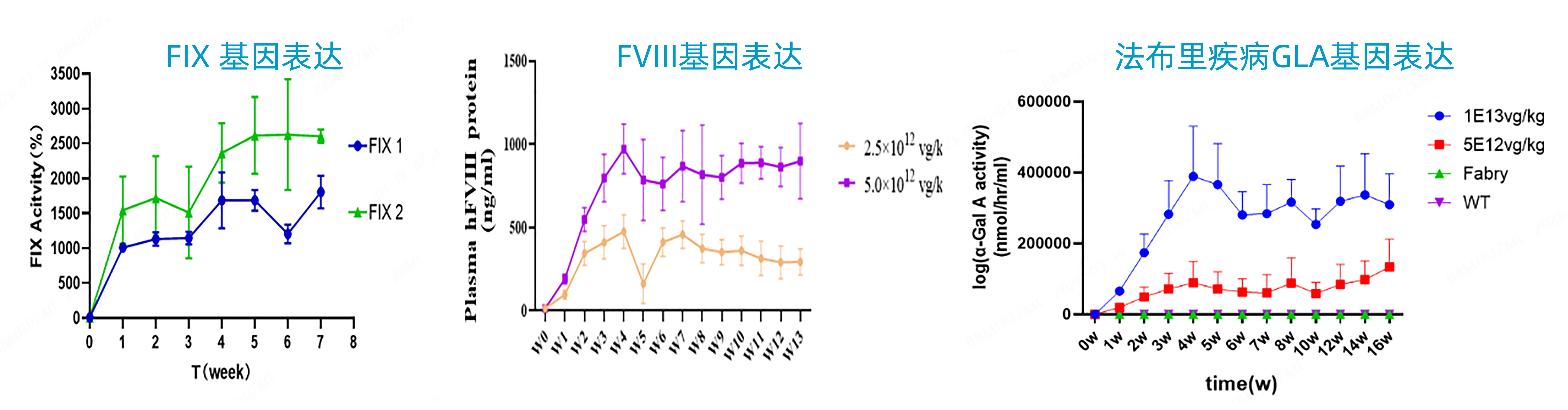
② Specific targeting of the liver in mice and monkeys in vivo, mediating sustained high-level gene expression;
③ Low levels of neutralizing antibodies in vivo.
Local injection
Joint
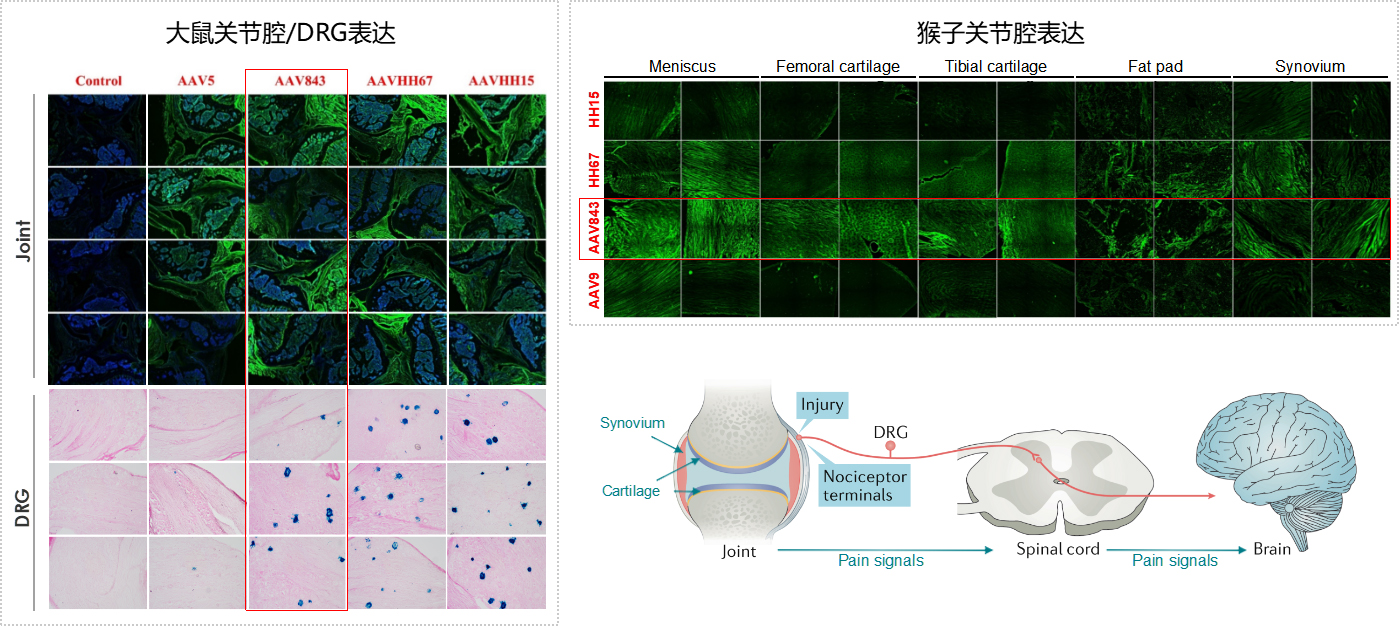
① Efficient transduction of joint tissue in rats and monkeys;
② Infection efficiency far exceeding that of serotypes such as AAV5.
AAVP21
Intravenous injection
Muscle/Heart
① After intravenous administration, highly efficient transduction of systemic muscle in mice and monkeys, at least 5-fold higher than AAV9;
② Low accumulation in the liver.
AAVT42
Local injection
Neurons
① Specific targeting of neurons in mice, rats and monkeys;
② Infection efficiency significantly superior to AAV9.
1. AAV843: Dual Targeting of Liver and Joints, with Infection Efficiency Far Beyond Natural Serotypes
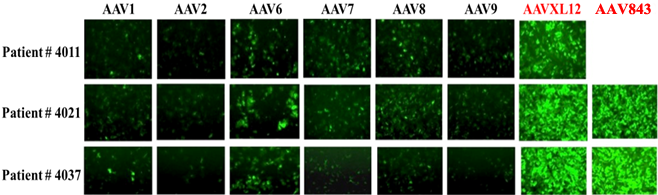
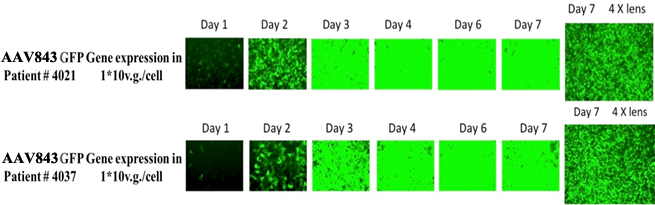
In vitro studies show that AAV843 transduces primary hepatocytes significantly more efficiently than a range of natural serotypes, including AAV1, AAV2, AAV6, AAV7, AAV8 and AAV9; moreover, compared with the natural AAV5 serotype used in several approved hemophilia gene therapy products, it achieves markedly higher transduction efficiency in the hepatic cell lines L02 and Huh7. In vivo experiments demonstrate that AAV843 specifically targets mouse liver tissue and mediates durable, high-level expression of the gene of interest. In addition, AAV843 achieves highly efficient gene delivery in the joint tissues of rats and monkeys, with transduction efficiency far higher than that of AAV5 and AAV9, demonstrating its dual potential for liver- and joint-targeted applications.
AAV843 capsid shows the highest transduction efficiency in human primary hepatocytes
Green fluorescent protein gene expression is high and sustained in human primary hepatocytes
Figure 1. Transduction efficiency of AAV843 in hepatocytes
Figure 2. AAV843 mediates persistent, high-level transgene expression in mice
Figure 3. Transduction efficiency of AAV843 in rat and monkey joint tissues
2. AAVT42: Neuron-Specific Targeting, with Efficacy Validated in Primates
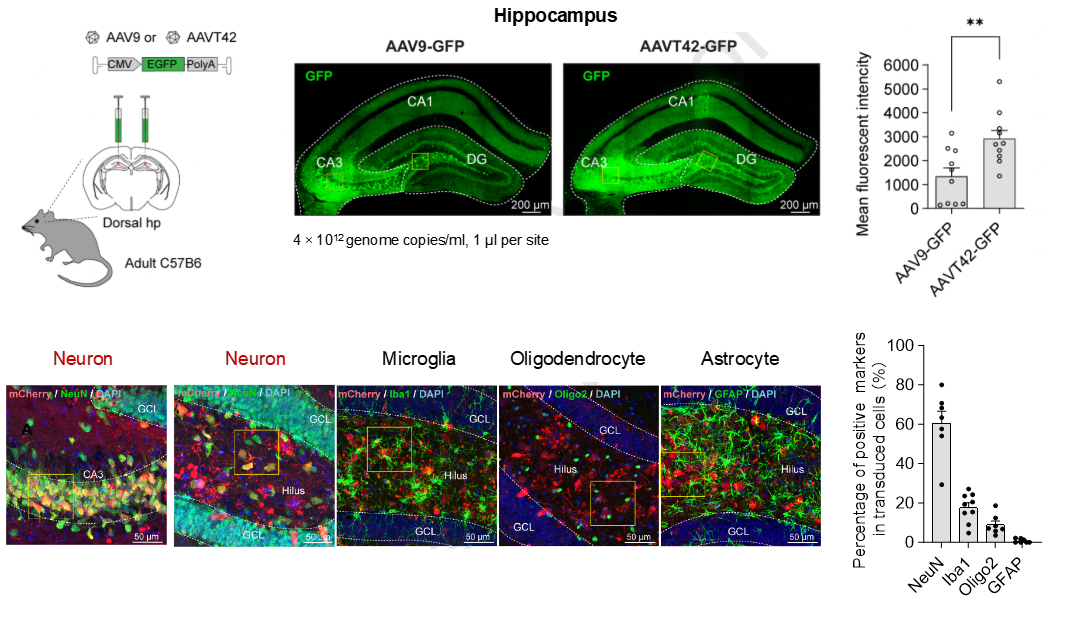
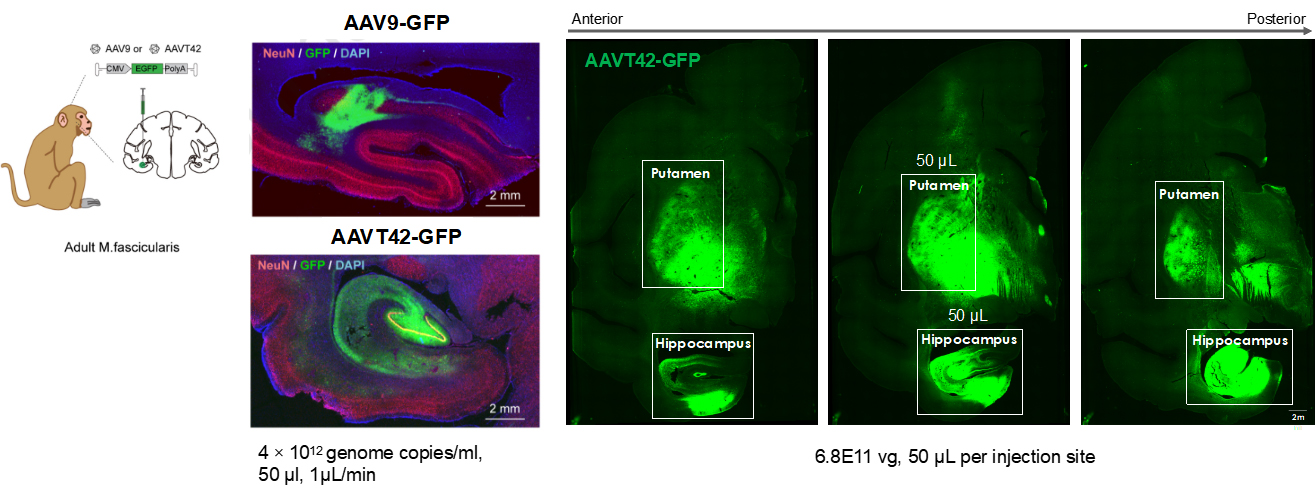
In mouse models, AAVT42 transduces neurons significantly more efficiently than AAV9 and displays excellent neuronal tropism: it mainly targets neurons, with lower transduction efficiency in glial cells. This property was further validated in non-human primates (cynomolgus monkeys), in which AAVT42 infected neurons far more efficiently than AAV9.
Figure 4. Transduction efficiency of AAVT42 in mouse neural tissue
Figure 5. Transduction efficiency of AAVT42 in cynomolgus monkey neural tissue
3. AAVP21: Precise Muscle/Heart Targeting, with Transduction Efficiency Over 5-Fold Higher Than AAV9
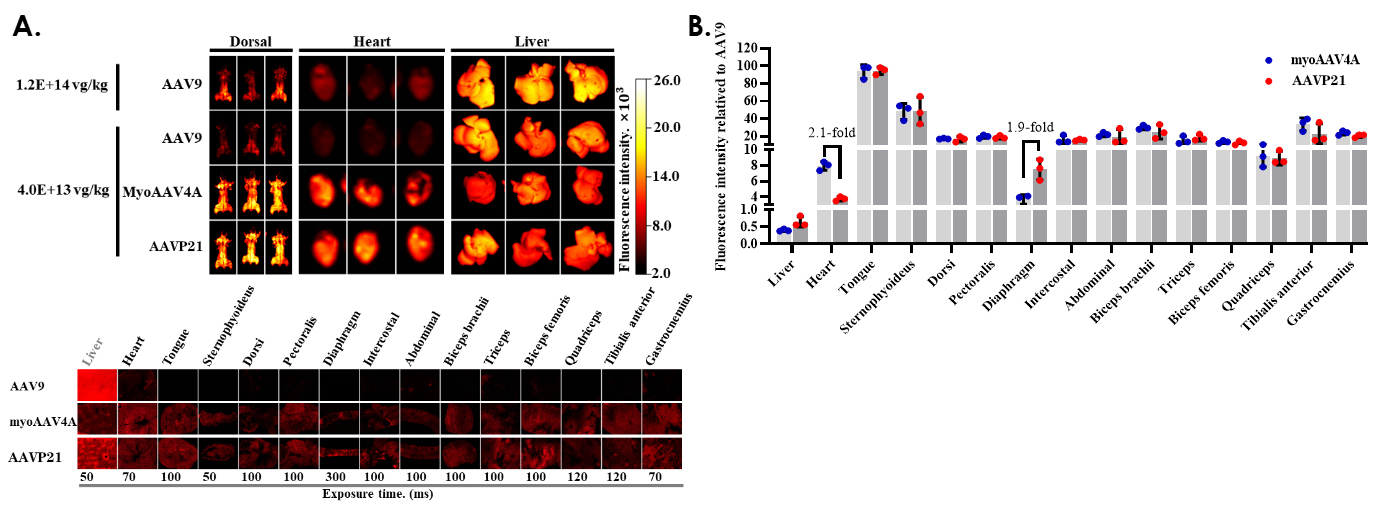
Mouse data show that, after systemic intravenous administration, AAVP21 achieves highly efficient gene delivery to muscle tissue throughout the body. Compared with AAV9, AAVP21 improves transduction efficiency in muscle by more than 5-fold, while non-specific accumulation in the liver is significantly reduced. In non-human primate (monkey) models, AAVP21 likewise shows highly efficient transduction of muscle (including cardiac) tissue, far superior to AAV9.
Figure 6. Transduction efficiency of AAVP21 in various mouse muscle tissues
Related Services
01. Virus packaging and testing services for the AAV843, AAVP21 and AAVT42 serotypes at the research and preclinical stages
02. Standard and customized vector construction and optimization, paired with a range of promoters and elements, to support diverse gene expression studies
Contact Us
Have a question or need assistance? Our team is here to help. Fill out the form below, and we willrespond within 1-2 business days.